With Context Engine, automatically prioritize your vulnerability backlog based on runtime and business context, so you can focus on the alerts that matter.
Today, I’m delighted to announce the release of Jit’s Context Engine, which uses the runtime context of vulnerabilities to automatically prioritize the top security risks in our customers’ cloud applications. One of the defining challenges of product security is the overwhelming volume of alerts generated by code and cloud security scanners, which is especially painful when the majority of “issues” don’t pose any real security risk.
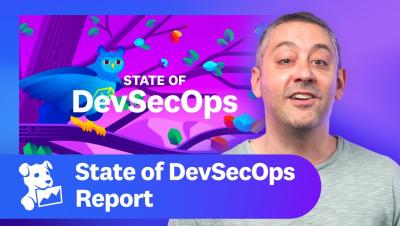
Datadog is constantly elevating the approach to cloud monitoring and security. This Month in Datadog updates you on our newest product features, announcements, resources, and events. To learn more about Datadog and start a free 14-day trial, visit Cloud Monitoring as a Service | Datadog. This month, we put the Spotlight on Datadog’s State of DevSecOps report.
Implementation of a DevSecOps approach is the most impactful key factor in the total cost of a data breach, according to IBM’s Cost of a Data Breach Report 2023. DevSecOps, security practices integrated in DevOps, represents an advanced practice where the choice of tools is crucial for maximum risk reduction.
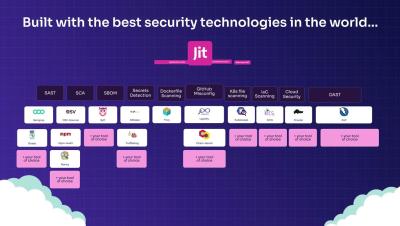
Jit provides full product security coverage in minutes, while making it easy for developers to adopt continuous security feedback and remediation into their daily routines.
As the volume of code continues to grow exponentially, software developers, DevOps engineers, operations teams, security specialists, and everyone else who touches code are increasingly spending their time in the weeds of securing, delivering, and scaling software. This bottles up creativity and ultimately slows software development for every organization.
We recently released the State of DevSecOps study, in which we analyzed tens of thousands of applications and cloud environments to assess adoption of best practices that are at the core of DevSecOps today. In particular, we found that: In this post, we provide key recommendations based on these findings, and we explain how you can leverage Datadog Application Security Management (ASM) and Cloud Security Management (CSM) to improve your security posture.
Imagine this: an attacker sneaks a tiny backdoor into software that hundreds of companies use. It sounds like a plot from a spy movie, but it’s a real threat that recently impacted major Linux distributions through a compromised utility tool, XZ Utils. So far, in 2024, over 35 billion known records have been breached. The Linux attack, potentially in action and undetected since 2021, is just one of the many that highlight the alarming proliferation of supply chain attacks.
And we never were. From the very beginning, DataTrails has been committed to bringing the power of transparency and trust technologies to regular enterprises, making very new and complex technology accessible to those who need it most: the existing industries and companies who run our world.
The widespread adoption of external libraries and packages in the modern application development process introduces potential security risks that could impact the entire application. To address this, Software Composition Analysis (SCA) tools like npm-audit and OSV Scanner play an important role.