Security | Threat Detection | Cyberattacks | DevSecOps | Compliance

SBOMs That Actually Matter

Mend.io, formerly known as Whitesource, has over a decade of experience helping global organizations build world-class AppSec programs that reduce risk and accelerate development -– using tools built into the technologies that software and security teams already love. Our automated technology protects organizations from supply chain and malicious package attacks, vulnerabilities in open source and custom code, and open-source license risks.

What is an AI-BOM? Why Static Manifests Fall Short

Your AI-BOM shows every model, tool, and data source you deployed. But when your SOC investigates an alert about unusual agent behavior, that inventory tells them nothing about what actually happened at runtime. Static AI-BOMs document what you intended to run. Attackers exploit what your AI workloads actually do in production: which APIs they call, what data they touch, and how they use approved tools in unapproved ways.

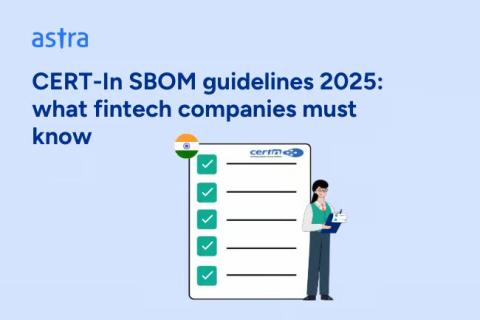
CERT-In SBOM Guidelines 2025: What Fintech Companies Must Know

UPI fraud spiked 85% in FY 2024, reaching ₹1,087 crore. Most of it traced back to vulnerabilities in third-party APIs and unpatched components that fintechs didn’t know they were running. As such, in July 2025, CERT-In released SBOM Guidelines 2.0, making Software Bills of Materials mandatory for all government, public, and essential services orgs, while encouraging others to adopt it as best practice. For CTOs and CISOs, the message is direct.


SBOM Security: 6 Key Components and Top 3 Use Cases

An SBOM (Software Bill of Materials) is a structured list of components, including third-party and open-source software, that make up a software application. It’s a detailed inventory of everything that goes into a software product, similar to a list of ingredients for food. SBOMs are crucial for improving software security by providing transparency and enabling organizations to identify and address potential vulnerabilities and risks within their software supply chains.

The Complete Guide to SBOM Software Bill of Materials

A Software Bill of Materials (SBOM) is like an ingredient list for software. It provides a detailed inventory of all the components that make up an application, including open source libraries, proprietary code, packages, and containers. Just as food packaging lists ingredients to protect consumers and ensure safety, SBOMs do the same for software by giving visibility into what is inside.

SBOM 101: A Complete Guide to Software Bill of Materials

Code reuse has become a foundational practice in modern software development. Some estimates suggest that over 80% of developers today re-use existing code, rather than writing code from scratch, when building software applications. This trend is largely due to the open-source movement, as one might call it. There exists a massive, ever-growing public repository of open-source libraries, frameworks, and components.

What is an SBOM and Why is it Critical to Third-Party Risk Management?

A decade ago, the primary focus of TPRM was questionnaire management and distribution, usually done in a simple and manual way, relying on vendors to self-report on their security practices. Today the basic best practices of TPRM have grown to include continuous monitoring and other advanced AI-based capabilities like CVE alerting for third parties as elementary aspects of an effective program.

BlueVoyant Unveils New SBOM Capabilities as Part of Its Leading Third-Party Cyber Risk Management Solution

BlueVoyant's new Software Bill of Materials (SBOM) management offering, powered by SBOM leader Manifest, enables organisations to efficiently analyse and reduce third-party risks from commercial software.

Understanding SBOM Standards: A Look at CycloneDX, SPDX, and SWID

Modern applications are no longer giant monoliths, they are a collection of micro services, open-source components, and third-party tools. But this makes it very difficult to actually understand the insides of our applications, particularly when you consider that our open-source dependencies also have open-source dependencies! The Software Bill of Materials (SBOM) plays a key role here. SBOMs provide a detailed inventory of all software components.

SBOM 2.0: Runtime Visibility, License Intelligence, Unmatched Container Security.

We’re excited to announce a major enhancement to the ARMO platform: Full Software Bill of Materials (SBOM) with Runtime Visibility and Open Source License Insights. In today’s threat landscape, it’s not enough to know what went into your containerized applications. You need to know what’s actually running, how it’s behaving, and whether it introduces compliance or legal risks. ARMO’s new SBOM capability delivers just that.