Jose Dores of Cloudflare explains how programmable SASE gives organizations the fastest path to adopting AI safely, with security built for what comes next.
Local AI agents are becoming part of everyday work, accessing enterprise data, using tools, and completing tasks directly on employee devices. Security teams need to enable this adoption without losing visibility, control, or governance over agent actions - even when those actions happen locally.
Western Canada Lottery Corporation (WCLC) runs one of the world's most geographically dispersed retail networks: 5,000 lottery terminal locations across Manitoba, Saskatchewan, Alberta, and three northern territories. See how they replaced a fragmented multi-ISP setup with Netskope One SASE. In this 2-minute story, Adam Janssens, Director of Infrastructure and Operations, explains how WCLC: "The cost savings to move away from private connections to secure SD-WAN with Netskope is definitely multi-millions per year, which is a huge benefit to our organization and our provinces.".
As an SMB managed SASE business grows, the real challenge is often operational: how to add customers and respond to changing needs without adding licensing friction. Cato SMB FlexPool helps eligible MSPs and service providers managed committed capacity at the partner level, supporting faster growth, better utilization, and control of the managed service experience. Contact your Cato channel representative to discuss SMB FlexPool eligibility and pool sizing.
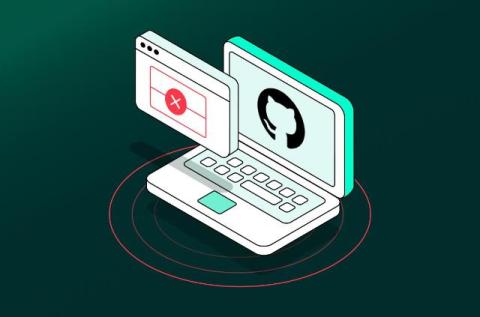
On August 17, 2026 at 13:40 UTC, GitHub first publicly logged that it was investigating elevated errors and latency issues, later reporting broad impact across web and API traffic, Git operations, Actions, Pull Requests, Issues, Pages, Webhooks, and identity-related services. The outage had significant implications for development teams. When GitHub degrades, developer workflows can stop quickly.
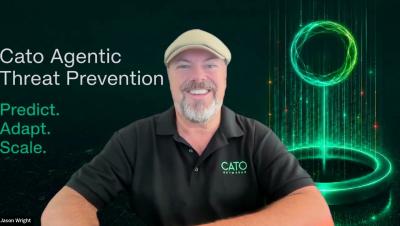
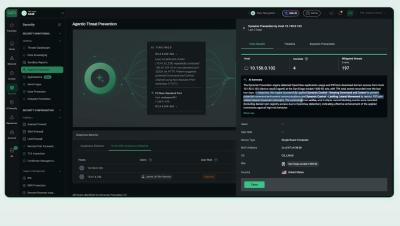
AI-powered attacks are moving faster, adapting in seconds, and overwhelming traditional defenses with machine-speed activity. In this video, Jason Wright explains why security teams need Agentic Threat Defense built on customized predictions, automatic adaptation, and cloud-native scale. Watch how Cato Agentic Threat Prevention helps reduce the risk of AI-powered threats, stop adaptive attacks earlier, and scale prevention to stop agentic attacks.
AI-powered adversaries are accelerating vulnerability discovery and automating attacks. For security teams, the challenge is adaptive attack chains, machine-speed execution, and attack volumes beyond manual workflows. Cato is redefining prevention in the AI era—predicting enterprise-specific attack paths, adapting protections at machine speed, and scaling defense with cloud-native scale. This means enterprises can do more than just react to attacks, they can prevent them.
In a perfect world, every business would design its network from day one with the need for scalability, connectivity from anywhere and zero-trust security in mind. In the real world, of course, few organisations have this luxury. Most have entrenched technology investments in place, and overhauling them to conform with modern network access and security paradigms isn't always feasible.
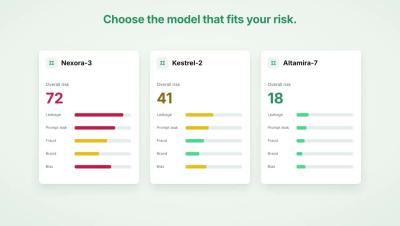
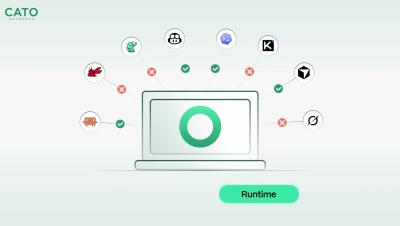
Enterprise AI is spreading fast across employees, applications, and agents. Security teams need a way to enable AI adoption without losing visibility, control, or governance. In this demo, see how Cato helps organizations secure AI across three fronts: · AI employees use, including sanctioned and unsanctioned AI tools· AI applications teams build, including LLM apps connected to enterprise data· Agentic AI, where agents can access tools, data, and workflows.