Security | Threat Detection | Cyberattacks | DevSecOps | Compliance

Java Crypto Catchup

In 2017, we started a blog series talking about how to securely implement a crypto-system in java. How to Get Started Using Java Cryptography Securely touches upon the basics of Java crypto, followed by posts around various crypto primitives Cryptographically Secure Pseudo-Random Number Generator (CSPRNG), Encryption/Decryption, and Message Digests. We also released a Java Crypto Module for easier dockerization of injectable modules exposing Crypto services via an API.
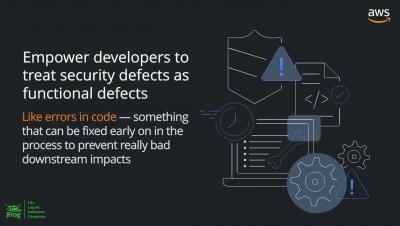
In the Financial Services Industry, 74% of Apps Have Security Flaws

Over the past year, the financial services industry has been challenged with pivoting its operations to a fully digital model, putting the security of its software center stage. Despite the unanticipated pivot, our recent State of Software Security v11 (SOSS) report found that the financial services industry has the smallest proportion of applications with security flaws compared to other sectors, along with the second-lowest prevalence of severe security flaws, and the best security flaw fix rate.

New PCI Regulations Indicate the Need for AppSec Throughout the SDLC

The PCI Security Standards Council (SSC) is a global organization that aims to protect payment transactions and consumer data by developing standards and services for payment software vendors that drive education, awareness, and implementation. Since payment software is constantly changing, the SSC is constantly evolving and adapting its standards to ensure that vulnerabilities and cyberattacks are minimized.

A Software Security Checklist Based on the Most Effective AppSec Programs

Veracode’s Chris Wysopal and Chris Eng joined Enterprise Strategy Group (ESG) Senior Analyst Dave Gruber and award-winning security writer and host of the Smashing Security podcast, Graham Cluley, at Black Hat USA to unveil the findings from a new ESG research report, Modern Application Development Security.

Announcing the 11th Volume of Our State of Software Security Report

Today, we released the 11th volume of our annual State of Software Security (SOSS) report. This report, based on our scan results, always offers an abundance of insights and information about software vulnerabilities – what they are, what’s causing them, and how to address them most effectively. This year is no different. With last year’s SOSS Volume 10, we spent some time looking at how much things had changed in the decade spanning Volume 1 to Volume 10.

How The JFrog Platform Drives DevSecOps At Scale

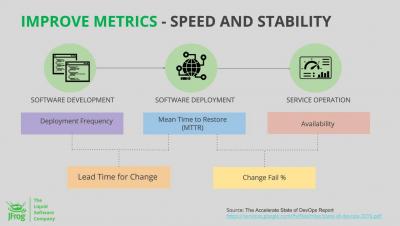
With the JFrog Platform at the core of your DevSecOps tool chain, you will over achieve your deployment frequency and change lead time metrics. By integrating JFrog into your existing CI environment current skills (people) and processes are maximized, while aggregating all the commercial and open source software artifacts, dependencies and documentation for re-use across all of your development projects to drive consistency and quality of the build.

Watch Here: How to Build a Successful AppSec Program

Cyberattackers and threat actors won’t take a break and wait for you to challenge them with your security efforts – you need a proactive application security (AppSec) program to get ahead of threats and remediate flaws quickly. It’s critical that you stand up an AppSec program covering all the bases, from which roles each team member will have to alignment on KPIs and goals, and even a detailed application inventory to stay on top of your code.

Enhancing Observability in DevSecOps

Digital transformation often accelerates innovation at the expense of creating an intelligence gap with massive amounts of unanalyzed data. This is where Continuous Intelligence comes into play. Join Sumo Logic’s Systems Engineer, Suresh Govindachetty, as he demonstrates how Continuous Intelligence helps find and solve information gaps, and how a single platform approach allows organisations to combine devs, operations, and security in ways that ease the burden for all teams across the organisation.
Featured Post

Container Inspection: Walking The Security Tightrope For Cloud DevOps

Containers are at the forefront of software development creating a revolution in cloud computing. Developers are opting for containerization at an impressive rate due to its efficiency, flexibility and portability. However, as the usage of containers increases, so should the security surrounding it. With containers comprising of many valuable components it is of the utmost importance that there are no vulnerabilities exposed when developing applications, and risks are mitigated before containers, and their contents, reach the end-user.