Security | Threat Detection | Cyberattacks | DevSecOps | Compliance

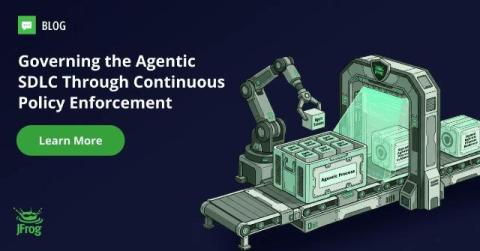
Governing the Agentic SDLC Through Continuous Policy Enforcement

The way software gets built has changed faster than the standards that govern it. AI agents now create pull requests, select dependencies, refactor codebases, interpret test failures, and execute infrastructure changes across the entire Software Development Life Cycle (SDLC). AI agents are autonomous team members, but unlike human engineers, they are ephemeral: their reasoning, decisions, and tool calls vanish the moment the session ends. You can’t hold an ephemeral process accountable.
The Year the Vulnerability Backlog Changed Shape

As we enter the AI era, few among us have found themselves so entrenched in the throes of the shifting landscape as CISOs. With the threat landscape shifting, they are up against increasing rates of vulnerabilities and exploits alongside rapidly scaling demands for ever more secure environments. As CISOs, with our role as the protectors of an organization, we are expected to deliver guidance and security visibility. This is not a vision of the future, it’s today’s reality.

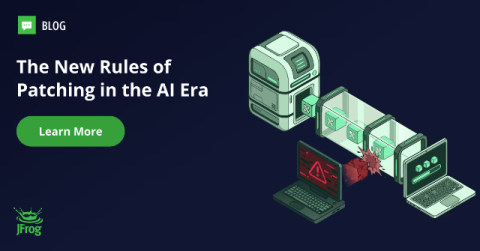
The New Rules of Patching: When a Fix Becomes a Blueprint for Attackers

TL;DR: Frontier AI has collapsed the vulnerability exploit window from weeks to mere hours. Attackers now use advanced AI models to reverse-engineer published fixes and generate working exploits faster than human security teams can deploy updates. In the AI era, publishing a patch creates a blueprint for attackers. Surviving this threat requires vendors to tier sensitive disclosures and customers to treat patch application speed as a critical security metric.

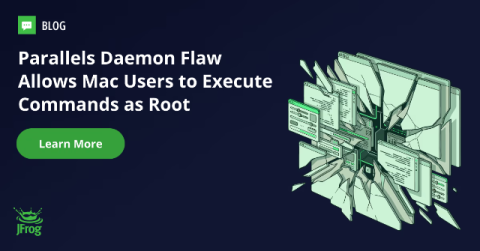
ParaShells: Parallels Desktop Turns Appliance Install Into a Root Shell

Your Mac runs a vulnerable version of Parallels Desktop. A malicious package, compromised CI job, or other unprivileged process is already running on it. No admin access. No Parallels-signed client. One appliance-install request later, attacker-controlled code runs as root. While testing Desktop 26.4.0 (build 57513) on Apple silicon, we found that an unprivileged local user could execute code as root through prl_disp_service.

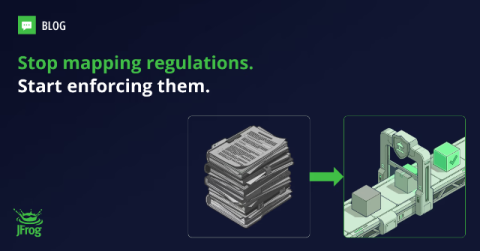
Every New Compliance Framework Restarts the Same Fire Drill. It Doesn't Have To.

Every compliance audit starts the same way: Someone flags a deadline, the team scrambles to pull evidence, map controls, and prove that the policies running in production actually match what the framework requires. They make it through. They exhale. Six months later, a new framework arrives, and the fire drill starts all over again. Most teams walk away from an audit believing they are compliant.

Extending the Single Source of Truth to the Agentic Software Supply Chain

Every developer on your team now runs multiple agents. None of them are waiting for human sign-off to act. That’s exactly the gap we discussed and closed at swampUP 2026. JFrog unveiled new capabilities that extend the JFrog Platform as not only the Single Source of Truth for OSS and heritage software, but now the Agentic Software Supply Chain. Here’s everything we announced, and why it matters.

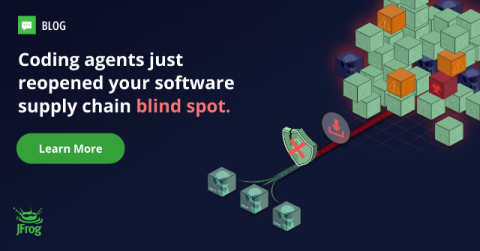
Coding Agents Just Reopened Your Software Supply Chain Blind Spot

Most organizations spent years hardening their software supply chain. The model is familiar: dependencies flow through a controlled repository, policies determine what is allowed, scanning catches what slips through, and every action is logged for auditability. It works because human developers operate within environments that enforce these rules. AI coding agents break that assumption entirely.

Introducing JFrog Platform Federation: One Control Plane for Synchronizing Every Site in Your Software Supply Chain

It’s 2 p.m. on a Tuesday. Your primary region goes down. Your software artifacts have been syncing to your Disaster Recovery site the way they were designed to, but your projects, permissions, and security policies were never part of the package. Instead of flipping the lights back on, your platform team is scrambling to manually reconstruct governance while builds grind to a halt across every other region.

Why Self-Healing Is the Only Way to Secure at Frontier AI Speed

For twenty years, the software security playbook has worked the same way. You find the vulnerability, score it, open a ticket, assign it to a human, wait for the fix, ship the patch, and prove it happened. Every step in that sequence assumes humans can review each fix individually and still keep up. Frontier AI broke that assumption. The exploit window has collapsed from weeks to hours. Attackers reason across your codebase, chain their findings, and ship exploits before a CVE is even published.

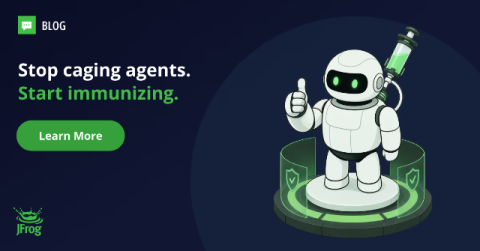
Agent Immunization: A New Model for Building Trusted AI Agents

The riskiest thing an AI agent does all day isn’t writing code. It’s shopping. Every few minutes, it reaches out for a package, an AI asset, or a tool, and pulls it in with no real way to check what’s inside. We think the fix is agent immunization: security that lives inside what an agent consumes, builds, and ships, not a wall built around it.