Security | Threat Detection | Cyberattacks | DevSecOps | Compliance

Secure SDLC for Engineering Teams (+ Checklist)

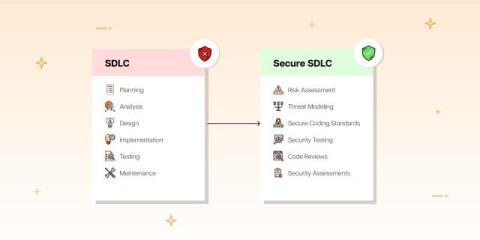
The difference between a secure organization and a breached one depends on how well security is embedded into the Software Development Life Cycle (SDLC). Is security a built-in capability, or was it added after the core architecture was already in place? When it’s the latter, security is scattered and breaches happen.

Secure Your Software Supply Chain: A CISO's Imperative in the SDLC

From customer-facing applications to internal systems, your businesses run on code. As CISOs, you may know that this reliance comes with a growing, complex challenge: securing the Software Development Lifecycle (SDLC) from end to end, especially against the insidious threat of software supply chain attacks.

What is Code Integrity? How to Ensure Code Integrity During SDLC?

Code integrity guarantees that software code remains uncorrupted, authentic, and protected throughout the lifetime of that software. Code integrity also protects software from changes made without proper authorization for malicious attack purposes through the installation of back doors, which is a simple form of malware, initiating unauthorized updates.

What is SDLC? Why Should You Opt for Secure SDLC Instead?

The Software Development Life Cycle (SDLC) provides a systematic framework for developing and maintaining software from conception to modification, producing high-quality software that meets stakeholder and customer requirements within specified time and cost constraints. However, traditional SDLC practices fall short of ensuring thorough application security. Why?

Software supply chain risk assessment: 8 steps to a secure SDLC

Like any chain, a software supply chain contains many links. These links consist of every actor involved in the development & deployment of your code in the Software Development Life Cycle (SDLC). An actor can be the developers, infrastructure components, and even repositories like GitHub. A company might have a very secure supply chain. However, it will only be as strong as its weakest link.

Strategies for a Secure Software Development Lifecycle

Between customer requirements, regulatory or legislative mandates and executive orders, incorporating strong security controls throughout the Software Development Lifecycle (SDLC) has become a central focus for development groups, leadership teams and governing bodies. However, regardless of external motivators, maintaining a secure SDLC also provides the developer tangible benefits regarding the health of the software by ensuring a meticulous focus on architecture and solid software-building practices.


Overcoming the Pitfalls of Inadequate Security Measures in the SDLC

Lax security measures in the software development lifecycle (SDLC) can lead to severe financial repercussions for organizations. The Verizon 2024 Data Breach Investigations Report highlights this growing risk, stating, "Our ways-in analysis witnessed a substantial growth of attacks involving the exploitation of vulnerabilities as the critical path to initiate a breach when compared to previous years.

NIST CSF 2.0 - SDLC for Continuous Improvement of Security

This is an analysis of the impacts and implications on cybersecurity practices, benefits, challenges, and how to deal with the transition to the new NIST CSF 2.0 framework. NIST released an update to its Cyber Security Framework (CSF) in February 2024. Two of the most obvious takeaways from this version are the addition of a new pillar and the expansion of its application beyond critical infrastructure.

Identify Malicious Code: Examples to Defend Your SDLC

A malicious code, commonly known as malware is simply a software created to harm computer systems and applications, make changes to networks, and the victim completely unaware. Unlike accidental security flaws and applications’ configuration failures, which are occurring because of irrelevant mistakes like coding mistakes or other mistakes during development activities, deliberate code is purposely designed in order to cause some harm.

A Timely Shift: Prioritizing Software Security in the 2024 Digital Landscape

The release of the February 2024 White House Technical Report, Back to the Building Blocks: A Path Towards Secure Measurable Software, brings about a timely shift in prioritizing software security. Software is ubiquitous, so it’s becoming increasingly crucial to address the expanding attack surface, navigate complex regulatory environments, and mitigate the risks posed by sophisticated software supply chain attacks.