Security | Threat Detection | Cyberattacks | DevSecOps | Compliance

Top 4 enterprise risk management software solutions

Good enterprise risk management software gives you one place to record and score every risk, keeps that record current by watching your controls instead of waiting for a quarterly review, maps risks to the frameworks you report against, connects to the tools your teams already use, and turns all of it into dashboards your executives and board will read. The hard part is telling which products do those things well and which just store risks in a nicer grid. Below are the features that matter, a scorecard to weigh them, and four tools worth a look.

Why Sales Commission Data Needs the Same Audit Trail as Any Other Financial Record

An unexpected data integrity question has crept into sales operations: can a company actually reconstruct how a commission payout was calculated months after the fact? For teams still running compensation through spreadsheets, the honest answer is usually no, and that blind spot carries real financial and compliance weight.

How AI Phone Calling Is Changing Voice Phishing Defense

Phone scams have been around for decades, but the last few years have brought a sharp shift in how convincing they've become. Voice phishing, often called vishing, used to rely on generic scripts and a scammer's ability to sound believable. Today, the same technology that powers helpful tools like AI phone calling is also being studied and used to fight back against these scams.

How Enterprises Vet Vendors: A Digital Contact Card Case Study

Every large company works with dozens, sometimes hundreds, of outside vendors. From software providers to marketing agencies to hardware suppliers, enterprises depend on a wide network of partners to keep operations running smoothly. But before any vendor gets a seat at the table, they go through a process that can feel like a job interview crossed with a background check. This process is called vendor vetting, and it exists to protect the enterprise from risk, wasted money, and reputational damage.

Twitter Brand Impersonation: How Security Teams Detect Fake Accounts and Phishing on X

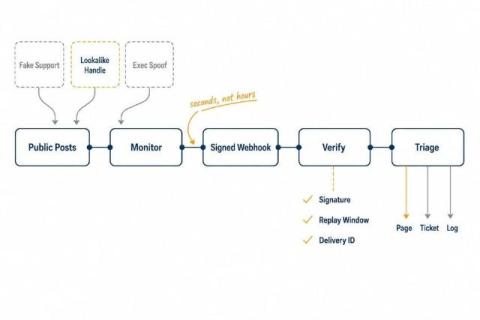
Most brand impersonation starts in public. A lookalike support handle appears, replies to real customers under your official account, and links to a credential-harvesting page. By the time it reaches a takedown vendor's weekly report, the damage window has been open for hours.

I Tested 16 AI Video Generators for Storytelling. Here's My 2026 Ranking

AI video gets much harder the moment you ask it to tell a story. A single beautiful shot can hide a lot of weaknesses. Narrative work exposes them: the character has to remain recognizable, actions need to happen in the right order, camera changes have to make sense, and the next clip should feel as if it belongs to the same world. That is why we are not ranking these tools by the prettiest demo. We care about how useful they are for building scenes, maintaining visual direction, working from references and turning multiple clips into something that feels intentional.

Where Does Session Replay Cross the Line?

Session replay has quietly become default infrastructure. Product teams want to see where users stall, support wants to stop asking "can you send a screenshot," and engineering wants a reproduction path for the bug that only happens on one customer's machine. The business case writes itself. The security review, in most organisations, never really happened. So when the question finally comes up - where does this stop being lawful? - most teams go looking for the answer in the wrong place.

Seagate Storage Built for Scale

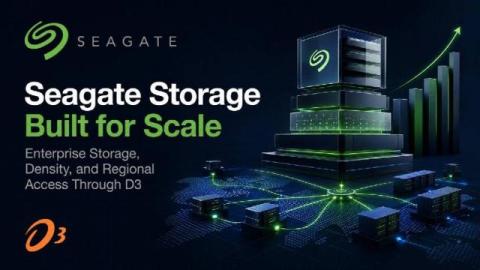
A storage expansion often looks simple on a spreadsheet. The organisation needs more capacity, so the infrastructure team adds drives, another enclosure or another rack and moves on. The difficulty is that each expansion carries more with it than raw terabytes. More hardware can mean more power, more cooling, more cabling, more floor space and more equipment to manage later. That is why "more storage" and "storage that scales well" are not the same thing.

Best Hypervisors in UAE for Enterprise Virtualization

Selecting a hypervisor in the UAE is no longer just a technical infrastructure decision. For many enterprises, it now affects licensing predictability, data management, operational resilience, security, and access to regional support. As organizations continue their digital transformation initiatives, infrastructure teams are also reassessing long-standing virtualization platforms. Changes in VMware licensing and ownership have encouraged many enterprises to explore VMware Alternatives and plan potential VMware Migration strategies.

Ways We Can Keep AI Under Control Before It Becomes a Problem

It's no secret that AI has a significant presence in our daily lives these days. Many people hail it as a great way to save time and help them with basic tasks each day. The problem is, AI has become a part of nearly every single app, product, and device. AI has overreached the limits that the companies selling it promised. It's time for everyone to take action to ensure that AI products and companies are kept under control before they become problematic.

CCTV in Medical Practices and Clinics: A Practical Privacy Guide for Front Desk and Administrative Staff

Security cameras in a medical office are often installed for sensible reasons: preventing theft, documenting disruptive incidents, supporting staff safety, and helping administrators understand what happened when a patient, visitor, or employee reports a concern. The challenge is that a clinic is not a typical retail lobby. A camera can capture a patient checking in, a parent discussing a child's appointment, a person entering a specialty practice, or a workstation where appointment details may be visible.

Top 7 Recommended Digital Risk Protection Platforms in 2026

The best digital risk protection platforms in 2026 are CloudSEK XVigil, ZeroFox, Recorded Future, Flashpoint, Check Point External Risk Management, Group-IB, and ReliaQuest GreyMatter DRP. They separate less on what they detect, since every vendor scrapes the same forums, than on whether they validate a finding, remove it, and connect it to an attack path. No two are strong at the same jobs.

Who Really Controls the AI? Why Infrastructure Sovereignty Matters

The smartest AI model in the room may still be running on someone else's computer. Teams focus on model quality and speed. They compare GPU availability and price. Control of the underlying infrastructure often receives less attention. That gap matters as AI moves into sensitive business systems. Models may process customer records. They may use intellectual property or regulated data. Some connect directly to production operations.

7 AI Detection and Response Platforms for Enterprise Security Teams

The most difficult AI incidents do not necessarily begin with an obviously malicious prompt. An employee can ask an approved agent to summarize customer data. The agent retrieves the correct records, invokes an approved tool, generates the requested output, and then sends it somewhere it should never have gone. Every individual action may look legitimate in isolation. The incident only becomes visible when security can reconstruct the entire sequence and understand what the user intended, what the agent inferred, which systems it touched, and where the execution path diverged.

The Best Speech-to-Text APIs for Media Captioning and Broadcast Workflows

Media captioning and broadcast transcription put different pressure on speech-to-text APIs than general business use cases. Accuracy still matters, but so do low latency for live output, speaker handling, timestamp quality, multilingual support, and the ability to keep working when the audio includes overlapping speakers, background sound, remote contributors, or fast-paced unscripted dialogue.

The Screenshot Looked Better-But One AI Edit Changed the Evidence

A security analyst prepares a phishing report for publication. The original screenshot is accurate but messy: a personal email address is visible, the browser contains unrelated tabs, and a notification blocks part of the page. The analyst uses an image editor to clean it up. The result looks professional. Unfortunately, one character in the suspicious domain has also changed. Tools such as Nano Banana can edit existing images and generate new ones, but security communication introduces a requirement ordinary visual content may not have: some pixels represent facts. Improving the image cannot be allowed to rewrite them.

How AML Software for Accountants Can Improve Client Due Diligence

If your firm is getting ready for Tranche 2, AML software for accountants can make that process far easier. It helps you manage AML compliance, speed up due diligence, and keep client due diligence consistent from the start. Instead of relying on spreadsheets and manual follow-ups, you can use one system to check, record, and review what matters.

How to Build a More Flexible and Connected AV Setup

A boardroom gets used for a client demo on Monday, a town hall on Wednesday, and a hybrid interview on Friday. It was built for one of those. It's now handling all three, badly. That mismatch is what flexible AV design fixes. Not by cramming in more gear, but by rethinking how the room, the network, and the equipment connect to each other in the first place.

How Drone Data Security Is Becoming Non-Negotiable for Critical Infrastructure Inspections

Infrastructure inspections used to mean a crew with clipboards, a bucket truck, and a lot of guesswork. Now it means a drone circling a substation, capturing LiDAR point clouds, thermal signatures, and centimeter-accurate geospatial data in a single flight, an approach Drone as a Service (DaaS) and similar operators have helped bring into the mainstream. That shift solved a lot of old problems. It also created a new one that most operators haven't fully priced in: what happens to all that data once the drone lands.

Digital Resilience Becomes the Core of Business Stability

Companies now judge their strength not by how quickly they grow, but by how effectively they recover when systems fail. A single outage, ransomware attack, or supply chain disruption can freeze operations for hours or days, draining revenue and eroding customer trust. In 2026, digital resilience shifted from an IT matter to a boardroom priority, guiding how leaders plan budgets and build teams. The goal is no longer to prevent every incident, which is impossible, but to keep essential functions running through turbulence. Firms valuing recovery as strategy outperform reactive rivals.