
The Screenshot Looked Better-But One AI Edit Changed the Evidence
A security analyst prepares a phishing report for publication. The original screenshot is accurate but messy: a personal email address is visible, the browser contains unrelated tabs, and a notification blocks part of the page. The analyst uses an image editor to clean it up. The result looks professional. Unfortunately, one character in the suspicious domain has also changed. Tools such as Nano Banana can edit existing images and generate new ones, but security communication introduces a requirement ordinary visual content may not have: some pixels represent facts. Improving the image cannot be allowed to rewrite them.
What Went Wrong With the Screenshot
The failure did not happen because removing the notification was inherently unsafe. That was a reasonable privacy edit.
The problem was that the screenshot was treated as one visual object instead of several types of information.
The email address was sensitive information. The unrelated browser tabs were unnecessary context. The phishing domain was evidence. The page background was mostly presentation.
Those categories require different treatment.
Before an AI-assisted edit, a security publisher should identify which elements are factual and must remain exact, which should be hidden for privacy, and which are visually flexible.
Without that classification, a perfectly reasonable instruction such as “clean up this screenshot” leaves too much open to interpretation.
The Three Moments Where Verification Failed
-
Before editing: nobody classified the details
The analyst saw an unattractive screenshot and started with presentation rather than evidence.
A better first step would have been to list the protected facts: phishing domain, page wording, browser warning, timestamp, and any other incident-specific information.
The personal address and notification could then be marked for removal.
This creates an explicit boundary between information the editor may change and information that should survive pixel-for-pixel in meaning.
-
During editing: factual text was treated as visual content
AI image editing can reconstruct or transform parts of an image. That is useful when changing backgrounds or visual styles. It becomes risky when small technical text must remain exact.
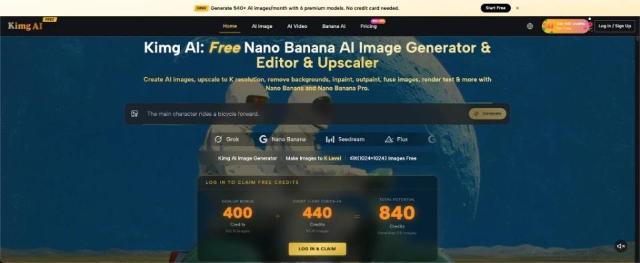
Kimg AI describes Nano Banana AI as supporting image-to-image editing and reference-based transformations. For a security screenshot, instructions therefore need to be constrained: remove the unrelated notification, preserve the phishing page, and do not alter technical text.
Even then, instructions are not verification. The output must still be checked.
-
After editing: nobody compared the result with the source
The edited screenshot looked cleaner, so it passed a visual review. It never received a factual review.
That distinction matters.
Security teams should compare the edited image with the source and inspect domains, filenames, timestamps, commands, error messages, application labels, and other meaningful details.
If the screenshot supports a technical claim, appearance alone cannot determine whether it is ready to publish.
Evidence and Illustration Need Different Rules
A second problem appears when generated visuals and real artifacts are mixed without clear labels.
| Evidence | Illustration | |
| Source | Real incident or system | Generated or constructed example |
| Technical details | Must remain accurate | May be simplified |
| Visual flexibility | Low | Higher |
| Privacy editing | Limited and documented | Built from non-sensitive material |
| Caption | State what was captured | State that it is an example or illustration |
| Use in analysis | Can support factual claims | Explains concepts but does not prove them |
A generated ransomware screen may be useful in an awareness article. It should not be captioned in a way that suggests it came from the incident being discussed.
Likewise, a conceptual attack diagram can simplify a complex sequence, but readers should understand that they are seeing an explanation rather than raw evidence.
A Better Review Protocol for Security Teams
A lightweight protocol can prevent most problems without creating a slow approval process.
Before editing, preserve the source and create a working copy. Mark factual details that cannot change. Remove highly sensitive material locally when the original should not be uploaded to an online tool.
During editing, request only the changes needed for publication. Avoid vague directions such as “make this more professional.”
After editing, run two separate checks.
The first is technical: are domains, commands, labels, relationships, and other facts still correct?
The second is privacy-focused: did any customer name, employee identity, internal hostname, email address, credential, ticket number, or unnecessary operational detail remain visible?
Finally, write the caption. If the team cannot state clearly whether the image is evidence, a sanitized derivative, or an illustration, it should not be published yet.
Where AI Editing Is Actually Useful
Strict verification does not mean security teams should avoid AI-assisted visuals.
There are several reasonable uses. A team may remove irrelevant visual clutter from a screenshot while preserving evidence. An awareness article may need a generic illustration of a phishing scenario when using a real victim screenshot would be inappropriate. A technical explainer may need a consistent visual style across several conceptual images.
Kimg AI also states that Nano Banana supports reference-image use and multiple references. That can help a publisher maintain a recognizable fictional character or visual treatment across an educational series.
The useful distinction is simple: AI has more freedom when the visual is explanatory and less freedom when the visual carries incident-specific facts.
The closer an image is to evidence, the more conservative the editing should become.
The Rule for Sensitive Source Material
There is one boundary an editing checklist cannot fix afterward: information that should never have been uploaded.
If a screenshot contains credentials, private keys, authentication tokens, recovery information, confidential customer data, or highly sensitive internal infrastructure details, do not send the raw file to a general online editor simply because you intend to remove those elements in the final result.
Sanitize the source first or create a safe derivative locally.
The same principle applies to reference images. A useful internal dashboard should not become a style reference merely because you like its layout.
AI tools can help transform safe inputs. They should not become an unnecessary destination for secrets.
Keep Enough Provenance to Answer One Question
Visual provenance does not need to become another heavy security system. It needs to answer one practical question later: “Where did this image come from?”
Keep the original artifact separately when appropriate. Save the edited public version under a different filename. Record a short note describing meaningful modifications.
For generated illustrations, keep enough context to show that the asset was constructed rather than captured from an incident.
This becomes valuable months later when the image is reused in another article, presentation, or training document. Without provenance, a generic illustration can slowly become detached from its original caption and start looking like real evidence.
A simple record protects both technical accuracy and editorial trust.
Conclusion
Security visuals deserve the same skepticism applied to technical claims. An AI-edited screenshot can be clearer and safer to publish, but only when factual details are identified before editing and verified afterward. Evidence, sanitized derivatives, and generated illustrations should also remain clearly distinguishable. Protect sensitive source material before it reaches an online editor and keep basic provenance for important assets. The next time a polished security image looks ready to publish, compare it with the source one more time—the smallest changed detail may be the one that matters most.