Security | Threat Detection | Cyberattacks | DevSecOps | Compliance

How Public VIN Records Become Part of Your Digital Footprint

When people think about online privacy, they usually consider email addresses, phone numbers, social media accounts, or browsing activity. Vehicle information rarely comes to mind. Yet a car can develop its own extensive digital footprint. A Vehicle Identification Number may connect publicly accessible auction listings, photographs, mileage readings, damage descriptions, specifications, and sale information that remain searchable long after the original event.

24 Hours to Paralysis: 87% of Automakers Cannot Survive a Day of Operational Downtime

Two hours of downtime is all it takes to plunge nearly 1 in 5 automakers into an immediate crisis, while 87% cannot sustain an outage beyond 24 hours. With 78.5% of companies running unsegregated IT/OT networks and 5 in 9 of plant managers unprepared for ransomware, a single cyber incident now threatens rapid assembly line paralysis across the supply chain.

Fleet Visibility: The Overlooked Factor Behind Rising Vehicle Costs

For any business running multiple vehicles, the real challenge isn't a single big expense - it's the accumulation of small, unmonitored ones. Fuel, maintenance, driver schedules, and unplanned repairs all generate data, and when that data lives in disconnected systems, warning signs go unnoticed until they become costly problems.

What Every UK Driver Should Know About Vehicle Registration

Navigating the world of vehicle ownership can feel like a complex maze of paperwork and legal obligations. From the moment you buy a car to the day you sell it, there are several key documents and processes you need to understand. Getting these details right is not just about following rules; it's about protecting your investment, ensuring you can drive legally and sell your vehicle without any hitches. This guide will walk you through the essential aspects of vehicle registration and ownership in the UK, providing clear steps and practical advice.

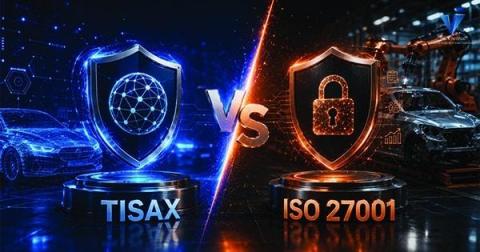
TISAX vs ISO 27001: What German Automotive Suppliers Need to Know

TISAX and ISO 27001 are related but not interchangeable. ISO 27001 is a general-purpose information security certification accepted across any industry; TISAX is the automotive industry’s mandatory, shared assessment framework, built on ISO 27001’s structure but adding prototype protection and data protection requirements that OEMs specifically demand. Most automotive suppliers need TISAX, and an existing ISO 27001 program is the fastest route to get there.

Important Factors to Check When Shopping for a Reliable Automobile

A car can look spotless, drive smoothly for ten minutes, and still become an expensive headache a month later. That is why reliable automobile shopping should never be rushed. You need records, comparisons, inspections, and a clear head before you fall for shiny paint or a low monthly payment.

Using Truck Telematics Data as Legal Evidence in Truck Accident Cases

Commercial truck telematics systems generate continuous operational data across every vehicle in a fleet. This data, which includes GPS position logs, electronic logging device records, engine diagnostic outputs, dashcam footage, and hard-event alerts, was designed for fleet efficiency and regulatory compliance. It has become, with increasing frequency, the most consequential evidence in commercial vehicle crash litigation.

The ghost in the machine: Addressing cybersecurity vulnerabilities and liability in autonomous vehicle failures

Autonomous vehicles are rapidly transforming the roadscape, but their increasing complexity introduces new cybersecurity risks with real-world legal consequences. Autonomous vehicle software vulnerabilities are increasingly affecting how crashes are analyzed and how responsibility is assigned. Vehicle-to-everything (V2X) communication security is also becoming a core concern as cars exchange data with nearby vehicles and infrastructure.

Automotive Pen Testing Is Different in 2026

Automotive pen testing used to be very much an extra service. An OEM or manufacturer might test a vehicle in a very broad way i.e perhaps doing a general scan for known vulnerabilities. Today however, a modern vehicle runs tens of millions of lines of code across dozens of electronic control units, exposes attack surfaces over CAN, Ethernet, Bluetooth, Wi-Fi, cellular and UWB, ships with companion mobile apps and dealer tools, and connects to OEM cloud platforms that handle telematics, OTA updates and V2X services.

CyberPhysical Security: Protecting the Modern EV Charging Perimeter

Electric vehicles have crossed from niche technology into mainstream infrastructure. Charging networks now form a critical layer of both the energy grid and the transportation system, and attackers have noticed. EV charging sits at a three-way intersection of cloud software, operational technology, and automotive systems. Each domain has its own threat model, its own tooling, and its own team assuming someone else owns the risk. That gap is where adversaries operate.