Security | Threat Detection | Cyberattacks | DevSecOps | Compliance

Best practices for audit trails and file tracking in secure data exchanges

Audit trails and file tracking are essential for ensuring accountability and transparency in sensitive data exchanges. Regulatory demands make robust traceability especially crucial as expectations for breach investigation and third-party oversight grow. This article explores how effective monitoring can help organizations meet security challenges and maintain compliance.

SOC 2 Type 2 Audit Requirements for Fintech Companies: The Complete Checklist

For fintech companies that move money, store account data, or connect to banking rails, trust must be documented. It cannot just be promised. A SOC 2 Type 2 report is the primary way financial platforms prove their security controls actually work. Demonstrating real fintech security and compliance unlocks enterprise partnerships, closes larger deals, and satisfies vendor security reviews. Banks and payment networks require these reviews before they integrate with you. Free Consultation.

Why ESG Data Security Is Becoming a Business Priority

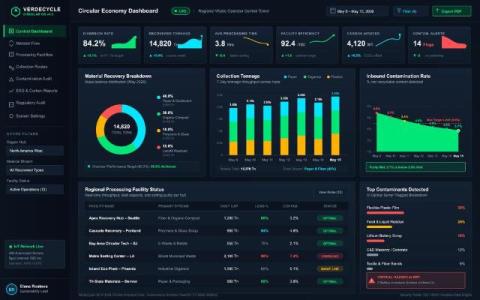
As businesses increasingly focus on their environmental, social, and governance (ESG) performance, the data behind these efforts is becoming as important as financial information. This shift, along with using AI to analyse and report on sustainability metrics, has introduced new cybersecurity risks. Protecting this sensitive data isn't just an option anymore; it's a core part of corporate responsibility and managing risk. With AI involved, the potential for sophisticated data manipulation introduces AI as an emerging risk dimension that security teams need to deal with.

What Are Auditors Looking for During a DORA Assessment

Are you prepared for a DORA assessment — and can you actually prove your organization is operationally resilient? Under the Digital Operational Resilience Act (DORA), having cybersecurity policies on paper isn't enough. Financial entities need to demonstrate how ICT risks are governed, monitored, tested, and managed in practice. In this video, we cover the key areas that assessors and regulators may review.

The hidden cost of reasonable assurance

For decades, compliance programs, audits, and certifications have operated on a foundational concept: reasonable assurance. Auditors review samples, evaluate controls periodically, and issue opinions based on limited visibility into a point in time. While this model served the analog era well, it is now insufficient for the speed, complexity, and interconnectedness of modern digital enterprises. Today’s organizations operate in real time. Threats emerge instantly. Vendors change continuously.

IT Audit: What It Is and How to Prepare for One

Cramming for an exam in school often meant late nights, large quantities of caffeine, and anxiety about potential final grades. Whether studying alone or as part of a group, you probably tried to pull together all your notes and review sheets, so you had the right information at your fingertips during the test. In some cases, these exams could determine whether you passed or failed a course.

How to achieve 3-day compliance audits

At enterprise scale, the audit season never really ends. An enterprise security program carries responsibility for a growing number of compliance frameworks, across all business units and regions, with overlapping cycles. In essence, the team is always preparing for another one. Before an external auditor starts the clock, teams run internal readiness checks, which industry sources estimate take four to eight weeks. Why so long?

Flawless Network Security Audit: 2026 UTMStack Guide

You're probably in one of two situations right now. Either an external auditor is already on the calendar and your team is scrambling to prove controls exist, or you've inherited a security program that looks mature from the slide deck but falls apart when someone asks for evidence. That's where a network security audit usually goes wrong. Teams treat it like a project with a start date and a finish date, when it works better as a validation loop. Its ultimate goal isn't to produce a thick report.

What Auditors and Regulators Are Starting to Ask About AI Agents

The regulatory landscape for agentic AI is moving faster than most compliance programs are tracking. CISOs who wait for final guidance before building their compliance posture will find themselves in catch-up mode at exactly the wrong moment and, in some cases, already behind.