Security | Threat Detection | Cyberattacks | DevSecOps | Compliance

5 CISO lessons for leading security with less

Every CISO knows they need to do more with less. Fewer analysts, tighter budgets, more obligations. Matthew Martin has led security through all of it in two very different worlds: 20 years in financial services, and now in higher education at Western Carolina University. After two decades with enterprise budgets and every tool available, Matt made a deliberate choice to take on higher ed with different constraints and a decentralized structure.

The new HIPAA security rule doesn't reward documentation. It rewards proof.

For twenty years, the HIPAA Security Rule has run on an honor system. “Addressable” specifications let organizations document their way around encryption and MFA. “Periodic” risk analysis meant whenever you got around to it. And when OCR came knocking after a breach, the defense was a binder: policies, attestations, and a risk assessment from eighteen months ago.

The hidden cost of reasonable assurance

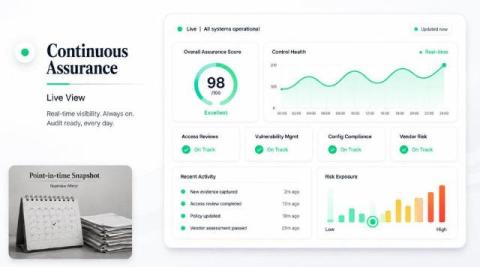
For decades, compliance programs, audits, and certifications have operated on a foundational concept: reasonable assurance. Auditors review samples, evaluate controls periodically, and issue opinions based on limited visibility into a point in time. While this model served the analog era well, it is now insufficient for the speed, complexity, and interconnectedness of modern digital enterprises. Today’s organizations operate in real time. Threats emerge instantly. Vendors change continuously.

Why third-party risk management is broken, according to CISOs and analysts

Independent journalists, analysts, and working CISOs are all reaching the same conclusion about questionnaire-based, point-in-time risk assessment: it’s no longer enough. Risk and vulnerabilities keep growing, compliance obligations keep stacking up, and AI adds an entirely new surface to account for. CISOs need something better: a continuous approach with visibility across their business, that actually reduces risk rather than just documenting it.

How to achieve 3-day compliance audits

At enterprise scale, the audit season never really ends. An enterprise security program carries responsibility for a growing number of compliance frameworks, across all business units and regions, with overlapping cycles. In essence, the team is always preparing for another one. Before an external auditor starts the clock, teams run internal readiness checks, which industry sources estimate take four to eight weeks. Why so long?

Strategic CISOs: A power mindset for your first 90 days

CISOs beginning a new role, or changing sectors, can easily make the same mistake. They walk in with years of experience, see what’s broken, and start fixing. By the end of week three, they’ve opened too many tickets and asked too many people to change too many things. They are quietly draining the trust account they’ll need to draw on for the next few years. It’s an honest mistake. CISOs are often hired because something is broken. There is real pressure to demonstrate value.

What is continuous application assurance? A new model for enterprise risk

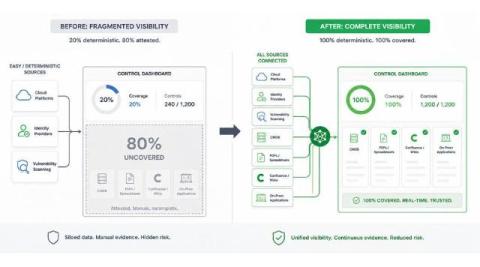
Most CISOs can’t answer a simple question with confidence: are the controls protecting our most critical applications actually working right now? Not last quarter, or the last time someone ran an assessment, but right now. That’s not a failure of effort. Enterprise security teams run on thousands of applications. Each one carries contracts, regulatory obligations, and customer trust.

CISOs need decision-grade risk intelligence, not another workflow

In large enterprises, the hardest security decisions are rarely made in the SOC. They are made in board meetings, budget reviews, audit discussions, customer escalations. The most dire are often represented in the moments when leaders have to decide what matters now, what can wait, and what risk the business is actually taking on. The real GRC problem is no longer how to manage more work. It is how to help the business make better decisions with higher confidence. CISOs do not need another workflow.

Why CISOs are right to be skeptical of AI - and what actually solves it

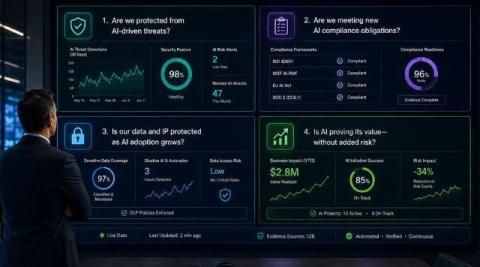
AI demos are easy. AI you’d actually trust near your control environment is not. If you’ve sat through a few of these pitches lately, you’ve probably landed on the same four questions every CISO we talk to is asking. And you’re right to ask them.