Security | Threat Detection | Cyberattacks | DevSecOps | Compliance

Global Bitcoin ASIC Miner Benchmark 2026: Comparing Efficiency and Rack Density Across Leading Models

In 2026, Bitcoin mining hardware is no longer judged by nameplate hashrate alone. As hashprice compresses and network difficulty rises, Bitcoin ASIC efficiency increasingly determines how long a machine can remain above its shutdown price. Yet J/TH is only the starting point. The power efficiency ratio shapes miner-side electricity demand, while mining rack density determines how much usable hashrate a facility can extract from limited power, cooling capacity and rack space.

Bitdeer Extends Its Infrastructure Strategy From Bitcoin Mining to Full-Stack AI Cloud and Model Studio

Every mining cycle returns to the same unromantic question: what does one megawatt earn after the electricity bill? As hashprice narrows the margin on mining hardware, AI workloads offer power-rich operators another source of revenue. Bitdeer's move into full-stack AI Cloud is therefore less a change of identity than a change in how infrastructure gets paid.

Can Journaling Your Crypto Trades Create Better Results?

Crypto trading can be fast-moving, emotional, and difficult to evaluate objectively. When prices shift quickly, traders may focus on wins and forget the decisions that led to losses. A trading journal offers a practical way to slow down and examine those decisions. By recording the reasoning behind each trade, along with market conditions and the eventual outcome, traders can identify patterns that may otherwise go unnoticed.

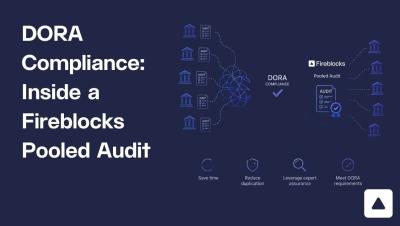
DORA Compliance: Inside a Fireblocks Pooled Audit

An internal auditor from Boerse Stuttgart Digital explains how a Fireblocks-hosted pooled audit helped meet DORA's third-party ICT requirements. Instead of every customer auditing Fireblocks one by one, the pooled audit community joined forces on a single common audit: shared scope, shared evidence, shared result. In this conversation, the pooled audit coordinator walks through how the community set the scope, why a pooled audit covers customer-specific requirements that a standard SOC 2 might miss, and how Fireblocks supported the process with subject matter experts, documentation, and on-site coordination.

SEC Advances Crypto Asset Capital Formation Framework

On August 18, 2026, the SEC proposed Regulation Crypto Assets1, a new regulatory framework intended to create a tailored registration exemption regime for certain crypto asset offerings while maintaining core investor protection requirements. The proposal represents a significant evolution in the SEC's approach to digital assets and could provide the clearest pathway to date for crypto issuers seeking to raise capital in the United States.

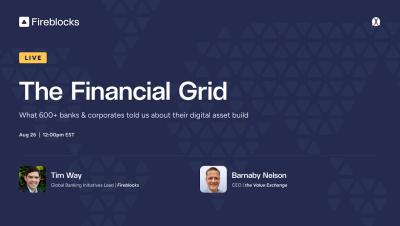
The Financial Grid: What 600+ banks & corporates told us about their digital asset build

89% of banks have committed budget to digital asset infrastructure. Only 16% are in production. The Financial Grid, our January 2026 survey of 600+ C-suite leaders at banks and corporates, maps what sits between funded and live. Barnaby Nelson, CEO of the Value Exchange, whose team ran the research, joins Fireblocks' Tim Way to unpack the gap: the internal constraints, the custody decision at the foundation, and the one call that turns budget into production.

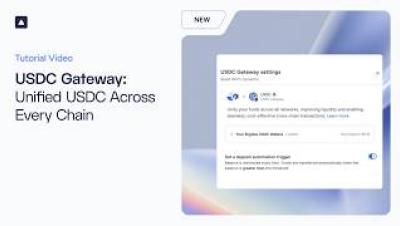
How to Use USDC Gateway with Fireblocks (API + UI)

Learn how to use USDC Gateway in Fireblocks to hold one unified USDC balance across chains and move it without managing per-chain inventory yourself. In this walkthrough, Matt from Fireblocks activates a Gateway wallet, makes a deposit, sets up recurring deposit automation, and withdraws to another chain, showing each step in both the API (Postman) and the Console UI. You'll also see how withdrawals pull gas from your USDC balance, so you don't need to hold native gas on the destination chain.

Full Webinar: Accept Stablecoins in Your Payment Stack | Fireblocks Flow

Fireblocks Flow lets businesses accept any crypto asset and settle in the stablecoin they choose, through a single SDK. Watch a live demo of checkout, deposit, and withdrawal flows. Accepting stablecoins looks simple and is anything but. Users show up holding one asset on one chain, merchants want to settle in another, and payment sources are scattered across wallets, exchanges, and off-ramps. Most teams end up stitching vendors together and still ship a clunky experience.

Why Cybersecurity Is Becoming Critical for Crypto Market Infrastructure

Digital asset markets have developed quickly, but their long-term growth depends on more than trading volume or market interest. As crypto becomes more connected to institutional finance, payment systems, fintech platforms, and treasury operations, the infrastructure behind these markets is coming under greater scrutiny. Speed and liquidity matter, but so do security, resilience, access control, and operational transparency.