Security | Threat Detection | Cyberattacks | DevSecOps | Compliance

150 hours saved in one month: Inside Jamf's IT Ops automation strategy

What would your IT team do with 150 extra hours in just one month? That’s exactly what Jamf achieved - the equivalent of nearly one additional full-time employee - while dramatically accelerating workflow delivery and reducing manual operational overhead. In this session, hear directly from the Jamf team on how they replaced manual, ticket-based IT work with intelligent workflows - from responsive phishing reporting and employee alert notifications to on-demand FileVault key recovery.

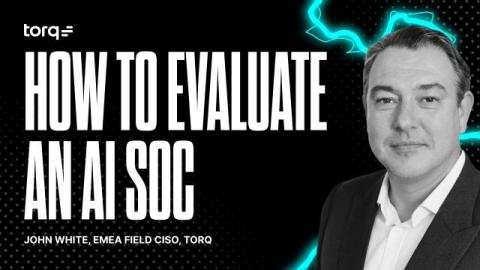
20 Questions Every Security Leader Should Ask Before Buying an AI SOC

Most “AI SOC” demos out there can look great. The polished dashboard, the confident verdict, the slide that says “autonomous.” A demo is built to show the platform at its best, on clean data, in a controlled environment, answering a question the vendor already knew was coming. The differences only show up after you’ve signed, when the platform meets your real stack, alert volume, and compliance requirements.

Enrich CrowdStrike detections with VirusTotal and send to TheHive

Automatically enrich CrowdStrike endpoint detections with VirusTotal and create fully enriched alerts in TheHive. When a new endpoint detection fires in CrowdStrike, this Tines story instantly creates a structured alert in TheHive and kicks off three parallel enrichment paths; checking every IP, file hash, and URL against VirusTotal. By the time your analyst opens the alert, the context is already there.

Security automation tools: What they are and how they work

Security automation tools use software-driven workflows to detect, investigate, and remediate cyberthreats with minimal manual intervention. By integrating across your security stack, these tools reduce alert fatigue, accelerate automated incident response, and maintain continuous compliance.

AI-generated code is running wild inside the enterprise. Now what?

Restrict access to AI tools and you curb innovation. Open it up and security risks multiply. And then there's a third problem: approved tools behaving in unapproved ways. Security and IT leaders are navigating a new and fast-moving problem - employees using AI to build workflows, automations, and agents faster than anyone can track or govern. The question isn't whether it's happening. It's what to do about it.

The Four Biggest Gaps in Today's AI SOC Vendor Market

A year ago, a handful of vendors called themselves an “AI SOC.” Today, more than 100 do. The label now means whatever the person selling it needs it to mean, leaving security teams to buy very different products under the same two words. So let’s sort the market. Beneath the “agentic” branding, most AI SOC vendors fall into one of four categories, and none of them clears the bar. Each can look capable in a demo.

Monitor Netskope ADEM scores and remediate with an AI chatbot

Automatically detect when user connectivity degrades in Netskope ADEM and respond instantly with an AI-powered Slack chatbot. In this five-minute flow, we walk through how to monitor Netskope ADEM experience scores for key users and trigger proactive outreach via Slack when performance drops. You'll see how Tines pulls scores on a schedule, creates a case when a threshold is breached, uses an LLM to craft a personalised Slack message, and deploys a Virtual Assistant to help the user troubleshoot in real time.

Automation in Security: Fast Track to Compliance

Manual security operations don't just slow teams down. They make breaches more expensive. Organizations that implement advanced security automation cut breach response time by over 100 days and save an average of $3.05 million per incident, according to JumpCloud's 2024 analysis. That number reframes the conversation. Automation in security isn't a convenience feature for mature SOCs. It's an operating model.

ITIL v5: Exploring New Opportunities for IT Professionals

ITIL v5 connects IT service management to real digital product needs and faster delivery. If your team wants clearer direction, improved customer experience, and measurable results, this framework is a practical choice. ITIL v5 unifies strategy, operations, and improvement, offering new opportunities for professionals seeking modern skills and roles in service management.