Security | Threat Detection | Cyberattacks | DevSecOps | Compliance

Torq Named a Leading Innovator in SACR 2026 AI SOC Market Report

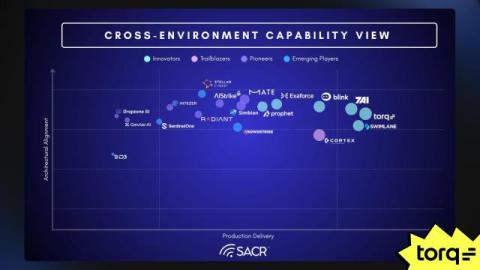
Software Analyst Cyber Research (SACR) just published its 2026 AI SOC Market Report, offering an independent assessment of vendors competing in what has rapidly become the most consequential category in enterprise security. Torq features prominently, and the report’s framing is worth unpacking because it illuminates what makes the AI SOC category hard to evaluate and why Torq’s approach is consequential.

Torq SOC Brain: The AI SOC That Learns, Not Just Remembers

Back in June, I wrote a blog making the case that agentic triage alone isn’t an AI SOC. The way I see it, that’s like saying triage is the only responsibility of a SOC team. But as we know, the SOC’s responsibilities extend far beyond that, and these triage-only solutions don’t investigate threats, contain them, or close cases. That work is still left to the SOC team; the bottleneck is just shifting.

The 2026 AI SOC Roadmap: Where SOC Teams Are Headed and How to Get There

Every conversation our team has with security leaders begins the same way. Nobody is backing off on AI in the SOC. The direction of the lean is what’s shifting. Torq’s 2026 AI SOC Leadership Report surveyed more than 450 CISOs and SOC leaders. The data confirms what those conversations were already telling me. We’ve left the adoption phase. The market is now in the architecture phase and the implications for how teams plan, buy, and build are significant.

20 Questions Every Security Leader Should Ask Before Buying an AI SOC

Most “AI SOC” demos out there can look great. The polished dashboard, the confident verdict, the slide that says “autonomous.” A demo is built to show the platform at its best, on clean data, in a controlled environment, answering a question the vendor already knew was coming. The differences only show up after you’ve signed, when the platform meets your real stack, alert volume, and compliance requirements.

The Four Biggest Gaps in Today's AI SOC Vendor Market

A year ago, a handful of vendors called themselves an “AI SOC.” Today, more than 100 do. The label now means whatever the person selling it needs it to mean, leaving security teams to buy very different products under the same two words. So let’s sort the market. Beneath the “agentic” branding, most AI SOC vendors fall into one of four categories, and none of them clears the bar. Each can look capable in a demo.

Grounding the AI SOC: The Context Graph Problem

See how Torq harnesses AI in your SOC to detect, prioritize, and respond to threats faster. Request a Demo David Melamed is Head of Emerging Technologies at Torq. He joined through Torq’s acquisition of Jit, which he co-founded and led as CTO since 2020, building agentic security on a production Context Graph. A cloud security veteran with 20+ years of experience, David previously held senior technical roles at Cisco (via the CloudLock acquisition) and MyHeritage.

Gartner Names Torq as Company to Beat in AI SOC Agents for Threat Investigation in May 2026

See how Torq harnesses AI in your SOC to detect, prioritize, and respond to threats faster. Request a Demo The AI SOC category just got its definitive race assessment, and Torq is at the front. In the May 2026 Gartner report AI Vendor Race: Torq Is the Company to Beat in AI SOC Agents for Threat Investigation (Document ID: G00855833), Gartner names Torq the Company to Beat.