Security | Threat Detection | Cyberattacks | DevSecOps | Compliance

The 2026 AI SOC Leadership Report: What 450 Security Leaders Told Us

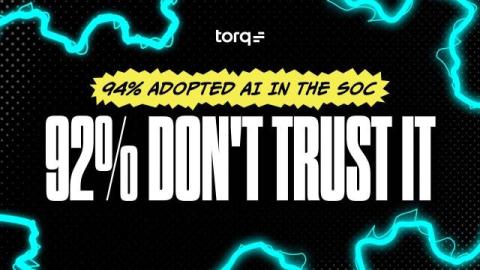
See how Torq harnesses AI in your SOC to detect, prioritize, and respond to threats faster. Request a Demo When we started building Torq four years ago, we had a thesis: the SOC was broken, and automation — real automation, not another tool bolted onto the stack — was the way to fix it. AI has since changed the game entirely. But has it streamlined the SOC, or introduced new complexity? We wanted to find out.

From Intent to Outcome: How Agentic Coding is Transforming the SOC

See how Torq harnesses AI in your SOC to detect, prioritize, and respond to threats faster. Request a Demo Security teams are being asked to move faster and handle more complexity, while the threats they defend against are increasingly AI-assisted. When I wrote about VoidLink in January, my point was simple: you cannot fight machine-speed threats with human-speed defense. Attackers are using AI to code, adapt, and scale attacks while humans are still grinding away doing the heavy lifting in the SOC.

SOAR is Dead. Here's What Replaces It in 2026.

When SOAR emerged around 2015, it was trying to solve a real problem: SOC analysts were drowning in manual, repetitive tasks across disconnected tools. SOAR promised to connect those tools, automate the workflows between them, and give analysts their time back. For a while, it mostly delivered. That era is long dead.

SOAR vs. AI SOC: The Category That Left SOAR Behind

If you’ve been in security operations for more than a few years, you’ve lived through the automation hype cycle at least twice. First, it was SIEM that was going to solve everything. Then SOAR was supposed to fix what SIEM couldn’t. Now, AI SOC platforms are delivering what SOAR always promised but never actually could.