Security | Threat Detection | Cyberattacks | DevSecOps | Compliance

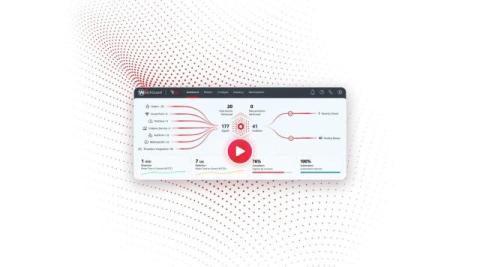
From Detection to Decisions: What's New in ThreatSync and Rai Analyst

Security teams are managing more endpoints, identities, networks, and security events than ever. Each control adds valuable protection, but the work of connecting its signals, explaining incidents, and deciding what needs attention often falls to analysts. That is why the next evolution of WatchGuard ThreatSync and Rai Analyst matters. ThreatSync provides the foundation for cross-product detection, correlation, incident management, and coordinated response.
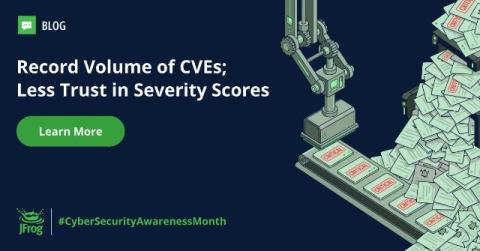
The Impact of AI on CVEs: Industry Challenges

Integrating artificial intelligence into cybersecurity has fundamentally changed vulnerability research – and not necessarily for the better. For decades, discovering and verifying Common Vulnerabilities and Exposures (CVEs) required deep technical expertise, creating a disciplined process that kept disclosure volume relatively manageable. Today, Generative AI has obliterated that barrier to entry.

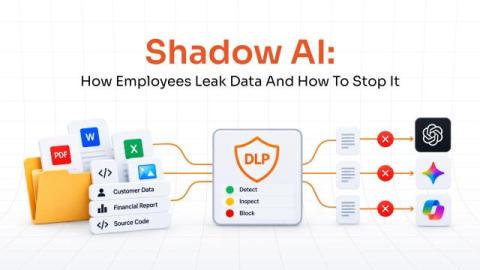
Shadow AI: How Employees Leak Company Data Into AI Tools and How to Stop It

Shadow AI refers to the use of artificial intelligence tools, applications, models, or AI-powered features without the organization's required IT approval, security review, or governance. It is often associated with employees using personal accounts for tools such as ChatGPT or Gemini. However, Shadow AI extends well beyond public AI chatbots.

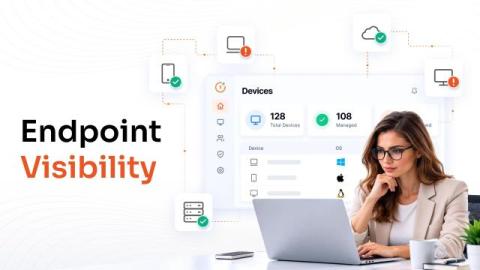
Endpoint Visibility: How to Find and Secure the Devices Your IT Team Can't See

Endpoint visibility is the ability to identify connected devices, understand their activity and health, and assess their security posture. Without it, IT teams struggle to determine which endpoints access business resources, identify security weaknesses, and investigate operational problems. Remote employees, personal phones, contractors, cloud-connected systems, and specialized equipment expand the endpoint landscape.

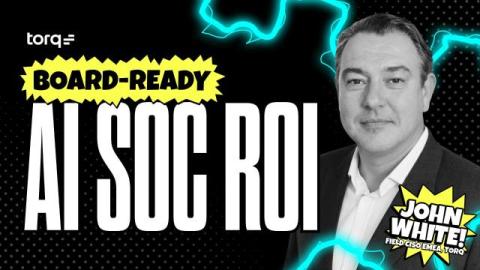
How to Measure AI SOC ROI: Beyond Hours Saved

John White is the Field CISO for EMEA at Torq. A respected security executive with more than 20 years of leadership experience, John previously served as CISO at Virgin Atlantic, where he led a multi-year transformation deploying the Torq AI SOC Platform to modernize cyber operations. Prior to Virgin Atlantic, he built and transformed security functions for global organizations, including ASOS, Liberty Global, AEG Europe, and KPMG.

Cato AI Endpoint secures browser AI, desktop AI and coding agents on every endpoint

AI used to live in a browser tab. Today it also runs inside the apps employees use every day, like Copilot in Word, in dedicated apps like ChatGPT and in coding agents such as Claude Code, Codex and Cursor. Coding agents work differently from chat apps. A chat app answers a question and waits. A coding agent is given tools and takes actions on its own, with the developer’s access. So every endpoint is becoming an agentic endpoint.

Point-in-time security is ending: what IDC, 451 Research, and our experts said

TrustCloud showed up across the security and analyst landscape in recent months. CEO Sravish Sridhar published three columns in SecurityWeek and SC Media on why point-in-time assurance no longer holds up, and both IDC and 451 Research covered TrustCloud’s continuous, AI-native approach. The pieces come at it from different angles, but they land on a common point: boards and buyers increasingly want proof a control is working now, not a snapshot from last quarter.

Keep Cyber Threats Out of Play: Five Cybersecurity Tips for Golf Facilities

Originally published by the PGA of America. Operating a golf facility means keeping track of a lot more than what’s happening on the course. Tee times, lesson schedules, payroll and vendor payments all depend on technology working as it should. Keeping those systems secure is easy to put off when everything is running smoothly, but it’s worth making time before a problem interrupts the day.

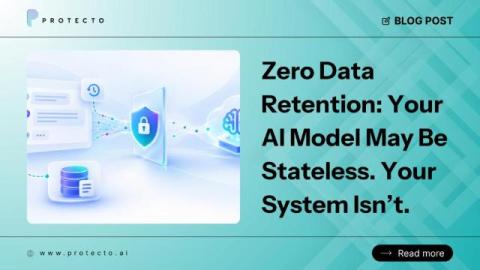
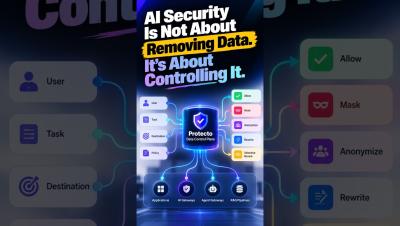
Allow, Mask, Anonymize, Rewrite: Control AI Data, Don't Remove It #ai #shorts

The goal of AI data security isn't to remove data. It's to control it. For every request, Protecto decides in real time whether data is allowed, masked, anonymized, rewritten, or selectively revealed. Those decisions change with the user, the task, the destination, and the policy.