Security | Threat Detection | Cyberattacks | DevSecOps | Compliance

How long does it take to replace every certificate after a CA distrust?

Last week we moved every certificate in one of our products to a new CA in 10 minutes. It was six certificates and 18 deployments. I said issuance was the part that slows down, because most CAs limit how fast you can order, and then I waved it off. A reader did the math for me. Some organizations run 30,000 certificates, they claimed, and that’s common at MSPs, telcos, and government agencies. Google Trust Services takes 100 orders an hour by default.
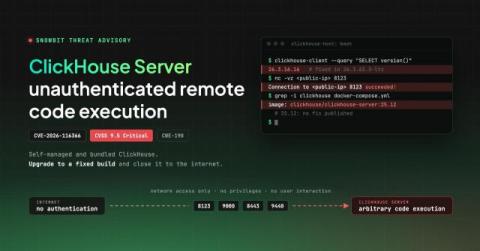
Threat Advisory - ClickHouse CVE-2026-116366: Unauthenticated Remote Code Execution

On 30 October 2026, ClickHouse disclosed CVE-2026-116366, a critical vulnerability in ClickHouse Server (CVSS v4.0 9.5). Under certain conditions, an unauthenticated attacker with network access to the server can execute arbitrary code. Third-party vulnerability trackers classify it as an integer overflow (CWE-190); ClickHouse has not confirmed this.

When Geopolitics Hits Your Balance Sheet: What Binance's $6.3B Hack Means for CTOs

Binance never chose to be on the front line of a geopolitical conflict, yet if blockchain-intelligence firms are right, that is where it ended up, and its balance sheet absorbed the first loss. Binance’s initial investigation indicates that a compromised DevOps engineer’s laptop may have given an attacker access to a service container and the ability to submit unauthorised withdrawals.

Fake profile pictures: how to tell a stolen photo from an AI face

Most fake profile pictures are either a real person's photo taken without permission or a face that a generator made up. The two leave different evidence behind, so the test that exposes one will miss the other. Work out which one you might be looking at before you trust the account.

How Arrests Without a Conviction Affect Employment and Background Checks

An arrest that never leads to a conviction can still surface on a background check. Whether you can see that record-or use it-rests on strict reporting rules and anti-bias limits. On October 29, 2026, the EEOC scrapped its decade-old guidance, leaving many online explainers out of date. This guide answers four rapid-fire questions-Does the record exist? Can a vendor report it? May you weigh it? What guardrails apply?-so you keep talent moving and systems secure while staying inside the new legal lines.

What is Identity Manager? | One Identity | IGA

What is One Identity Manager? It’s an identity governance and administration (IGA) solution that automates user provisioning, access requests, access certification, and role management across on-premises, hybrid, and cloud environments. Watch this overview to see how Identity Manager helps you enforce least privilege, close compliance gaps, and manage the full identity lifecycle from joiner to mover to leaver. Learn more about identity governance and administration at oneidentity.com.#IGA.

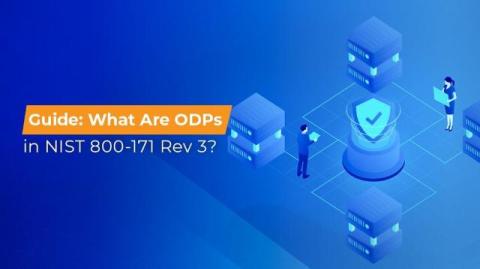
Guide: What Are ODPs in NIST 800-171 Rev 3?

The shift from NIST SP 800-171 revision 2 to revision 3 includes a lot of changes, which we've already covered from a bird's-eye view over in this post. One of the biggest changes in Rev 3 is the introduction of ODPs, or Organization-Defined Parameters. These are very important for compliance with CMMC moving forward, but they're still something of a mystery to some security professionals, and are worth explaining. What are they, how do you define them, and how do you use them for compliance?

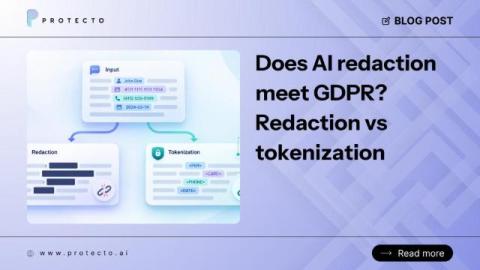
Does AI redaction meet GDPR? Redaction vs tokenization

Short answer: GDPR names pseudonymization as a recommended safeguard, in Article 25 and Article 32, and Recital 28 says pseudonymization reduces risk for data subjects. Redaction deletes the value, so a redacted prompt breaks the model’s ability to reason. Tokenization replaces the value with a consistent token, so the model keeps working. Tokenization is a safeguard, not an exemption. A familiar pattern: a team writes a regex, strips emails from the prompts, and calls it done.

"Are We Exposed?" What CISOs Need to Know About Their Software Risk

Recent events have once again highlighted the need to quickly answer the question, “Are we exposed?” We now face threats to businesses and governments from vulnerabilities and compromises in three fundamental components used in software development: Curl, PHP, and LiteLLM.