Security | Threat Detection | Cyberattacks | DevSecOps | Compliance

Your AI Agent Was Manipulated. Can You Trace What Happened Next?

AI agents are moving into production fast. They read email, call tools, query databases, and trigger business processes, often chaining those steps in ways no single team designed. Building them has never been easier. Securing what happens after an agent is manipulated is the hard part. That is the gap Salt and AWS will tackle together on Tuesday, November 10, at 9:00 am PT (12:00 pm ET) in a live session: AWS + Salt: Build Fast, Stay Secure with Agentic AI. Save your seat →

PHP to Prevention: The Importance of Cyber Security Fundamentals

If you’ve followed the news recently, you’ve probably seen reports about newly discovered PHP vulnerabilities. The warning prompted action from governments, website operators and technology providers around the world, with some organisations temporarily taking websites offline while updates were applied. For many business leaders, the immediate reaction was probably: What is PHP, and does this affect me?

Data protection impact assessments (DPIA): Guide and best practices

Accelerating security solutions for small businesses‍ Tagore offers strategic services to small businesses. A partnership that can scale‍ Tagore prioritized finding a managed compliance partner with an established product, dedicated support team, and rapid release rate. Standing out from competitors‍ Tagore's partnership with Vanta enhances its strategic focus and deepens client value, creating differentiation in a competitive market.

How to Stop a Malware Campaign That Can Shift Its Infrastructure

MSPs are used to blocking malicious domains, detecting suspicious IP addresses, and continuously updating their defenses against emerging threats. However, what happens when attackers can shift their infrastructure in near real-time without interrupting the campaign? The ErrTraffic campaign, analyzed by the WatchGuard Threat Lab, provides an example of how malware distribution techniques are evolving.

4 real? Tracking exploitation and patching of eMudhra's weak keys

On October 19, 2026, we learned about eMudhra’s eight shockingly weak keys: where eMudhra was trusted to pick a 115-digit number for their virtual combination lock protecting the Internet, they picked the number 4. Not even four digits, just the number 4. The other seven keys were similarly weak: 56, 66, 115, 155, 156, 230 and 237. The next day, we wrote a blog post on the immediate action we took to mitigate this leak, and what customers needed to do on their end to stay secure.

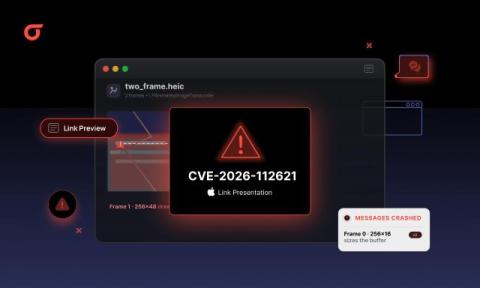
CVE-2026-112621: How a Link Preview Could Crash Apple Messages

In this blog, I'll explain how I found the LinkPresentation out-of-bounds write, later assigned CVE-2026-112621 and fixed in iOS 27.2 and macOS Golden Gate 27.2. LinkPresentation is the framework Apple uses to build link previews, and on an unpatched Mac, one crafted preview in Messages was enough to crash it. That fix shipped on October 26, 2026, and Apple credited me, Vinay Kumar Rasala (Xplo8E) of Appknox, alongside an anonymous researcher.

AI agent security in Kubernetes: Why prompt injection isn't the right term

This post is based on Mackenzie's conversation with Abdel Sghiouar on The Secure Disclosure podcast. Listen to the full episode or watch below. If you give an agent the run of your cluster, it can trace a problem through every layer of the stack faster than any on-call engineer. But that same reach makes the agent worth hijacking.

Cybersecurity Awareness Month: Securing the Next 250 with Cyber Threat Hunting

October has made a strong case for this year’s Cybersecurity Awareness Month (opens in a new tab) theme, “Securing the Next 250,” chosen in honor of the U.S.’s 250th anniversary. The initiative, started by the Cybersecurity and Infrastructure Security Agency (CISA) and the National Cybersecurity Alliance (NCA), occurs annually in October to raise awareness about online safety and empower individuals and businesses to protect themselves from cybercrime.

eMudhra CA Key Exposure: How miniOrange PAM Enables Control

The eMudhra CA key exposure involved eight intermediate certificates generated with weak private keys. Although the affected intermediates had not issued publicly trusted end-entity certificates, changes to certificate trust stores created a need to identify dependencies and plan certificate replacement across affected environments.

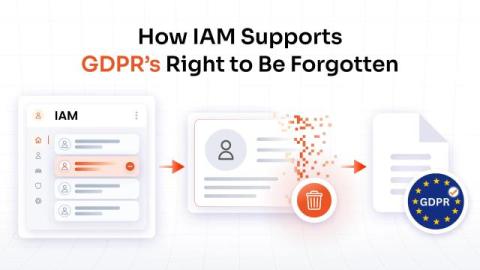
How IAM Supports GDPR's Right to Be Forgotten

Deleting a user account takes seconds. Deleting everything your organization knows about that user is a much bigger job. When a customer invokes their right to be forgotten, their profile in your identity provider is only the starting point, because their details also live in your CRM, support desk, billing tool, analytics platform, and a few SaaS apps your marketing team connected last year. Every one of those copies has to be found and dealt with before the legal deadline.