Security | Threat Detection | Cyberattacks | DevSecOps | Compliance

AI SecOps Worskhop Series: Detection Engineering with LimaCharlie and Claude Code

This hands-on workshop is designed for security professionals interested in learning how to integrate advanced AI capabilities into their detection and response workflows. Attendees will receive practical, step-by-step instruction on leveraging the power of Claude Code, a sophisticated AI agent, to significantly enhance security operations within the LimaCharlie platform for detection engineering use cases.

Detection Engineering with LimaCharlie and Claude Code

Detection engineering is fundamentally a translation problem: rules need to be converted between formats, IOCs need to be converted into detection logic, and noisy alerts need to be converted into precise suppressions. That translation work is what consumes analyst time, and it's what Claude Code handles well.

How multi-agent systems work in LimaCharlie

This video walks through how single agents and multi-agent systems are built and run inside the LimaCharlie platform. Agents in LimaCharlie are defined declaratively. Each agent specifies the model it runs, its instructions, the tools it can access, what events trigger it, and the guardrails it operates under. This approach makes agents version controllable, reviewable, and portable across tenants.

Are we blindly giving AI access to everything?

Users are connecting AI tools without understanding the security implications. In this week's Intel Chat, Chris Luft and Matt Bromiley discuss a security breach at Vercel that originated from a compromised third-party AI tool used by one of its employees. The attacker gained control of the employee's Google Workspace account, which provided access to Vercel's internal environment.

Crypto theft, Vercel breach, Mastodon attack, North Korean IT in US & cyber negotiator guilty [316]

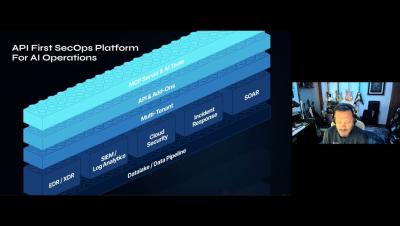
In this episode of The Cybersecurity Defenders Podcast, we discuss some intel being shared in the LimaCharlie community. Support our show by sharing your favorite episodes with a friend, subscribe, give us a rating or leave a comment on your podcast platform. This podcast is brought to you by LimaCharlie, maker of the SecOps Cloud Platform, infrastructure for SecOps where everything is built API first. Scale with confidence as your business grows.

Agentic SecOps: Build a security AI agent that automatically investigates detections

A credential access event fired. An AI agent investigated it, correlated it against running processes, assessed the risk, and closed the ticket. No analyst touched it. The entire loop ran in minutes. This is what security operations look like when AI can actually operate in the environment rather than advise from outside it. Security operations have always required a special kind of person.

Unexpected hurdles creating U.S. cyber policies

The early days of U.S. cyber policy were defined by agencies that had no common language and no playbook to follow. J. Michael Daniel, President and CEO of Cyber Threat Alliance and former White House cybersecurity coordinator, talks through what it actually took to coordinate cyber policy across the federal government, build public-private partnerships that work, and stand up an intelligence sharing organization that serves the entire cybersecurity industry.

How to scan your code bases using AI for vulnerabilities with Jeff McJunkin

Join us for this week's Defender Fridays as Jeff McJunkin, Founder of Rogue Valley Information Security, walks through how he built an AI-powered pipeline to scan large codebases for real, exploitable vulnerabilities, using the Linux kernel as his proving ground. At Defender Fridays, we delve into the dynamic world of information security, exploring its defensive side with seasoned professionals from across the industry. Our aim is simple yet ambitious: to foster a collaborative space where ideas flow freely, experiences are shared, and knowledge expands.

Fingerprinting AI Attacks: Detection Every SOC Needs

Revisiting a conversation between LimaCharlie co-founder Christopher Luft and Chris Cochran, Field CISO & Vice President of AI Security at SANS Institute, on The Cybersecurity Defenders Podcast. For most of cybersecurity’s history, defenders could operate under a safe assumption: somewhere on the other end of an attack, a human was making decisions. Scripts might automate parts of the kill chain, tools might accelerate execution, but a person was in the loop.