

|
By Tamara Bailey
Today’s businesses spend more money on SaaS tools than on laptops. According to Gartner, the average organization now uses over 125 different SaaS applications. With the multitude of cloud apps businesses use on a daily basis, securing that expanding environment requires visibility and control across users, applications, data, and infrastructure.
|
By Adam White
You already know the feeling. An alert fires, and you’re the one digging through logs to figure out if it matters. A query takes three tries to get right. A tool demo looked great, but you still cannot picture it running against your own environment. Before dedicating too much of your over-committed schedule to a proof of concept, you want to know one thing: does this actually work the way they say it does?
|
By Margaret Selid
More security and operations work now happens inside an AI client instead of a dedicated console. That shift creates a gap for any platform that isn’t part of the conversation. Every time an analyst needs to triage an insight or check a log, they have to leave the AI client and go open a different tool. Sumo Logic closes that gap with a Model Context Protocol (MCP) server.
|
By Oren Shevach
MFA fatigue campaigns work on a simple bet: eventually, someone taps “approve” just to make the notifications stop. It paid off. The attacker was in. The first move was quiet — deactivate SMS authentication, a small settings change easy to miss on a busy queue, and exactly the kind of thing that buys room to work without tripping an alarm. Then came the real work: AWS credentials pulled from one system, SSH keys from another, and a slow and methodical pull of internal source code.
|
By Tamara Bailey
Commercial airlines run some of the world’s most complex technology environments. Every day, they balance decades-old aircraft systems with modern cloud platforms, connected devices, global payment networks, and strict regulatory requirements, all while ensuring flights depart safely and on time. For security teams, that means protecting an enormous attack surface without disrupting operations.

|
By Margaret Selid
You’re collecting more telemetry than ever, but chances are it hasn’t made your job easier. Fragmented data, disconnected tools, and manual investigations mean more noise, slower response times, and higher operational costs. The promise of AI is that it will solve it, but in most cases, you just end up trading noise for expensive hallucinations. Point an LLM at raw, unorganized log storage, and you get an assistant that burns through credits to produce generic, unreliable answers.
|
By David Girvin
Phishing used to be the easy alert. Bad grammar. A link to “Amazon.com.” A sender address off by one character. Analysts joked about it. You almost felt bad for the attacker. That era is over. AI killed it.
|
By Janet Alexander
So, you want to be a cybersecurity analyst. With the rise in high-profile data breaches, privacy concerns and rapid technological advancements, there’s a greater demand for cybersecurity analysts now. And the demand for cybersecurity analysts is only expected to grow. But before you get too far into pursuing this job, let’s look into the basics of this profession. Below, we answer the most frequently asked questions about becoming a cybersecurity analyst.
|
By Michelle Beastall
For nearly a decade, the security industry has used machine learning to solve detection. By feeding it enough logs and determining abnormal behaviors, it found the threats that rules-based systems miss. This delivered sharper anomaly detection, fewer false positives, and UEBA is now essential. In fact, threat detection and analytics account for close to 44% of total SIEM spend, the single largest use case by far. Using machine learning for detection was only the start.
|
By Tamara Bailey
The banking industry stands at a critical intersection of technology, security, and customer experience. As financial institutions navigate massive data volumes and increasingly sophisticated threats, they’re also trying to survive the digital transformation that’s made customer expectations higher than ever and trust more fragile than before.
|
By Sumo Logic, Inc.
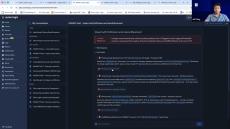
Join us as Jeff and Adam review how to use Mobot, SOC Analyst Agent, and MCP Server for your security operations with Sumo Logic. Sumo Logic turns log data into fast, actionable signals for security and operations teams.

|
By Sumo Logic, Inc.
On this episode of Masters of Data, we dig into what we're calling the tokenpocalypse, the real cost of running AI at the scale most of us have quietly slid into. We trace the whiplash of the past two years, from "everyone needs the AI hammer" to backlash against obvious AI slop, then get into the harder question of what happens when a mission-critical process runs out of tokens, from chaining Claude to Databricks for a custom dashboard to the eye-watering budget Uber reportedly burned through by April.
|
By Sumo Logic, Inc.
Join Jeremy Powell, CISO of Sumo Logic, to learn how AI-powered agents are reshaping modern security operations. Discover the key principles, governance, and best practices for building an agentic security program that enhances analyst productivity, accelerates threat response, and strengthens organizational resilience.

|
By Sumo Logic, Inc.
On this episode of Masters of Data, we tackle breaking into cybersecurity. David shares his journey from welder to AppSec manager, proving that career pivots are tough but doable. We explore entry points like SOC analyst, GRC, and application security roles, noting that penetration testing gigs are fiercely competitive. AI is reshaping the landscape, making technical skills more accessible while amplifying the need for critical thinking. Networking beats degrees. Side projects and hands-on certifications matter more than credentials.
|
By Sumo Logic, Inc.
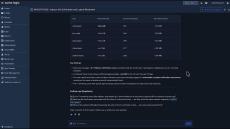
Mobot is Sumo Logic's conversational interface designed to streamline investigations for SOC analysts and observability users. Ask a question in plain English and get a full SOC analyst-style investigation without writing a query. Inside an Insight, Mobot pulls context like the C2IP, ransomware hash, host, and exfiltration data automatically. A six-word question, "anyone else hit by the campaign?", triggers a full investigation across every mailbox and endpoint tied to that attack, with a link to the raw query behind every answer.
|
By Sumo Logic, Inc.
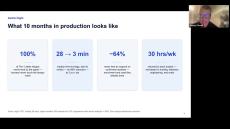
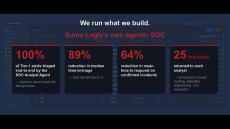
Sumo Logic's SOC Analyst Agent automatically triages every insight within the SIEM, replacing the manual work that used to fall to a tier-one analyst. Using Sumo Logic's own SOC as customer zero, we found that 100% of tier-one alerts are triaged end-to-end by the agent, resulting in a 89% reduction in median time to triage, from 28 minutes to 3 minutes. In this demo, you’ll see.

|
By Sumo Logic, Inc.
On this episode of Masters of Data, we take you inside the Dojo AI demo we're bringing to the show floor at Black Hat. We walk through the SOC Analyst Agent, Mobot, and MCP back to back. SOC Analyst Agent triages every tier one alert down to the one that actually matters, and Mobot picks up from there, running the investigation in plain English to track down other phishing victims and lateral movement. We also show how MCP pulls that same insight into Claude or Slack. SOC leads tired of alert fatigue and analyst burnout will want the numbers here: 100% of tier one alerts triaged automatically, and 25 hours a week back per person.

|
By Sumo Logic, Inc.
On this episode of Masters of Data, we revisit the predictions Adam White, Zoe Hawkins, and David Girvin made at the end of last year, checking our own scorecard halfway through 2026. The hits: agents running amok and deleting databases, MCP becoming the backbone for tracking what agents actually do, growing security gaps around personal data, and a collective rejection of low-quality AI content. The misses: we underestimated how fast companies would cut staff for AI, then quietly start rehiring once the agents couldn't cover the work, and we're still arguing about whether token burn is a cost problem or a coming attack vector.

|
By Sumo Logic, Inc.
Weekly office hours with David Girvin. Check out recent feature releases and updates, watch a quick live demo, and ask any questions with live Q&A.
|
By Sumo Logic, Inc.
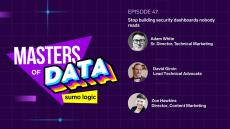
On this episode of Masters of Data, we dig into one of data's most contested formats: the dashboard. We explore why so many dashboards get built and never opened, tracing the shift from in-person SOC culture (big screens, shared visibility, immediate feedback) to the remote-work era of folders full of charts no one reviews. The conversation covers North Star metrics, the tension between practitioner and leadership dashboards, and the uniquely tricky problem of security metrics that can look green while a threat actor has quiet dwell time in your environment.

|
By Sumo Logic
Security information and event management (SIEM) solutions have been around since 2000, and they were developed with the goal of helping organizations in the early detection of targeted attacks and data breaches.
|
By Sumo Logic
SIEM stands for Security Information and Event Management and these solutions have been around since 2000. They were developed with the goal of helping organizations in the early detection of targeted attacks and data breaches.
|
By Sumo Logic
In this paper we will discuss some of the general philosophies and perspectives that will assist anyone who wants to securely leverage the benefits the cloud by using its strengths to overcome issues that have traditionally been labeled as weaknesses.
|
By Sumo Logic
This white paper describes the technologies and processes used by Sumo Logic to secure customer data, and provides background on the company's deeply ingrained security culture.
|
By Sumo Logic
This white paper is intended to support stakeholders movement of applications to the cloud, and provide some fundamental approaches to adopt in order to better protect every layer of the AWS infrastructure.
- September 2026 (6)
- August 2026 (4)
- July 2026 (5)
- June 2026 (8)
- May 2026 (7)
- April 2026 (11)
- March 2026 (5)
- February 2026 (9)
- January 2026 (7)
- December 2025 (7)
- November 2025 (7)
- October 2025 (4)
- September 2025 (6)
- August 2025 (7)
- July 2025 (14)
- June 2025 (3)
- May 2025 (4)
- April 2025 (2)
- March 2025 (2)
- February 2025 (1)
- December 2024 (2)
- November 2024 (4)
- October 2024 (3)
- September 2024 (4)
- July 2024 (2)
- June 2024 (2)
- May 2024 (9)
- April 2024 (4)
- March 2024 (4)
- February 2024 (2)
- January 2024 (5)
- December 2023 (1)
- November 2023 (8)
- October 2023 (5)
- September 2023 (6)
- August 2023 (4)
- July 2023 (5)
- June 2023 (5)
- May 2023 (14)
- April 2023 (5)
- March 2023 (2)
- February 2023 (3)
- January 2023 (3)
- December 2022 (4)
- November 2022 (5)
- October 2022 (3)
- September 2022 (13)
- August 2022 (1)
- July 2022 (3)
- June 2022 (5)
- May 2022 (2)
- April 2022 (4)
- March 2022 (4)
- February 2022 (3)
- January 2022 (5)
- December 2021 (5)
- November 2021 (4)
- October 2021 (8)
- September 2021 (18)
- August 2021 (13)
- July 2021 (11)
- June 2021 (6)
- May 2021 (2)
- April 2021 (2)
- March 2021 (3)
- February 2021 (2)
- January 2021 (5)
- December 2020 (8)
- November 2020 (1)
- October 2020 (4)
- September 2020 (1)
- August 2020 (1)
- July 2020 (8)
- June 2020 (7)
- May 2020 (7)
- April 2020 (4)
- March 2020 (6)
- February 2020 (5)
- January 2020 (2)
- December 2019 (2)
- October 2019 (7)
- September 2019 (5)
- August 2019 (6)
- July 2019 (2)
- June 2019 (5)
- May 2019 (2)
- April 2019 (2)
- March 2019 (4)
- February 2019 (3)
- January 2019 (2)
- November 2018 (2)
- October 2018 (1)
- July 2018 (1)
- June 2018 (1)
Empowering the People Who Power Modern Business. A Cloud-native Machine Data Analytics Platform for DevSecOps.
Sumo Logic is a secure, cloud-native, machine data analytics service, delivering real-time, continuous intelligence from structured, semi-structured and unstructured data across the entire application lifecycle and stack.
Build, run and secure your AWS, Azure, Google Cloud Platform or Hybrid applications with Sumo Logic, a cloud-native, machine data analytics service for log management and time series metrics.
- Optimize Continuous Delivery: Accelerate development, testing, & deployment of your application.
- Monitor & Troubleshoot in Real Time: Enable DevOps to proactively identify and fix performance issues.
- Secure Your Platform: Detect, investigate and respond to security issues instantly.
- Simplify Compliance Management: Ensure compliance with HIPAA, PCI, GDPR and much more.
One platform for real-time, Continuous Intelligence.