Security | Threat Detection | Cyberattacks | DevSecOps | Compliance

How cyber incidents become information crises

Customers notice a cyber incident long before investigators finish explaining it. Failed payments and missing services raise questions that demand quick answers. Understanding how cyber incidents become information crises helps organisations respond before confusion damages trust.
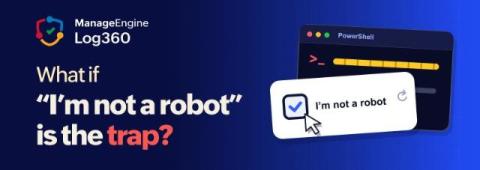

ClickFix: How a fake CAPTCHA becomes a malware delivery mechanism

CAPTCHAs are designed to distinguish humans from automated systems. A user types distorted letters or clicks a few crosswalks, and in doing so proves there is a human behind the keyboard rather than a script. The whole idea rests on one assumption: A human, unlike a bot, will pause and think for a moment before acting. ClickFix takes that assumption and turns it into the attack itself. The fake verification screen does not ask the user to prove they are human by thinking.

Every AI Agent Creates Security Debt. Most Organizations Aren't Tracking It.

Technical debt accumulates when organizations prioritize immediate speed and defer the architectural work that keeps systems dependable. Most engineering leaders know how that story ends. The shortcuts that made the first release possible eventually slow down every release after it. The agentic enterprise is creating a security equivalent.

How to Block Sensitive Data in AI Prompts at the Endpoint

A data loss prevention (DLP) team writes a rule to keep customer records out of ChatGPT. The rule catches an uploaded spreadsheet but misses the same records pasted into a prompt, because no file transfer occurred. The team adds text pattern matching to close the gap, and the rule starts flagging harmless prompts that happen to contain a name and a number. Both failures share one cause. The rule judges what the text looks like and cannot see where it came from.

Application Security for GDPR Compliance: A Complete Guide

Seven years after the General Data Protection Regulation came into force, organizations are still learning a hard lesson: GDPR compliance is a technical lesson as much as it is a legal one. Application security for GDPR compliance sits at the center of that reality, because the personal data GDPR protects lives in your software: your web applications, your APIs, your cloud-native services, your third-party integrations.

From Detection to Decisions: What's New in ThreatSync and Rai Analyst

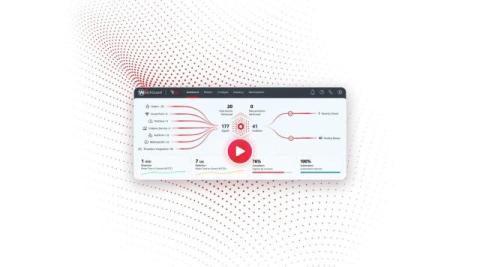
Security teams are managing more endpoints, identities, networks, and security events than ever. Each control adds valuable protection, but the work of connecting its signals, explaining incidents, and deciding what needs attention often falls to analysts. That is why the next evolution of WatchGuard ThreatSync and Rai Analyst matters. ThreatSync provides the foundation for cross-product detection, correlation, incident management, and coordinated response.

The Impact of AI on CVEs: Industry Challenges

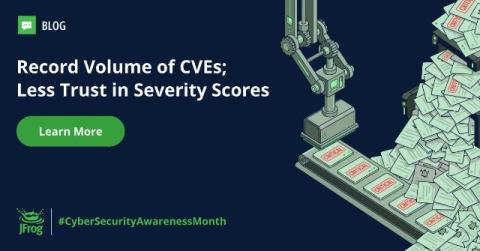
Integrating artificial intelligence into cybersecurity has fundamentally changed vulnerability research – and not necessarily for the better. For decades, discovering and verifying Common Vulnerabilities and Exposures (CVEs) required deep technical expertise, creating a disciplined process that kept disclosure volume relatively manageable. Today, Generative AI has obliterated that barrier to entry.

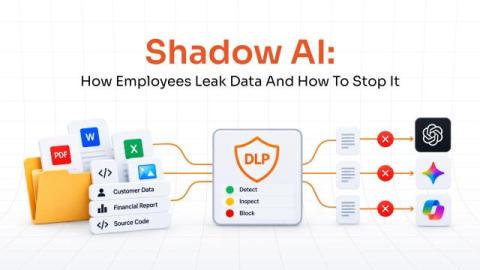
Shadow AI: How Employees Leak Company Data Into AI Tools and How to Stop It

Shadow AI refers to the use of artificial intelligence tools, applications, models, or AI-powered features without the organization's required IT approval, security review, or governance. It is often associated with employees using personal accounts for tools such as ChatGPT or Gemini. However, Shadow AI extends well beyond public AI chatbots.

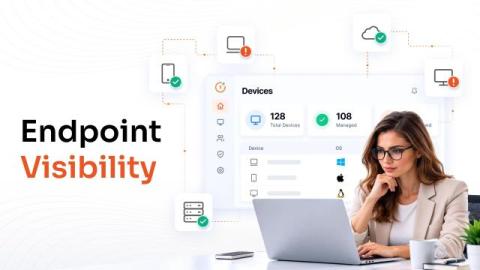
Endpoint Visibility: How to Find and Secure the Devices Your IT Team Can't See

Endpoint visibility is the ability to identify connected devices, understand their activity and health, and assess their security posture. Without it, IT teams struggle to determine which endpoints access business resources, identify security weaknesses, and investigate operational problems. Remote employees, personal phones, contractors, cloud-connected systems, and specialized equipment expand the endpoint landscape.

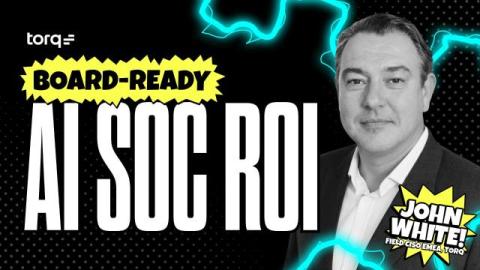
How to Measure AI SOC ROI: Beyond Hours Saved

John White is the Field CISO for EMEA at Torq. A respected security executive with more than 20 years of leadership experience, John previously served as CISO at Virgin Atlantic, where he led a multi-year transformation deploying the Torq AI SOC Platform to modernize cyber operations. Prior to Virgin Atlantic, he built and transformed security functions for global organizations, including ASOS, Liberty Global, AEG Europe, and KPMG.