Security | Threat Detection | Cyberattacks | DevSecOps | Compliance

An Alert Doesn't Stop an Attack: Introducing Autonomous Defense

Security teams have never been better at finding problems. Discovery is broader, detection is sharper, and the volume of findings keeps climbing. But a finding is not a fix. When teams identify a risky AI agent, an exposed MCP server, or an active attack against an API, what happens next usually looks the same: someone triages it, someone opens a ticket, and someone on another team eventually makes the change. Until then, the risk stays exactly where it was.
Stop Waiting for the Alert: Enforcing AI Agent Behavior with Zenity Boundaries

Every security team I talk to has some version of the same document. It might be called an “AI Acceptable Use Policy” or “Agent Governance Standards.” It usually lives in Confluence or SharePoint. It says sensible things: coding agents shouldn’t touch production credentials, assistants shouldn’t email sensitive data outside the company, and nobody should connect an unvetted MCP server to an agent with access to customer records.

Deployment alerts: know when a renewed certificate doesn't land

Renewing a certificate is the easy part. Getting it onto the server is where automation breaks. Somebody rotates the API token on the firewall. A service account password expires. A VM gets rebuilt and the agent never comes back. The certificate renews right on schedule, the deployment fails, and the server keeps serving the old certificate until it expires. Renewed and deployed are not the same thing.

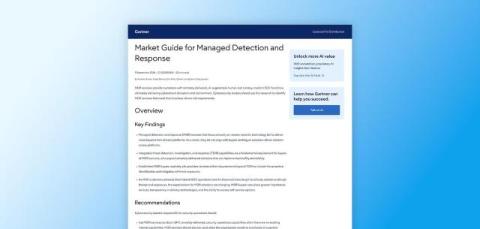
Beyond Alerts: What the 2026 Gartner Market Guide Says About the Future of MDR

Managed Detection and Response has long helped organizations extend their security operations capabilities, but buyer expectations are changing. Detecting suspicious activity and notifying internal teams is no longer enough. Organizations increasingly expect MDR providers to help investigate incidents, contain threats, identify exposures, and deliver measurable improvements to their security posture.

How to Reduce Alert Fatigue Without Missing Real Incidents

Alert fatigue in DLP and insider risk management (IRM) programs doesn't get solved by adding more analysts or writing more rules. It gets solved when the system generating the alerts can already tell the difference between routine activity and genuine risk, so the queue analysts see is short because it's accurate, not because thresholds were loosened. That distinction matters because the two failure modes look identical from the outside.

Why Traditional Security Monitoring Is No Longer Enough in 2026

Cybersecurity has become significantly more complex over the past few years. Attackers no longer rely solely on mass phishing campaigns or simple malware. Modern threat actors use automation, artificial intelligence, credential theft, living-off-the-land techniques, and multi-stage attacks designed to evade traditional security controls. As a result, organizations that still depend on conventional monitoring tools often struggle to detect and contain threats before damage occurs.

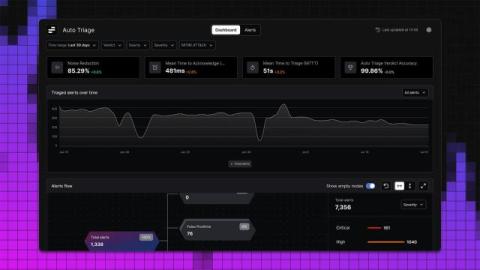
Runtime Incident Classification: Turning a Noisy Alert List Into a Triage Decision

Here is a scene every security team knows. A reverse shell opens a connection to an external address, pulls a service-account token, and starts moving against your cloud identity. Two rows below it on the same dashboard sits a payload that hit a front-end container and never executed. Both are tagged high severity. Both are competing for the same analyst’s attention at the same moment.

Why Insider Threats Don't Trigger Alerts

Insider threats often don’t trigger alerts because the activity relies on valid credentials, approved tools, and authorized workflows. When viewed as individual events, this behavior looks normal and stays below traditional rule thresholds. Risk accumulates across otherwise valid actions without producing a signal that meets alert thresholds.

Respond to CrowdStrike & SentinelOne alerts across multiple customers

Manage security alerts from multiple EDR customers automatically. See how Tines ingests, enriches, and responds to CrowdStrike and SentinelOne detections in one workflow. If you're managing EDR platforms for multiple customers, keeping on top of alerts across separate tenants is a nightmare. This story pulls alerts from CrowdStrike and SentinelOne, normalizes the data, and automatically opens a Tines Case all without hardcoding a single credential.