Security | Threat Detection | Cyberattacks | DevSecOps | Compliance

How KeeperMSP Simplifies Multi-Tenant Security

For Managed Security Service Providers (MSSPs), managing cybersecurity programs across multiple client environments can be a daunting task. Context-switching between isolated client accounts, enforcing access policies at scale and ensuring that no vulnerability in one environment affects another demonstrates the ongoing challenges of multi-tenant security.

Why Every MSP Should Be Offering a 30-Minute Cloud Risk Assessment

As businesses continue moving critical workloads to the cloud, attackers are increasingly targeting identities, SaaS applications, and cloud configurations. While many organizations believe their cloud environments are secure, hidden risks often go unnoticed until it's too late. For MSPs, this presents an opportunity to deliver greater value while growing recurring security revenue.

The MSP's Invisible Enemy: How to Pinpoint Friction in Cybersecurity

In managed security, failures rarely happen because of a lack of technology. They happen because of friction, small operational bottlenecks that slow down detection, skew prioritization, or delay incident response. That friction is silent, but deadly. More than any single tool, it determines an MSP’s actual capacity to protect its clients at scale. So, the real question isn't whether you have enough visibility. It’s: Where are your operations failing without you even realizing?

The Identity-First Shift in MSP Recruitment

Leading Managed Service Provider (MSP) distributors aren’t just adding identity tools to their marketplace. They are redefining the criteria for partnership within their ecosystems. For years, joining a major distributor’s marketplace was primarily a commercial transaction. Submit your business details, pass some basic onboarding checks and sell away. Identity security was an afterthought, a product category rather than a partnership requirement. Those days are gone.

The Top 5 M365 Security Gaps MSPs Find in New Customer Tenants

Most MSPs don’t have a security problem because they are missing tools; but because the tools they already have aren’t properly configured. Microsoft 365 includes a wide range of powerful security features designed to protect identities, data, and access. Over time, however, tenant configurations change: users are added, permissions are expanded, policies are adjusted, and temporary “duct tape” solutions become permanent.

Inside the Data: What SMBs Want from Their MSPs in 2026

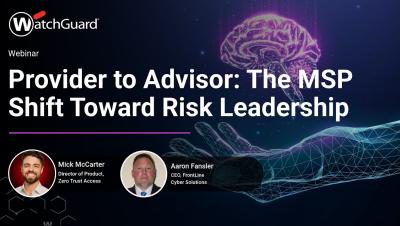
Cybersecurity demands are outpacing what many SMB and midmarket organizations can manage internally. New global research from WatchGuard Technologies shows rising concern around AI-driven attacks, increasing pressure for 24/7 monitoring, and growing demand for MSPs that can deliver measurable security outcomes. In this webinar, WatchGuard will break down key findings from its global cybersecurity survey and what they mean for MSPs looking to grow their security practice and strengthen customer relationships. You’ll learn.

Acronis named a Champion in the Omdia Cybersecurity MSP Ecosystems Leadership Matrix 2026

Analyst firm Omdia has recognized Acronis as a Champion in the Omdia Cybersecurity MSP Ecosystems Leadership Matrix 2026. This distinction is the highest placement in one of the industry’s most closely watched evaluations of cybersecurity vendors serving managed service providers (MSPs). The recognition highlights Acronis’ continued investment in cybersecurity innovation, partner profitability and MSP-focused platform development.

How MSPs should evaluate AI security

AI is already incorporated into most of your clients’ workflows. Employees are using chatbots and other built-in GenAI tools to draft emails, analyze data and automate work. The challenge? Much of that activity is happening outside your formal security controls, and that creates a new risk layer. For managed service providers (MSPs), the question is no longer whether to secure AI adoption for their clients, but how to evaluate the right AI security solution.

How MSPs can protect Australian businesses from payment diversion fraud

Payment diversion fraud is a rapidly growing and potentially expensive threat to Australian businesses. Attacks exploit weaknesses in payment verification processes to trick organisations into transferring funds to criminal-controlled accounts. According to Australia's National Anti-Scam Centre, Australians lost A$166.8 million to payment redirection scams in 2025, up nearly 10% compared to 2024.