Security | Threat Detection | Cyberattacks | DevSecOps | Compliance

Why Traditional Security Monitoring Is No Longer Enough in 2026

Cybersecurity has become significantly more complex over the past few years. Attackers no longer rely solely on mass phishing campaigns or simple malware. Modern threat actors use automation, artificial intelligence, credential theft, living-off-the-land techniques, and multi-stage attacks designed to evade traditional security controls. As a result, organizations that still depend on conventional monitoring tools often struggle to detect and contain threats before damage occurs.

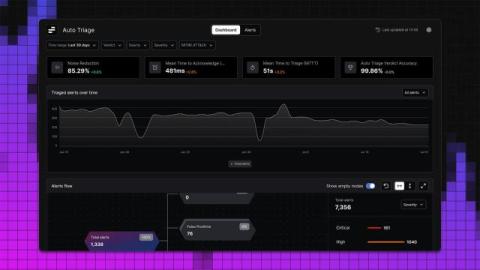
Runtime Incident Classification: Turning a Noisy Alert List Into a Triage Decision

Here is a scene every security team knows. A reverse shell opens a connection to an external address, pulls a service-account token, and starts moving against your cloud identity. Two rows below it on the same dashboard sits a payload that hit a front-end container and never executed. Both are tagged high severity. Both are competing for the same analyst’s attention at the same moment.

Why Insider Threats Don't Trigger Alerts

Insider threats often don’t trigger alerts because the activity relies on valid credentials, approved tools, and authorized workflows. When viewed as individual events, this behavior looks normal and stays below traditional rule thresholds. Risk accumulates across otherwise valid actions without producing a signal that meets alert thresholds.

Respond to CrowdStrike & SentinelOne alerts across multiple customers

Manage security alerts from multiple EDR customers automatically. See how Tines ingests, enriches, and responds to CrowdStrike and SentinelOne detections in one workflow. If you're managing EDR platforms for multiple customers, keeping on top of alerts across separate tenants is a nightmare. This story pulls alerts from CrowdStrike and SentinelOne, normalizes the data, and automatically opens a Tines Case all without hardcoding a single credential.

How to Reduce Alert Fatigue in AI Agent Detection: Why It's a Unit-of-Detection Problem, Not a Triage Problem

When AI agent workloads start generating more alerts than your SOC can keep up with, the instinct most teams reach for is to deploy more triage on top of what they already have. If the SIEM is producing thousands of atomized alerts, plug in something downstream that can cluster, prioritize, and auto-resolve them faster than a human can. The market has consolidated around exactly this answer.

How to Detect Account Takeover in Real-Time: Moving Beyond Login Alerts

Most enterprise fraud stacks are built to detect account takeover after it’s already succeeded. Login anomaly rules fire at authentication. Transaction models fire at monetization. By both points, the attacker is already inside. Knowing how to detect account takeover in real-time means shifting detection upstream – to behavioral signals, device trust, credential exposure feeds, and session integrity monitoring that activate before any fraudulent transaction is attempted.

Escalate unacknowledged login alerts with PagerDuty and Jira

What happens when a suspicious login fires and the user doesn't respond? This Tines flow handles it automatically, escalating to PagerDuty in minutes. Escalate alerts which users have not responded to shows you how to build a smart, automated response workflow that checks in with your user first — and only escalates if they don't reply in time. No more manual follow-ups, no missed alerts slipping through the cracks.

Buyer's guide to alarm company management software

Choosing alarm company management software should feel like a business decision, not a guessing game. Yet that is exactly where many alarm companies end up. One platform looks polished but lacks recurring billing depth. Another handles scheduling well but falls apart when you need site history, inspections, and renewals tied to the same customer record. A third claims it can do everything, but only after six add-ons and a long setup.