Security | Threat Detection | Cyberattacks | DevSecOps | Compliance

From Shadow APIs to Shadow AI: How the API Threat Model Is Expanding Faster Than Most Defenses

The shadow technology problem is getting worse. Over the past few years, organizations have scaled microservices, cloud-native apps, and partner integrations faster than corporate governance models could keep up, resulting in undocumented or shadow APIs. We’re now seeing this pattern all over again with AI systems. And, even worse, AI introduces non-deterministic behavior, autonomous actions, and machine-to-machine decision-making. Put simply, shadow AI is much, much riskier than shadow APIs.
AI Attacks, CaaS & the New Reality of Banking Security

This week, in the episode – Guardians of the Enterprise, Ashish Tandon, Founder & CEO, Indusface, speaks with Madhur Joshi, CISO at HDB Financial Services (part of the HDFC Group), on how large financial institutions are navigating a rapidly evolving cyber threat landscape. The conversation covers the rise of AI-driven attacks, Cybercrime-as-a-Service (CaaS), and the growing complexity that comes with expanding digital footprints across cloud, applications, and APIs.

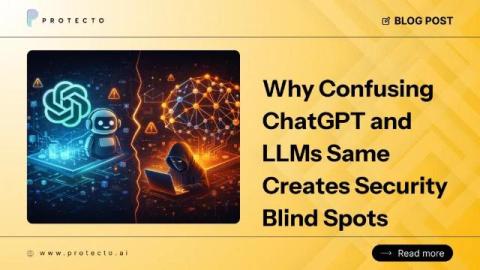
Why Confusing ChatGPT and LLMs as the Same Thing Creates Security Blind Spots

When news broke that the Head of CISA uploaded sensitive data to ChatGPT, the response was predictable: panic, headlines, and renewed questions about AI safety. But this incident reveals more about confusion than actual risk. The real issue? Most organizations don’t understand what they’re actually risking when they use AI tools. Let’s fix that.

From Acceleration to Exposure: Why AI Demands Mature AppSec

For most engineering teams, AI feels like a breakthrough years in the making. Code gets written faster, reviews move quicker, and releases that once took weeks now happen in days—or even hours. But as more of the software lifecycle becomes automated, a less comfortable reality is setting in: application security hasn’t kept pace, and AI-native security practices are often missing. When AppSec foundations are immature, AI doesn’t reduce risk—it scales it.

Vibe Coding & AI Coding Assistants: Who Secures AI-Generated Code?

84% of developers are using or planning to use AI tools in their workflow (Stack Overflow, 2025). AI coding assistants like Codex, GitHub Copilot, and CodeWhisperer are changing how we build software. But here’s the real question: Who secures AI-generated code? In this video, we break down: If you’re using AI to write code, you need: AI-generated code is still code. It must be reviewed, validated, and monitored.

How miniOrange's GPT App Connects LLMs to Your WordPress Site

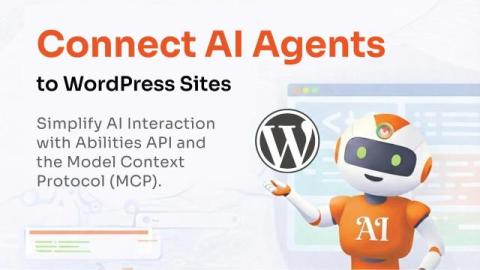
WordPress is entering a new phase in how websites are managed with the introduction of API Abilities and support for the Model Context Protocol (MCP). These updates allow WordPress core, plugins, and themes to clearly define the actions they support and how those actions should be executed. For the first time, WordPress can communicate its capabilities in a structured way that large language models can reliably understand.

1Password's new benchmark teaches AI agents how not to get scammed

As we embed AI agents into our lives and workflows, we’re learning the (sometimes surprising) ways in which they outperform human beings, and other ways in which they fall short. And occasionally, we find an example where agents, paradoxically, are both better and worse than their human users.

The AI SOC Org Chart for 2026 and Beyond

See how Torq harnesses AI in your SOC to detect, prioritize, and respond to threats faster. Request a Demo John White is the Field CISO for EMEA at Torq. A respected security executive with more than 20 years of leadership experience, John previously served as CISO at Virgin Atlantic, where he led a multi-year transformation deploying the Torq AI SOC Platform to modernize cyber operations.