Security | Threat Detection | Cyberattacks | DevSecOps | Compliance

How do Cloud Scanners Handle Zero Trust Security?

The global zero trust security market was valued at USD 19.2 billion in 2024 and is expected to grow at a CAGR of over 17.4% between 2025 and 2034, driven by rising cybersecurity threats. This explosive growth is a direct reflection of the fundamental change in how organizations think about security.

Embracing Zero Trust: Lessons from Australia's Defence Supply Chain Data Breach

Earlier this week, The Australian broke the news that the Cyber Touhan hacking group stole classified plans for Australia’s new infantry fighting vehicles, a $7B AUD procurement program, in a massive cyber-attack targeting 17 Israeli defence contractors in the supply chain. The attack was carried out by targeting a downstream supplier, MAYA Technologies, exploiting vulnerabilities in their network and peripherals to gain access to sensitive data.

How Responsible AI Governance Strengthens Cybersecurity Defenses

Here's something that should keep you up at night: cybercrime might cost the global economy $10.5 trillion every year by 2025. That's not a typo. Traditional security measures? They're already struggling to keep pace. Attackers have figured out how to weaponize artificial intelligence, launching sophisticated campaigns that waltz right past conventional defenses like they're invisible.

How Insurity and Reach Built a Living Zero Trust Model - with Jay Wilson & Garrett Hamilton

Would you rather run a network where everyone trusts everything, or one where nothing moves without being continuously verified? Most would agree that the most secure is ideal. The real question is: how do you get there, and by what means? And where is "there"? That’s the spectrum of Zero Trust maturity most organizations find themselves navigating—from implicit trust and flat networks to real-time validation and least-privilege access that adjusts as environments change.

How Physical Asset Security Strategies from Cybersecurity Apply to Gold Bullion Storage

The parallels between protecting digital assets and physical gold bullion reveal a fundamental truth about modern security architecture: threats evolve, but the principles of defense remain constant. Organizations safeguarding high-value physical assets can extract substantial operational advantage by adopting frameworks originally designed for cyber defense. This convergence of physical and digital security thinking represents a strategic shift in how enterprises approach asset protection.

Zero-Trust with Zero-Friction eBPF in Calico v3.31

Calico has used eBPF as one of its dataplanes since version 3.13, released more than five years ago. At the time, this was an exciting step forward, introducing a new, innovative data plane that quickly gained traction within the Calico community. Since then, there have been many changes and continued evolution, all thanks to the many adopters of the then-new data plane.

Overview of Teleport Zero Trust Access: Secure Infrastructure Without VPNs

In this video, we explore how Teleport Zero Trust Access replaces outdated VPNs and static credentials with a modern, identity-based approach to secure infrastructure access. See how Teleport unifies access across servers, Kubernetes, databases, and cloud environments, all powered by short-lived, certificate-based credentials that eliminate passwords, reduce risk, and streamline engineering workflows.

Cybersecurity Trends in 2026: From AI Defense to Digital Trust

In 2026, cybersecurity has evolved from being an IT concern to becoming one of the most strategic levers of global stability. As artificial intelligence systems become self-learning, quantum computing moves closer to commercialization, and consumer data flows multiply across platforms, cybersecurity is no longer about preventing attacks-it's about maintaining trust in an increasingly automated world.

Implementing Zero Trust Architecture in Microsoft 365 to Counter Evolving Cloud Threats in 2025

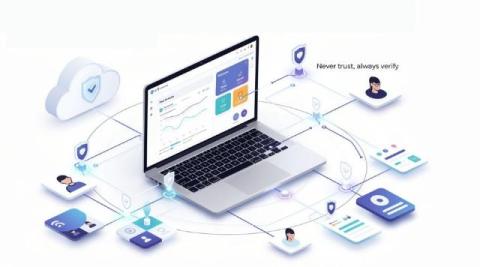
In an era where cloud adoption has become ubiquitous, the security paradigms of the past are no longer sufficient. Traditional perimeter-based defenses, which assume trust once inside the network, have given way to more dynamic models. Zero Trust Architecture (ZTA) stands at the forefront of this shift, operating on the principle of "never trust, always verify." This approach is particularly critical for Microsoft 365 (M365) environments, which encompass a suite of productivity tools like Exchange Online, SharePoint, Teams, and OneDrive, all hosted in the cloud.

Zscaler + Torq: Inside the Zero Trust SOC

See how Torq harnesses AI in your SOC to detect, prioritize, and respond to threats faster. Request a Demo Torq AMP spotlights the partners redefining what’s possible in security operations. Each partner brings a unique strength that seamlessly extends Torq’s autonomous SOC platform. Together, these partnerships help SOC teams achieve speed, accuracy, and scale that were once out of reach. Explore the future of SOC in the AMP’d Sessions video series.