



Barton, Australia
2005
  |  By Wade Barisoff
Recent headlines heralded another unfortunate security breach: an employee of the NSW Treasury in Sydney, Australia, illegally downloaded more than 5,600 sensitive government documents, which were later recovered at his home. This was labeled a “significant cyber incident” by the NSW government and had been detected by an internal security monitoring tool that detected “movement of a large cache of documents”.
  |  By Irena Mroz
If you work with the Australian defence sector, DISP membership is no longer optional. The Defence Industry Security Program (DISP) is a baseline requirement for organisations operating in or supplying into Australian Defence. Most companies still treat DISP in defence as a compliance checkbox, but that approach fails. DISP is about reducing real operational risk across the supply chain.
  |  By Wade Barisoff
You cannot turn a corner without entering the world of AI. I was in a big box home improvement store the other day and there was a manufacturer touting the AI built into their refrigerator! Children’s toys, personal electronics, and even cat litter boxes are now selling AI-assisted products. I am a technology early adopter, and where I’ve seen good uses of AI, we are in the phase of “throw AI into everything” mode, as we do not know what will stick.
  |  By Andrew Reynolds
The LA Times recently reported on a suspected breach involving a public sector legal office and a third-party tool used to transfer discovery materials. According to the report, the exposed data included a large volume of highly sensitive records, including witness information, medical data, unredacted legal documents, personnel records, and investigative materials. Without getting ahead of the facts, there is a pretty straightforward lesson here. Sensitive data rarely stays in one place.
  |  By Irena Mroz
The Family Educational Rights and Privacy Act (FERPA) has governed how universities handle student records since 1974. Fundamentally, FERPA is a federal privacy law that grants students the ability to exert some meaningful authority over their academic information. At the same time, it also assigns responsibility for the maintenance and safeguarding of student education records to the universities that maintain them.
  |  By Kurt Mueffelmann
Organizations today face a common challenge: sensitive data is everywhere. It lives across collaboration platforms, endpoints, databases, SaaS applications, and cloud storage systems. Employees and partners need to access and share information quickly, often across teams, organizations, and even countries. At the same time, regulatory requirements, security mandates, and privacy obligations demand stronger protection for sensitive data.
  |  By Irena Mroz
As organizations increasingly rely on Microsoft Teams for internal and external collaboration, the platform’s chat and file-sharing capabilities have become central to daily operations. However, speed and flexibility come with risk. User-managed collaboration tools can create challenges in maintaining control over data access and enforcing compliance with organizational sharing and usage policies.
  |  By Darroll Walsh
Microsoft SharePoint has a mature, well-structured security model. It gives organizations control over who can access sites, libraries, and documents, and for most day-to-day needs, it works well. But there is a fundamental limitation built into how SharePoint security works: it controls access based on role, not on the sensitivity of the content itself.
  |  By Irena Mroz
In 2025, universities in the United States and Australia found themselves squarely in the crosshairs of persistent and evolving cyber threats. Higher education institutions manage highly sensitive personal information, financial details, healthcare records, and research data, making them prime targets for sophisticated attackers, ransomware gangs, and even hacktivists. As cybercrime escalates globally, the education sector is facing some of its most disruptive and consequential breaches in years.
  |  By Erik Hanson
As Winter Storm Fern made its way across the US this weekend, children across the country were glued to phones, computers, or televisions as they tried to guess how long they would be out of school this week. Little do they know, however, the data, science, and lack thereof, that goes into that decision. School closures are the very public end of a complex and fast-changing dataset that is highly dependent on locality and can be wildly different on either side of a district line.
  |  By archTIS
Kojensi from archTIS is a highly secure, multi-level security platform for the secure sharing and collaboration of sensitive and classified files. By taking a data-centric, zero trust security approach, a file’s attributes such as security classification, organisation and country releasability, determine who is able to access, edit and download the file. Kojensi users can create, co-author and share documents in real-time, all in a secure and intuitive platform that ensure sensitive information remains need to know only.
  |  By archTIS
Empower your organization to take advantage of all the productivity and collaboration the Microsoft suite has to offer with meeting regulations including NIST, CMMC, and ITAR for information security. archTIS’ zero trust attribute-based access control (ABAC) powered information security solutions for public sector enhance native security capabilities to empower secure collaboration within your agency, with other agencies, defense, multinational coalitions and supply chain partners.
  |  By archTIS
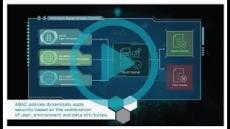
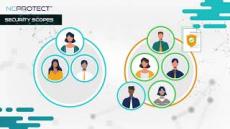
The complete portfolio of archTIS solutions, including NC Protect and Kojensi, leverage a data-centric, attribute-based access control (ABAC) methodology to ensure the highest levels of data protection. Watch this video to learn about the advantages of using ABAC-enabled access and data protection policies to safeguard sensitive data.
  |  By archTIS
Empower your agency to take advantage of all the productivity and collaboration capabilities the Microsoft 365, Teams and SharePoint Server have to offer with zero trust ABAC powered information security from NC Protect.
  |  By archTIS
NC Protect offers a simpler, faster and scalable way to ensure secure collaboration in Teams. NC Protect dynamically adjusts access to and protection of chats, channels and files shared in Teams based on user and file attributes to control what users can see, how they can share information and with whom. Get granular security with less time and effort.
  |  By archTIS
Discover, Classify, and Protect your most Sensitive data. Find critical data in local and remote file shares such as Microsoft SharePoint, Office 365, AWS or Azure and create custom sensitive data rules to locate and classify intellectual property and other sensitive data specific to your business.
  |  By archTIS
Data protection, encryption and compliance for Microsoft platforms: SharePoint, Office 365, OneDrive and more. Instantly encrypt SharePoint data and keep it protected no matter where it is stored or how it is used: in use, in flight, and at rest.
  |  By archTIS
NC Protect offers a simpler, faster and scalable way to ensure secure collaboration in Teams. NC Protect dynamically adjusts access to and protection of chats, channels and files shared in Teams based on user and file attributes to control what users can see, how they can share information and with whom. Get granular security with less time and effort.
  |  By archTIS
Organizations have sensitive data spread across on-premises and cloud based platforms. This present a major challenge for IT to ensure data integrity and security. NC Protect is both content and context aware to automatically find, classify and secure unstructured data on-premises, in the cloud and in hybrid environments.
  |  By archTIS
See how NC Protect provides Nutanix Files users unmatched information protection capabilities to prevent accidental sharing, data misuse and loss, while maintaining a simple and intuitive user experience that empowers customers to start securing information in hours, not days or weeks.
  |  By archTIS
Business demands information management that meets their needs. From an IT perspective, it means that stakeholders are demanding access to information services that reach far beyond the boundaries of the organisation. At the same time, they are also expecting the IT department to protect their high-value information assets and intellectual property. How can you ensure that enabling remote and mobile access to your protected information services will not compromise your high-value information assets?
  |  By archTIS
Now more than ever the Boardroom, Chief Executive Officer and Chief Information Officer have information security front of mind and keeping them awake at night. Every day a new attack, incident or vulnerability is announced that has a significant impact on reputation, compliance, cost or service delivery. Chief Information Security Officers must now adapt to this changing landscape and lead their organizations to adopt new security methodologies to both protect and enable their data whenever and wherever it is required in a cost effective, risk managed way. So how do they achieve it?
  |  By archTIS
Government, defense and defense industry base (DIB) must meet the demands of both the DoD and the critical infrastructure players and map to critical controls laid out in NIST 800-171, NIST 800-53, and the upcoming CMMC 2.0 to adequately protect Federal Contract Information (FCI) and Controlled Unclassified Information (CUI).
  |  By archTIS
Information barriers that were once relegated to financial services and regulatory compliance are quickly becoming a must have to accommodate a variety of business scenarios. The art of running a business is a forever evolving path of goldmines and hurdles. Trying to map these business processes over current technology, is challenging at best and extremely difficult to achieve for all elements and viewpoints of business workflows.
  |  By archTIS
The U.S. Government requires all manufacturers, importers, exporters, and brokers of defence articles, defence services or related technical information to meet International Traffic in Arms Regulations (ITAR) compliance. Applying these regulations to your business and to those within the greater supply chain introduces additional costs, rigor, and complexity into your processes. This whitepaper introduces 5 essential checkpoints of ITAR and provides strategies to assist with compliance and cyber resilience.

archTIS Limited (ASX:AR9, OTCQB:ARHLF) is a global provider of innovative software solutions for the secure collaboration of sensitive information. The company’s award-winning data-centric information security solutions protect the world’s most sensitive content in government, defence, supply chain, enterprises and regulated industries through attribute-based access and control (ABAC) policies. archTIS products include Kojensi, a multi-government certified platform for the secure access, sharing and collaboration of sensitive and classified information; and NC Protect and the cp. suite of products for enhanced information protection for file access and sharing, messaging and emailing of sensitive and classified content across Microsoft 365 apps, Dropbox, Nutanix Files and Windows file shares. For more information visit archtis.com or follow @arch_tis.