Security | Threat Detection | Cyberattacks | DevSecOps | Compliance

Navigating SAMA, ADGM & DFSA Requirements with Teleport

The Middle East, especially the UAE and Saudi Arabia, has become a priority market for cloud service providers (CSPs) as governments accelerate digital transformation across public and private sectors. The opportunity is real, but so is the complexity. In our work with clients and regulators, Coalfire has seen that market entry often hinges less on commercial certifications and more on meeting strict data sovereignty and cybersecurity requirements.

How Two Small Bugs Led to a Critical Vulnerability and a Cryptography Audit of Go's SSH Library

Last summer we found a critical vulnerability in Teleport, our first in a decade. It was assigned CVE-2025-49825. This vulnerability allowed Teleport SSH certificates, issued to users of a cluster, to sign other SSH certificates which would then be incorrectly accepted by Teleport as valid. Once you can sign your own certificates, you can escalate privileges and bypass authentication controls. This is why we classified it as a critical vulnerability.

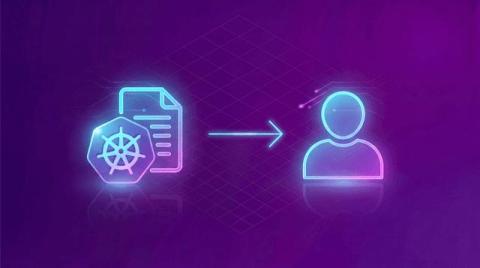
How to Use Teleport and GitHub Actions to Deploy to Kubernetes Without Shared Secrets

We live in the era of Kubernetes. And if you are using Kubernetes, you are probably using CI/CD to deploy your applications into it. However, as CI/CD and Kubernetes have grown in popularity, the number of bad actors looking to exploit weaknesses in them has also grown. It is critical that modern security techniques keep your Kubernetes clusters, and the sensitive data and services within them, safe from attack.

Guide: Certificate-Based Authentication for Payment & Banking Infrastructure

Payment and banking infrastructure continues to grow. Bare-metal servers and mainframes now sit alongside Kubernetes clusters, microservice architectures, and CI/CD pipelines running across multiple clouds and on-prem data centers. Every new environment adds its own accounts, tokens, and access paths to manage. But because this infrastructure powers live transactions, there is no room for downtime or disruptions.

How to Access Internal Web Apps Without a VPN

Most organizations start with a VPN when they need to give employees access to internal web applications. The VPN places the user on the internal network, and from there, they can reach the app. This approach works when the user base is small and the number of internal apps is limited. But as teams grow, compliance requirements increase, and the mix of technical and non-technical users increases, a VPN’s network-level connectivity introduces new operational and security challenges.

Identity Security for AI

What's scarier than an engineer with prod access? An agent with the same access that never sleeps, never asks, and runs a thousand sessions while you're at lunch. Last year we solved the problem of visibility in the Identity Chain, the concept is that identities are fragmented and it’s hard to get a view from Identity Providers to Infrastructure. Within a year, two things have changed. First, teams are using LLMs & Tools to perform actions on their behalf - fully delegating work to AI Agents.

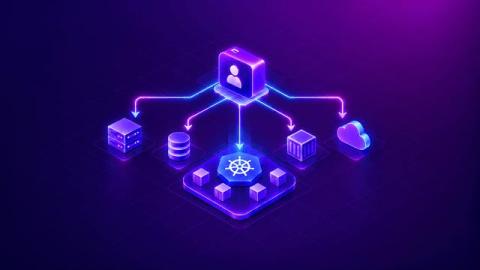
Securing kubectl on Remote Kubernetes Clusters Without Static Credentials or VPNs

Fleets of robots, drones, EV chargers, and sensors now run K3s or MicroK8s on the device itself, bringing container orchestration to hardware deployed in warehouses, cell towers, and customer sites around the world. Engineers need kubectl to debug and manage containerized workloads on those devices in the field. But because each cluster requires a kubeconfig file, and every kubeconfig file is a shared static credential, risk grows with each new device added to the fleet.