Security | Threat Detection | Cyberattacks | DevSecOps | Compliance

Automated provisioning and governance for healthcare company, B Braun

Join B Braun representatives Andreas Müller, IT project manager, and Michal Kasynski, identity manager engineer as they explore their choice of One Identity Manager for their healthcare and pharmaceutical company’s identity governance and administration (IGA) needs.

Top 16 AI Agent Security Solutions

AI agent security solutions fall into two categories. Some use AI agents to perform security work, such as red teaming, pentesting, SOC investigation, threat hunting, and risk analysis. Others protect AI agents, copilots, MCP servers, and agentic workflows from vulnerabilities such as over-permissioning, prompt injection, unsafe tool use, data exposure, and unauthorized actions.

Episode 2: Least privilege access

In this episode, we'll walk you through one of the core tenets of PAM360: eliminating standing privileges. You will learn how to replace permanent administrative access with just-in-time (JIT) privilege elevation, reduce your attack surface, and enforce least-privilege access across your endpoints and critical systems. We will also break down PAM360's privilege elevation framework—built on a maker-checker model and policy-based access—so you can configure and scrutinize access requests, automate approvals, and enable dynamic controls for applications and user actions.

NIST Privileged Access Management: Complying with the NIST Requirements

Privileged accounts are the crown jewels of any IT environment. Admin credentials, root access, service accounts. These are what attackers go after first, because compromising one can hand them the entire organization. Forrester puts the number at 80% of security breaches involving privileged accounts. NIST frameworks, particularly SP 800-53, exist to make sure you're not leaving that door unlocked.

From Access Details to Actually Connected: Introducing the Apono Access Launcher

Approved access shouldn’t mean you’re done waiting. For most developers, it just means the friction is about to start. You request access to a database. It gets approved. Now what? You open the portal, navigate to your request, find the session, click into Access Details, hunt for the right tab, copy a hostname, switch to your database client, create a new connection profile, paste in the hostname, go back for the username, go back for the password. And finally, connect. Whew.

New in miniOrange PAM: Bringing EPAM to Windows and macOS

Privileged access has become significantly more complex over the last few years. Security teams are managing Windows and macOS devices, administrators rely on native tools to do their jobs, network infrastructure continues to expand, and operational technology environments are becoming increasingly interconnected. At the same time, manual approval processes and fragmented controls often create more friction than protection.

PAM essentials for effective compliance with the Australian Essential Eight and the ISM controls

The Australian Essential Eight and the Information Security Manual (ISM) together define the cybersecurity baseline for organisations operating in Australia. While the ISM contains over 700 security controls, the Essential Eight distils the most critical of these into eight prioritised mitigation strategies and each strategy maps to multiple ISM controls underneath it. At the heart of both frameworks lies one recurring theme: restricting and governing privileged access and that's where privileged access management becomes your most powerful compliance lever.

How to Manage AI Agent Access Control

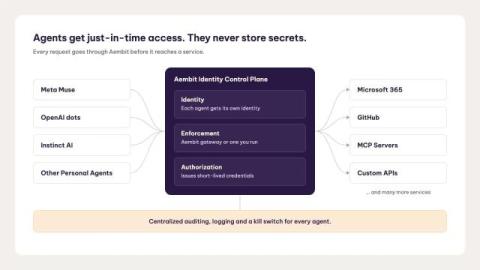
AI agent access control is about governing what autonomous software agents are allowed to do and access across your cloud infrastructure, data systems, and internal tools at runtime. It’s about identity ownership and action-level authorization, so your AI agents operate within tightly scoped, time-bound, and policy-enforced permissions that you can keep track of.