Security | Threat Detection | Cyberattacks | DevSecOps | Compliance

Let's Talk Security: Operationalizing Zero Trust

In this conversation, Forescout CEO Barry Mainz is joined by Dr. Chase Cunningham, also known as Dr. Zero Trust. Together, they will explore why Zero Trust feels harder than promised in real-world environments and what changes when you make Zero Trust universal (UZTNA): every connection, every asset, every environment.

From Zero Trust to SPIFFE: How to Secure Microservices with Istio and Teleport

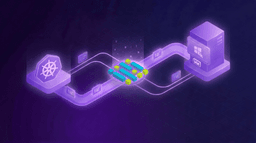
This guide walks through how to deploy microservices with Zero Trust using SPIFFE identities, service mesh mTLS, and short-lived certificates. You’ll learn how to deploy a secure microservices application, configure default-deny authorization policies, and rebuild service connectivity with explicit SPIFFE-based allow rules.

When Zero Trust Stops Being a Buzzword and Becomes Security

The cyber landscape is a minefield, and one wrong step can trigger disaster! As organizations digitize more of their operations, their attack surface expands, giving cybercriminals more opportunities for sophisticated attacks. The days of relying solely on a strong perimeter firewall are over; once a threat breaches that outer wall, traditional security models often leave the internal network exposed. This reality has driven innovative IT leaders to adopt more rigorous security strategies.

RIP mVPN: Why ZTNA Is the Future of Secure Access for SMBs

Once upon a time, the managed VPN (mVPN) was the hero of remote work. Employees worked from the office, servers lived in cupboards, and if you could gain access to the network, you were trusted. Fast forward to today, and that hero has not aged well. Hybrid work is permanent. Cloud apps rule. Attackers are smarter, faster, and annoyingly persistent. SMB IT teams are expected to hold it all together with limited time, limited budget, and zero tolerance for downtime.

The Role of Artificial Intelligence in Zero Trust Cybersecurity Frameworks

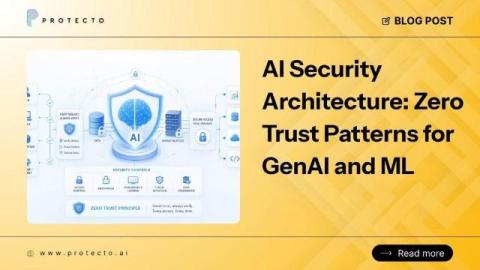
Artificial intelligence (AI) is no longer an experimental capability in cybersecurity; it is foundational to modern security operations. Organizations are operating in environments defined by cloud-first infrastructure, remote and hybrid workforces, SaaS sprawl, and identity-centric attack patterns. At the same time, threat actors increasingly rely on automation and AI to accelerate reconnaissance, credential abuse, and post-compromise activity.

Top 10 Zero Trust Solutions

An engineer gets a notification at 2 a.m. because something in production is broken. They need database access right away. For many teams, that access is already sitting there. Standing permissions granted for a past need that no longer exists. Credential abuse is still the most common way for a breach to start. It accounts for roughly 22% of initial attack paths, which is actually ahead of vulnerability exploitation at 20%. In many cases, attackers are not breaking in or exploiting a flaw.

API-Based Zero Trust Assessment: Measuring Your Security Posture in Minutes

Zero Trust (and probably many general posture) conversations stall at one question: Where are we actually today? Because Reach connects directly through APIs, teams can quickly assess their environment without deploying new agents or ripping anything out. That makes it practical to benchmark a Zero Trust program against the CISA Zero Trust Maturity Model — and see what’s real vs. assumed.

Zero Trust for Data Privacy: The Backbone of Modern Cybersecurity

Data privacy used to be the realm of hospitals, banks, and fervent devotees of the Fourth Amendment to the US Constitution. Something we knew we wanted but conceptually assumed wouldn’t affect most people. Our dependence on the Internet for almost all aspects of daily life has changed that. In 2026, data privacy and cybersecurity are deeply intertwined. Protecting sensitive information isn’t just about stopping hackers.

Zero Trust for Mid-Market: Why Modern IT Security Assumes Attacks Will Succeed

Guest post by WatchGuard Tech All-Star, Marko Bauer It's Monday morning, 7:30 AM. Your employees arrive at the office and can't log in. Systems are dead. Your phone rings. IT reports: Ransomware. All data encrypted. Then the email: €500,000 ransom. In 48 hours, the attackers will begin publishing customer data, contracts, and internal documents on the dark web. The first dump is already online, as “proof.” Your company is paralyzed. Production can't work. Sales has no access to orders.