Security | Threat Detection | Cyberattacks | DevSecOps | Compliance

Security Starts at Home: Why Zero Trust Is Powering Leading Security Companies

If you’re a security vendor and you get breached, you’re not just another victim; you’re a failed promise. A broken fire alarm in a burning building. When Okta disclosed a breach in October 2023, its stock dropped nearly 11%, wiping out close to $2 billion in market cap in a single day – a stark reminder of how quickly trust evaporates.

Securing the Decentralized Workforce: Best Practices for Remote Web3 Teams

The Web3 revolution is redefining how teams operate. Traditional office setups are being replaced by decentralized, remote-first environments. Developers, designers, marketers, and operators now collaborate across borders using blockchain-native tools. While this model offers unmatched flexibility, it also opens the door to serious security risks. As the number of Web3 remote jobs grows, so does the need for smarter, more robust security practices.

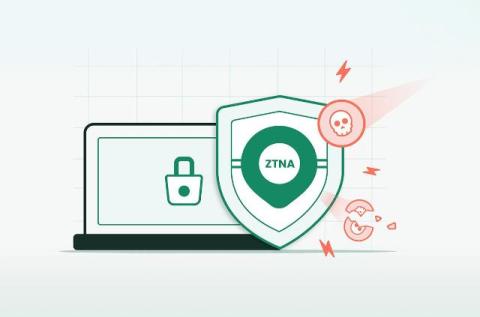
ZTNA Alone Won't Win the Zero Trust Race. Here's Why.

In the race to secure modern enterprises, Zero Trust Network Access (ZTNA) is gaining speed, and has become the default remote access solution for many enterprises. But while ZTNA is a fabulous on-ramp to Zero Trust and a broader security strategy, it’s not enough to secure the win on its own. Operationalizing Zero Trust requires takes than just access control. It requires a security platform play: convergence, continuous risk evaluation, and visibility across every edge.

The Future of Cybersecurity: How SASE Security is Transforming Network Protection

For decades, enterprise networks resembled fortified castles: one or two drawbridges (MPLS links) funneled all traffic back to a central moat where hardware firewalls, proxy stacks, and IPS appliances examined every packet. Cloud computing, hybrid work, and an explosion of SaaS shattered that perimeter. Today, an employee might open a CRM record in Salesforce from a café, push source code to GitHub over home Wi-Fi, and join a Zoom meeting through a 5G hotspot-often in the same morning.

Why Zero Trust Is Essential for Effective Cybersecurity

Let’s face it—cybersecurity is no longer a game of building taller walls or thicker locks. The old rules, the ones based on the idea that threats come only from outside, just don’t hold up anymore. In today’s digital world, where employees connect from anywhere, apps live in the cloud, and attackers can sit quietly inside your systems for weeks, trust has become a loaded word.

Cato's Unique ZTNA Broker Architecture - A Difference That Matters!

Zero Trust Network Access (ZTNA) has rapidly become a foundational security strategy for organizations modernizing their IT infrastructure. The increasing distribution of users, devices, and applications makes traditional security measures inadequate. Several solutions offer cloud-based brokers to implement ZTNA, but it’s crucial to understand that these solutions are not created equal. Let’s explore why Cato Networks’ cloud-based ZTNA solution distinctly stands apart.

Zero Trust Isn't Enough: Here's How to Validate It and Prove Resilience

Authors: Tova Dvorin, Senior Product Marketing Manager | Adrian Culley, Senior Sales Engineer You’ve implemented Zero Trust. You’ve rolled out segmentation, multi-factor authentication (MFA), and policy enforcement. Your dashboards are full. But when the Board asks: —you hesitate. You’re not alone.

Zero Trust for IoT: Best Practices for Secure Device Access

IoT security has become a top priority in today’s hyper-connected world, where billions of devices—from sensors and cameras to industrial controllers—are linked across diverse networks. As organizations deploy more IoT devices to drive innovation and efficiency, they also introduce new security challenges that traditional security models are ill-equipped to address.

Transforming Defence Information Sharing & Collaboration with Zero Trust Solutions

Partners in the defence supply chain, including manufacturers, distributors, and service providers, play a critical role in supporting national security initiatives. These entities frequently handle sensitive and classified information, which necessitates a robust framework of cybersecurity measures. To safeguard this sensitive data from potential breaches and cyber threats, they are required to adhere to stringent government-mandated cybersecurity protocols.

The Rise of Industry-Specific Cyber Defenses

You've probably noticed that digital security no longer feels like a background process. It's front and centre in boardrooms, startup pitches, and industry expos. But here's what's quietly shifting beneath the headlines: cybersecurity is splintering. What used to be a generic layer of protection is now becoming something deeply tied to a business's core operations. Hospitals aren't just worrying about hackers-they're defending against threats that target how medical records are shared.