Security | Threat Detection | Cyberattacks | DevSecOps | Compliance

The Role of Artificial Intelligence in Zero Trust Cybersecurity Frameworks

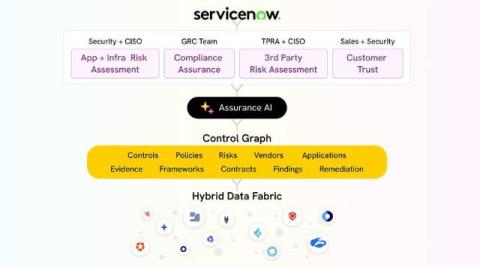
Artificial intelligence (AI) is no longer an experimental capability in cybersecurity; it is foundational to modern security operations. Organizations are operating in environments defined by cloud-first infrastructure, remote and hybrid workforces, SaaS sprawl, and identity-centric attack patterns. At the same time, threat actors increasingly rely on automation and AI to accelerate reconnaissance, credential abuse, and post-compromise activity.

How to build secure agent swarms that power autonomous systems in production

We worked with the Autonomy team to show how 1Password can secure agent swarms using a safer pattern: just-in-time, least-privilege access, without inheriting broad device, cloud, or infrastructure permissions, and without hardcoding secrets into agents.

What Are Moltbot and Moltbook? Why the Agentic AI Frenzy Is a Security Trap

AI agents aren’t taking over. But agentic AI without security is a real problem. Over the last few days, Moltbot and its social platform Moltbook have surged across headlines and social media. Some are calling it a glimpse of artificial general intelligence. Others say AI agents are organizing themselves. That’s not what’s happening. In this video, SecurityScorecard’s Jeremy Turner, VP of Threat Intelligence & Research, breaks down what Moltbot actually is, why this isn’t AGI, and where the real danger lives.

ChatGPT Oopsies Series of Information - The 443 Podcast - Episode 356

This week on the podcast, we cover a Politico report detailing a security lapse at CISA in the United States involving sensitive data and a public version of ChatGPT. Next, we dive into a couple of recently resolved vulnerabilities in the SolarWinds Web Help Desk application. Finally, we end with some closure on a story about two Coalfire penetration testers who were arrested several years ago for completing a penetration test in Iowa.

Claude Code writes and tests Cobalt Strike detection rules #cybersecurity #ai #securityoperations

Watch Claude Code generate production-ready Cobalt Strike detection rules in LimaCharlie. The agent defines detection requirements, creates rule logic for high-signal patterns, validates syntax, and deploys rules to the tenant. Named-pipe indicators and process-based signatures are tested against positive and negative controls to confirm accuracy. Security teams can operationalize threat-specific detections in minutes instead of hours.

The AI Blind Spot Debt: The Hidden Cost Killing Your Innovation Strategy

In today’s AI rush, I’ve seen even the most disciplined organizations find it almost impossible to apply the hard-won lessons of DevOps and DevSecOps onto AI adoption. These organizations often feel forced to choose between moving fast and staying in control. As a result, they develop a “wait and see” approach to AI usage and implementation, and it’s creating a new, more dangerous form of technical debt. I call it the AI Blind Spot Debt.

Cyberhaven DSPM: Uniting DSPM & DLP to Secure Data in the AI Era

Enterprise security programs were built for a time when data lived in a small number of predictable locations. That model no longer holds. Today, data is constantly created, copied, transformed, and shared across cloud applications, endpoints, on-prem systems, and generative AI tools, often without clear visibility. Protecting data in the AI era requires three pillars: holistic visibility across the full data lifecycle, a deep understanding of data with context (e.g.

When AI Agents Create Their Own Reddit: Moltbook Highlights Security Risks in the Agentic Action Layer

A new platform, Moltbook, has attracted significant attention within the AI community. It is not famous because humans are posting there, but because autonomous AI agents are. Moltbook is a social network designed for AI agents to post, comment, upvote, and even form communities. Humans can observe these interactions but cannot participate. This experiment reveals a striking reality. AI agents are coordinating, sharing code, and developing complex cultures without human visibility.

5 Essential AI Tools for Project Managers to Boost Productivity in 2026

It's 2026, and if you're still manually color-coding spreadsheets or manually typing meeting minutes, you're stuck in the past. We are no longer "task trackers", we're "strategic navigators". But with the release of GPT-5.2 and the deluge of AI agents, it's noisy. I've seen so many PMs download 20 different AI apps and they're all the same: "generating some generic text for you". If you really want to save time, you don't need more writing tools; you need a varied toolkit that takes care of the different parts of your brain: your scheduler, your communicator, your designer, your librarian.

Secure AI with CrowdStrike: Real-World Stories of Protecting AI Workloads and Data

AI is reshaping business at machine speed. From automating claims to improving customer engagement, organizations are embedding AI into core workflows faster than most security teams can track. As AI systems expand, they introduce a new class of security considerations. AI no longer lives in a single layer of the stack. It runs on cloud infrastructure, processes sensitive data, and operates through a growing network of human and non-human identities.