Security | Threat Detection | Cyberattacks | DevSecOps | Compliance

Everyone Is Securing the Wrong Layer of AI

The AI security market is crowded. Vendors are racing to protect prompts, harden models, detect jailbreaks, and scan for data leakage at the LLM layer. The investment is real. The intent is good. And most of it is missing the point. Here is the problem: agents do not just think. They act. They call APIs. They trigger workflows. They write to databases, send emails, move money, and modify production systems.

Exposure as a Competency: How Agentic Exposure Management Can Differentiate High-Performing Teams

In today's fast-paced work environment, the factors that distinguish high-performing teams go well beyond technical skills and traditional leadership. Increasingly, organizations are recognizing "exposure" as a critical competency, one that shapes how teams interact with uncertainty, opportunity, and risk. While exposure has historically been viewed through a financial or risk management lens, it is now emerging as a core driver of organizational agility, innovation, and resilience.

Trusted AI Video Platforms for Safer Content Creation

AI-generated video content is growing fast, and so are the risks that come with it. Statista data shows a sharp rise in AI incidents tied to content generation, with deepfakes and rights violations among the most documented concerns. For creators, brands, and marketers, choosing the right AI video platform means thinking beyond output quality.

Top AI cybersecurity companies in 2026

AI cybersecurity companies in 2026 fall into two categories: platforms using AI to automate detection, investigation, and response, and platforms built to secure the AI systems organizations are now deploying. With this grouping into ‘AI for Security’ and ‘Security for AI’, this article covers the breadth and depth of AI cyber security companies.

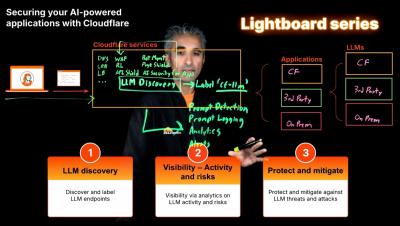
Lightboard series - Secure your AI-powered applications with Cloudflare

Humair from Cloudflare walks through the details of how Cloudflare's AI Security for Apps secures AI-powered applications. Learn how Cloudflare can discover AI/LLM endpoints and detect and mitigate AI-specific threats like PII exposure, unsafe/toxic content, prompt injection and jailbreak. Learn more.

How to Triage an AI Agent Execution Graph: A Three-Tier Decision Framework for Security Teams

A platform security engineer gets an alert at 2:14 a.m. One of the LangChain agents running in their production Kubernetes cluster has produced an execution graph with eleven nodes, seven tool calls, and an egress edge to a domain that is not in the agent’s approved integration list. The chain is fully rendered in their console. Every signal is there.

The CISO's AI Agent Production Approval Checklist: 7 Gates to Clear Before Go-Live

Your engineering lead is in your office Thursday morning. They want to push an AI agent to production next Tuesday. It’s a LangChain-based workflow agent, connected through MCP to three internal tools and one external API, with access to a customer database. The framework posters are on the wall. Your team has spent two quarters standing up runtime observability. And sitting in that chair, you still don’t know whether to say yes.

A Critical Look at OpenClaw and NemoClaw

Surprise, surprise, agentic AI is advancing very quickly, and security isn’t quite keeping up. While most attention in recent times has focused on improving model capability, we’ve often been left wondering how to actually make these systems safe enough to trust with real-world tasks and limited interaction. This challenge has become particularly evident with the rise of platforms like OpenClaw, where autonomous agents can execute multi-step actions with minimal human oversight.

The Exploit Window Collapse: Claude Mythos and the Future of Incident Response

Every so often, something comes along that forces you to recalibrate how you think about cyber risk. Not incrementally, but fundamentally. Claude Mythos feels like one of those moments. The cybersecurity industry has spent decades racing attackers to close vulnerabilities faster. Claude Mythos suggests that race may be entering an entirely new phase. One where speed itself becomes the defining risk factor.

The Mythos Moment: Why the Future of Cybersecurity Is Software Trust

Anthropic’s Mythos announcement is not just another cybersecurity headline. It is a signal. AI is transforming software faster than security teams can adapt. The organizations that win won’t be the ones that simply find more flaws. They’ll be the ones that can prove their software can be trusted. A signal that software risk has entered a new era; one where AI can accelerate both the creation of software and the discovery of its weaknesses faster than human teams can respond.