Security | Threat Detection | Cyberattacks | DevSecOps | Compliance

Why Identity Security is Key To Managing Shadow AI

Employees are adopting Artificial Intelligence (AI) tools to enhance their productivity, but they rarely consider the security implications of doing so. When an employee pastes sensitive customer data into an unapproved AI tool, that data is processed by a third-party model outside the organization’s control, often leaving no audit trail for security teams to review.

Your auditor is about to ask about AI agents. 9 things they'll want to see

Accelerating security solutions for small businesses‍ Tagore offers strategic services to small businesses. A partnership that can scale‍ Tagore prioritized finding a managed compliance partner with an established product, dedicated support team, and rapid release rate. Standing out from competitors‍ Tagore's partnership with Vanta enhances its strategic focus and deepens client value, creating differentiation in a competitive market. Studies show that AI adoption outpaces understanding.

NIST CSF 2.0 and Agentic AI: Building Profiles for Autonomous Systems

AI agents are likely already running inside your infrastructure. They triage alerts, remediate incidents, provision resources, and make decisions without waiting for a human to approve each step. For teams aligned to NIST’s Cybersecurity Framework (CSF) 2.0, this creates a problem: the framework assumes human actors, human-speed decisions, and human-readable audit trails. Autonomous systems break all three assumptions. The good news is that CSF 2.0 was designed to be adapted.

Torq Leads Every Category in the 2026 KuppingerCole Analysts Leadership Compass: Emerging AI SOC

See how Torq harnesses AI in your SOC to detect, prioritize, and respond to threats faster. Request a Demo The security automation market just got its definitive evaluation and its new name. KuppingerCole Analysts is the global analyst firm that sets the benchmark for cybersecurity technology evaluations.

Attacking the MCP Trust Boundary

Every secure API draws a line between code and data. HTTP separates headers from bodies. SQL has prepared statements. Even email distinguishes the envelope from the message. The Model Context Protocol (MCP), the fast-growing standard for connecting AI agents to external services, inherits that gap from the models it sits on top of.

AI Guardrails - DSPM Enters a New Era of Control and Visibility

You cannot turn a corner without entering the world of AI. I was in a big box home improvement store the other day and there was a manufacturer touting the AI built into their refrigerator! Children’s toys, personal electronics, and even cat litter boxes are now selling AI-assisted products. I am a technology early adopter, and where I’ve seen good uses of AI, we are in the phase of “throw AI into everything” mode, as we do not know what will stick.

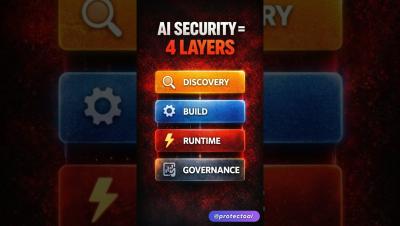
Why AI Security Needs More Than One Tool #shorts #ai

Why AI security needs more than one tool Most teams believe a single cybersecurity tool—like WAF, EDR, or API security—is enough to protect their AI systems. But that approach is outdated. AI security is not one layer—it’s a full stack problem. Discovery – Identify Shadow AI and unknown AI usage Build-Time Security – Prevent data poisoning & model risks (MLSecOps) Runtime Security – Stop real-time AI attacks and agent misuse Governance (AISPM) – Ensure visibility, compliance, and policy control.

AI Penetration Testing: Protecting LLMs From Cyber Attacks

88% of organizations now regularly use artificial intelligence (AI) in at least one business function. While adoption of AI technologies has accelerated rapidly, security measures often lag. The rush to roll out AI has, in many cases, overshadowed essential testing and safety protocols. This is particularly a worry when AI and Large Language Models (LLMs) become deeply embedded within organizational workflows and systems in a way that most software isn’t.

Introducing Decipio: A Community Tool to Catch Credential Theft in the Act with Defense First AI

Today, Arctic Wolf is announcing Decipio, a new community‑shared cybersecurity tool designed to help defenders catch attackers while they’re trying to steal credentials inside a network. Credential theft is one of the most common ways cyber attacks begin and one of the hardest to detect early. In many cases, there’s no alert, no obvious warning, and no immediate sign that anything is wrong.

Understanding Data Governance in the Age of Generative AI

Generative AI is changing how organizations create, process, and distribute information. Tools powered by models from companies like OpenAI and Google can produce content, analyze data, and automate workflows at a scale that wasn't realistic a few years ago. That shift creates opportunity, but it also raises a more grounded concern: how do you control, protect, and manage the data feeding these systems?