Security | Threat Detection | Cyberattacks | DevSecOps | Compliance

How Mobile Access Changes the Way Active Traders Manage Positions

Financial markets move quickly, and timing affects every trading decision. Mobile activity now plays a major role in how markets are accessed. Recent market data shows that nearly 25 percent of total trades on Indian stock exchanges are placed through mobile platforms, highlighting a shift toward on-the-go trading.

AI-Powered Storyboarding: Turning a Script into a 60-Second Concept Trailer in One Afternoon

In the traditional film industry, the distance between a "brilliant idea" and a "visual pitch" is often measured in months and thousands of dollars. After a screenwriter finishes a script, the production team must embark on a grueling journey: hiring storyboard artists to sketch hundreds of frames, scouting locations, commissioning concept art, and perhaps hiring a CGI house to create a rough animatic. For independent filmmakers or small creative agencies, this "development hell" is where most projects die. They simply lack the resources to show stakeholders what the movie will feel like.

The Digital Fortress: Understanding VDS Servers in the Modern Age

Imagine you are moving into a new apartment. You aren't sharing a single room like in a hostel (Shared Hosting), nor do you own the entire building (Dedicated Server). Instead, you have your own walls, your own front door, and your own utilities. So, let's consider a situation where you need a stable digital home for your business. This is exactly what a Virtual Dedicated Server (VDS) is. It is a portion of a physical server that acts entirely like a separate machine, giving you full control over your resources. While shared hosting splits power among many, VDS reserves it solely for your needs.

The Human-AI Alliance in Security Operations

Picture a SOC analyst starting an investigation. A suspicious spike in authentication activity appears on their dashboard, and they need to understand what’s happening quickly. To do that, they move through a familiar sequence of tools. What begins as a single investigation quickly turns into a chain of context switches: That’s nine steps to investigate one event. This isn’t accidental. Security tools have evolved to solve isolated problems, but together they have created fragmentation.

A January Snapshot: Real-World AI Usage

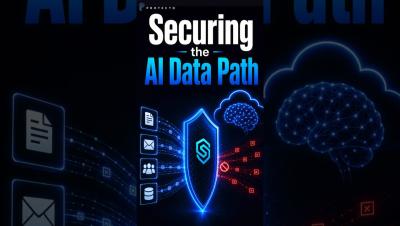
AI is no longer a fringe productivity experiment inside organisations, it is embedded, habitual, and increasingly invisible. This snapshot from CultureAI’s January usage data highlights how AI is actually being used across everyday workflows, and where risk is forming as a result. Rather than focusing on hypothetical threats or model-level concerns, the findings below surface behavioural signals from real interactions: prompts, file uploads, and context accumulation.

How do AI guardrails protect infrastructure from the unsafe and unpredictable territory of LLM risks

How do AI guardrails protect infrastructure from the unsafe and unpredictable territory of LLM risks? An AI firewall or guardrail device sits between your applications and large language models to keep the data sent and received from LLMs safe, compliant, and high-quality. Its design is to inspect natural-language traffic and protect your infrastructure against LMM vulnerabilities, including prompt injection, jailbreak attacks, data poisoning, system prompt leakage, and OWASP Top 10 vulnerabilities, using advanced, proprietary reasoning models.

Using SSL Inspection and AI Guardrails to Protect Infrastructure

Using SSL Inspection and AI Guardrails to Protect Infrastructure How do you protect your AI infrastructure from threats without impacting user experience? In this video, we'll cover the methods organizations can use to inspect encrypted traffic, including what is sent to AI chatbots, and add guardrails to protect against security risks. We'll cover.

0-Click RCE in Claude Desktop: How AI Extensions Threaten Endpoint Security

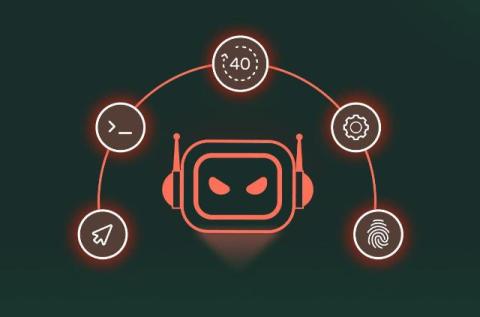
The modern enterprise software ecosystem increasingly relies on desktop AI applications enhanced through extensible plugin or extension frameworks. These extensions are designed to improve productivity by enabling integrations with local files, browsers, APIs, developer tools, and internal systems. However, this same extensibility introduces a high-risk attack surface when extension permissions, sandboxing, and input validation are weakly enforced.