Security | Threat Detection | Cyberattacks | DevSecOps | Compliance

AI-Powered Protection, Profitable Margins: Why VARs Are Switching to AppTrana WAAP

Globally, the VAR market for IT products is projected to exceed USD 11.8 billion in 2024 and grow at a CAGR of 7.5%, potentially doubling by 2033. Within security software, where overall market spending is expected to surpass USD 200 billion, VARs(Value Added Resellers) play an outsized role by packaging products with services that help enterprises implement, manage, and get measurable outcomes from their technology investments.

A practical guide to AI-ready machine identity governance in finance

Across financial services operations, machine identities play critical roles, but in many organizations, these cryptographic keys, API tokens, certificates, and service accounts remain chronically under-governed. What’s more, machine identities outnumber human identities by staggering margins, creating a massive, often unseen, unsecured attack surface—one that’s only further compounded by the rise of artificial intelligence (AI).

Secure Your AI Workflows: New Governance & Visibility Features from Snyk

As AI transforms software development, AppSec teams face new complexities. For instance, the lack of visibility into where AI is being used and the reality that AI-generated code is often highly vulnerable make it nearly impossible to prioritize remediation and effectively scale security programs. To succeed, AppSec teams have to evolve from task managers to strategic governance enforcers.

AI-Assisted Phishing Attacks Are an Increasingly Serious Threat

AI-assisted phishing attacks pose a significant and increasing threat to organizations, according to Matt Weidman, partner and vice president of Commercial Property & Casualty at USIA. In an article for CBIA, Weidman explains that attackers can use AI tools to craft targeted, convincing phishing messages that are almost indistinguishable from the real thing.

Ethical and Regulatory Implications of Agentic AI: Balancing Innovation and Safety

Artificial intelligence (AI) has come a long way over the past six decades. From simple chatbots in the 1960s to today’s sophisticated large language models (LLMs), mimicking human behavior has always been one of AI’s most intriguing applications. At present, though, AI cannot plan or make decisions as humans do. If it could, the ethical implications of AI would suddenly become much more complex. That’s where agentic AI comes in.

ChatGPT Polished My LinkedIn Until Recruiters Replied in 48 Hours

ChatGPT rewrote Marcus's résumé so effectively that three recruiters contacted him within two days. His LinkedIn Premium subscription had generated zero meaningful leads in six months, while this Language Model transformed his generic job history into compelling career narrative.

The AI revolution in financial cybersecurity

Financial cybersecurity has never been a static discipline. Over two decades in this industry, I’ve seen it transform from a compliance checkbox to a cornerstone of business resilience—usually after a painful lesson. Today, we’re heading into the most significant paradigm shift for financial security since online banking: the convergence of artificial intelligence and machine identity governance.

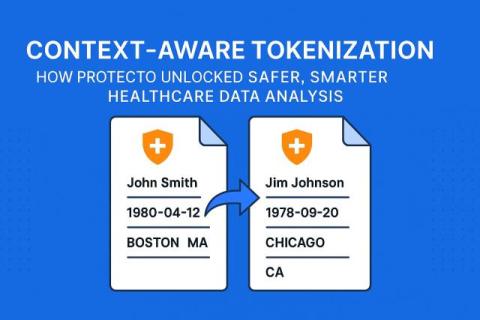
Context-Aware Tokenization: How Protecto Unlocked Safer, Smarter Healthcare Data Analysis

The healthcare industry, despite being highly regulated, is one of the most targeted for breaches, necessitating tight measures. While these measures are necessary, they often restrict the free flow of information, critical for analysing patient outcomes and improving internal operations. Tokenization has long been a reliable method for masking protected health information (PHI). But not all tokenization is created equal.

CrowdStrike Collaborates with AI Leaders to Secure AI Across the Enterprise

AI is transforming how organizations operate, from automating workflows to fueling innovation and competitive advantage. It’s the backbone of the modern enterprise. But while the opportunities AI presents are enormous, they come with new risks: models can be stolen, cloud workloads can be hijacked, and data can be poisoned. Every layer of the AI stack — from GPUs and training data to inference pipelines and SaaS apps — is a new target.