Security | Threat Detection | Cyberattacks | DevSecOps | Compliance

Configuration Drift: Why 99% of Cloud Failures Are Customer-Caused

"Gartner estimates that 99% of cloud security failures through 2025 will be the customer's fault, primarily due to misconfigurations." Don’t become part of the statistic. Take our configuration drift product tour for a spin. Consider it some light work before the weekend. Most breaches don’t stem from cloud provider failures, but from customer-side issues like misconfigurations, weak identity controls, and unmanaged change.

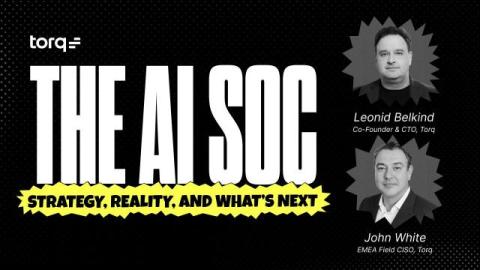
AI in Cybersecurity: Force Multiplier or Just More Noise? #podcast #aisecurity #aicybersecurity

Is AI actually making security teams safer—or just adding more noise? In this episode of IEN's Security Breach podcast, SafeBreach CTO Itzik Kotler joins Jeff Reinke to break down how attackers are using AI, why alert fatigue keeps getting worse, and what security teams should focus on before chasing the next “shiny object.” This conversation is a grounded take on preparation, detection engineering, and using AI intentionally—not reactively.

AI vs. Legacy Systems: Why Your Old Documentation Isn't Safe

AI vs. Legacy Systems: Why Your Old Documentation Isn’t Safe In this A10 Networks discussion, "APIs are the Language of AI: Protecting Them is Critical," security experts Jamison Utter and Carlo Alpuerto tackle one of the most overlooked threats in modern IT: the "specter in the shadow." For years, many organizations relied on "security through obscurity"—the idea that if a system is old or undocumented, it's safe from attackers. However, AI has changed the rules. These systems can now decipher legacy documentation and communicate with obscure systems faster than a human ever could.

AppGuard Critiques AI Hyped Defenses; Expands its Insider Release for its Next-Generation Platform

A new Top 10 Cybersecurity Innovators profile by AppGuard has been released, spotlighting growing concerns over AI-enhanced malware. AI makes malware even more difficult to detect. Worse, they use AI to assess, adapt, and move faster than any cyber stack can keep up. The report advocates for a fundamental change in approach, highlighting the limitations of reactive security measures. Rather than constantly adding or changing detection layers of cyber stacks, the profile emphasizes the importance of reducing endpoint attack surface-a perspective that challenges conventional industry practices.

Introducing your AI interaction layer

AI is everywhere, but without a consistent and secure way to connect it to real systems, it remains fragmented, difficult to govern, and hard to scale. Today, we’re introducing your AI interaction layer. Tines unifies AI agents, copilots, and Model Context Protocol (MCP) servers and clients in a single, secure environment. It gives teams a practical way to connect AI to systems and put it to work seamlessly across operations.