


|
By Tanium
Real-time visibility, control, and compliance for RTX Spark, NVIDIA DGX Spark, NVIDIA DGX Station and DGX Station for Windows.
|
By Tanium Staff
For the last three years, enterprise AI happened somewhere else. Models trained in someone’s cloud, inference ran behind an API, and the endpoint stayed where it had always been: on a laptop that opened a browser. With local AI computing platforms like NVIDIA DGX Spark (opens in a new tab), RTX Spark (opens in a new tab), and DGX Station (opens in a new tab), that framework is ending.
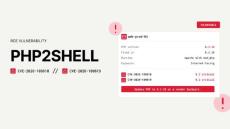
If you run PHP anywhere in your environment, patch to PHP 8.5.12, 8.4.27, 8.3.36 or 8.2.35 now. Two critical flaws disclosed this week, CVE-2026-109618 and CVE-2026-109619 (nicknamed "PHP2Shell"), let an unauthenticated attacker run code on a server with nothing more than a crafted web request. Both carry a CVSS v4.0 score of 9.2, every earlier release is affected, and exploitation in the wild has been reported. The patch is the easy part.
|
By Tanium Staff
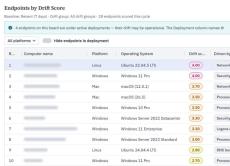
The next attacker in your environment probably won't look like an attacker. With AI in the mix, they can sign in with stolen credentials and use the same tools your IT team uses every day. Nothing about that activity matches a known-bad file or a known-bad rule. That is the problem Endpoint Drift is built to solve. It learns what normal looks like for each endpoint, then shows you which ones have started behaving differently, and why.

|
By HuntIQ Team
Stacking is usually the first thing we reach for on a persistence hunt. Pull every service, autorun or scheduled task across the environment, count how many endpoints have each one, and sort ascending. The entries at the bottom, the ones that show up on one or two machines, are where you start digging. In one Tanium Customer's environment, that didn't work at all. Each endpoint returned somewhere between a hundred and five hundred rows, and almost every one of them was unique to that endpoint.
|
By Tanium
In an era when AI lets attackers blend in and move at machine speed, Tanium Security Operations detects by behavior, responds at scale, and makes expert hunting routine for every analyst.
|
By Adam Gogal
The Service Graph Connector for Tanium has been a reliable and proven way ServiceNow customers keep their CMDB populated with Tanium endpoint data. As environments have grown and AI has accelerated the pace of change, the opportunity became clear: what if the CMDB could reflect that change as it happens, instead of catching up on a schedule?
|
By HuntIQ Team
The Hunt or be Hunted series tells the hunt stories. HuntIQ Tradecraft, now live on the Tanium Resource Center, gives you the playbooks to run them yourself.
|
By Loic Simon
Tanium’s customers span critical infrastructure sectors, including some of the largest banks, hospital systems, and government agencies in the world. They trust our agent on their most sensitive endpoints, which means that the software we ship must meet the high standards they set for themselves. That’s why we hunt our own vulnerabilities before anyone else can.
|
By HuntIQ Team
A hunting playbook built for ClickFix went looking for pasted commands and found a working credential to a third-party portal instead. Here is the sensor question, the filtering logic, and the reason keyword hunting fails at this.

|
By Tanium
How do you patch faster - all while honoring your patching policies and *not* breaking things? Attackers are using AI to find and exploit vulnerabilities faster, and vendors are shipping patches faster too. Your patching processes need to keep up! In this episode we show how to automate patching on a monthly cadence, roll it out in rings, and keep control of the process the whole way through. zero-touch, ring-based patch automation with Tanium deployment plans, in Atlas or the classic console.

|
By Tanium
Attackers don't wait for humans, and neither should your SOC. Tanium Security Operations brings detection, investigation, hunting, and response together on one platform that moves at machine speed. See how Tanium Atlas works as an extension of your team: pulling live telemetry, historical activity, and the full process tree the moment a threat surfaces, hunting a hypothesis across every endpoint in your fleet, and containing threats from one endpoint to hundreds of thousands. When the hunt needs to go deeper, HuntIQ's hands-on experts take it from there, inside your environment.

|
By Tanium
Tanium Provision takes a device from bare metal to domain-joined and software-ready, hands-off, from start to finish. This episode walks through the entire process, end to end. Rob Broughall takes us through the full provisioning journey: setting up the infrastructure, building a Windows 11 bundle from the ground up, and watching a device go from bare metal to domain-joined and running software in under two hours.

|
By Tanium
Vulnerability and compliance scans just got faster with Tanium's new scan engine. Today we're digging into Tanium Scan Engine 7.0, a rebuild of Comply scanning that moves enumeration onto Tanium Index instead of scanning live every time. The result: faster scans, lower resource usage, and one less dependency to worry about (goodbye, JRE!!).
|
By Tanium
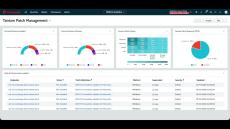
A critical vulnerability is discovered. Minutes later, it's patched — approved, scheduled, and deployed, with no one bouncing between systems to make it happen. In this video, Steven Payne shows how Tanium and ServiceNow close the gap between finding a problem and fixing it, turning a vulnerability into a governed change request and an executed patch deployment without a single manual hand-off. It's change management and endpoint remediation working as one motion instead of two disconnected jobs. If patch cycles have ever felt like a race against the clock, watch how much faster — and safer — that race can be.
|
By Tanium
Want to point your own AI at Tanium? The Atlas MCP Server makes that possible — governed, scoped, and available today. In this episode we cover: Tanium MCP - Available now (read-only) How to set up OAuth clients and how RBAC applies How to scope a single-purpose agent to one module, like Asset, using path-based tool filtering How to tell which tools consume Atlas AI credits - and which don't!
|
By Tanium
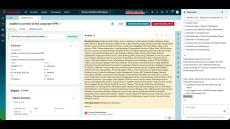
What if your service desk could solve a ticket before a human ever picked it up? Steven Payne walks through a live incident and shows ServiceNow's Now Assist doing the detective work in real time, pulling live Tanium endpoint data to pinpoint the root cause and draft the resolution, all in seconds. No log-diving, no remote sessions, no back-and-forth. Just a faster path from "ticket opened" to "issue resolved," with a person still firmly in control of the final call. This is what an autonomous service desk actually looks like in action — watch it happen.
|
By Tanium
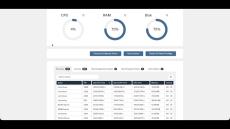
Most CMDBs are lying to you. The data looks clean, the dashboards look confident, and none of it reflects what's actually running in your environment right now. In this quick walkthrough, Steven Payne shows what happens when Tanium's real-time endpoint truth flows directly into ServiceNow's CMDB — no stale scans, no manual reconciliation, no guessing. Watch asset inventory, software, patch health, and vulnerability exposure snap into focus in real time, and see why "good enough" data is no longer good enough for the automations and AI your business is betting on.
|
By Tanium
Performance issues can seem like a maze to navigate when you're manually correlating data. And identifying driver issues? Well, no one wants to go there without a performance SME. But what happens when you introduce agentic analysis? Jason Stough shows how Tanium Atlas gets you from fleet-wide analysis to investigating a single endpoint to a confirmed root cause, fast.

|
By Tanium
See how a ScreenMeet session's AI summary lets Tanium Atlas turn a one-off fix into a safe, fleet-wide deployment.

|
By Tanium
Whole-of-state cybersecurity requires three components - governance, implementation and validation.

|
By Tanium
Preventing risks and breaches through cyber hygiene across endpoints is safer than remediation. And if done well, cyber hygiene can become a lightweight part of the way the company operates.

|
By Tanium
Protecting data from theft and improper use has long been the domain of cybersecurity and IT executives. But today, this is also a very real concern for the C-suite and, in many cases, the board of directors, all of whom are well aware of the repercussions of a data breach and failing to comply with regulations.

|
By Tanium
Cybersecurity and reliability risks cannot be managed by working in silos. The key to solving complex IT operations problems collaboratively is to build a common engineering approach.
- October 2026 (8)
- September 2026 (12)
- August 2026 (15)
- July 2026 (9)
- June 2026 (13)
- May 2026 (17)
- April 2026 (15)
- March 2026 (14)
- February 2026 (5)
- January 2026 (10)
- December 2025 (6)
- November 2025 (11)
- October 2025 (15)
- September 2025 (16)
- August 2025 (13)
- July 2025 (16)
- June 2025 (14)
- May 2025 (12)
- April 2025 (14)
- March 2025 (13)
- February 2025 (15)
- January 2025 (12)
- December 2024 (18)
- November 2024 (10)
- October 2024 (18)
- September 2024 (16)
- August 2024 (14)
- July 2024 (15)
- June 2024 (14)
- May 2024 (15)
- April 2024 (17)
- March 2024 (10)
- February 2024 (11)
- January 2024 (12)
- December 2023 (11)
- November 2023 (13)
- October 2023 (7)
- September 2023 (19)
- August 2023 (14)
- July 2023 (11)
- June 2023 (20)
- May 2023 (10)
- April 2023 (17)
- March 2023 (13)
- February 2023 (13)
- January 2023 (14)
- December 2022 (7)
Empowering the world’s largest organizations to manage and protect their mission-critical networks.
The industry’s approach to endpoint management is flawed. Every IT security and management provider offers only a small piece of the solution required to protect our environments. Organizations are forced to buy tens of these different solutions, stitch them together, and make decisions based on stale, inaccurate and incomplete data. CIOs and CISOs need a new way to manage and secure their endpoints.
It's time for a different approach:
- Visibility: See into every endpoint, managed or unmanaged, with complete, accurate and real-time visibility.
- Control: Whether in the cloud or on premises, take control of your entire IT estate in seconds with minimal network impact.
- Remediation: Enable teams to investigate and respond to incidents with complete, high-fidelity data in real time.
Converge tools, workflows and teams across the entire endpoint management cycle.