Security | Threat Detection | Cyberattacks | DevSecOps | Compliance

Open-Source Intelligence Tools for Security Teams

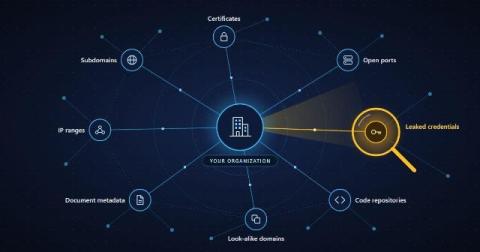
Attackers rarely start with an exploit. They start with a search: which subdomains a company runs, which staff email addresses sit in breach dumps, which forgotten server still answers on the internet. MITRE ATT&CK treats this stage as a tactic of its own, Reconnaissance, and most of it runs on public data.


A Short History of Crypto Customer Data Leaks, and What They Teach

In August 2026, Trezor told about 13,700 US customers that their names, email addresses, phone numbers and shipping addresses had been stolen in a breach at ShipMonk, a logistics company that had once handled its orders. Weeks later the number rose to roughly 80,700, after the company found the stolen records also covered orders placed between late 2019 and mid-2021. Customers who had bought a wallet five years earlier, and long since forgotten the delivery, were suddenly on a list in the hands of an extortion group.

Beyond Triage: How the Aurora Agentic SOC Enhances the Concierge Experience

A lot of the current conversation about agentic SOCs is about triage. Faster detection, faster investigation, alerts resolved in minutes instead of hours. When we set out to build the Aurora Agentic SOC, we didn’t just want to make triage faster. We fundamentally re-engineered our SOC to strengthen every job it does, and enhancing the Concierge Experience for our customers was a key part of that.

The first 72 hours of a ransomware attack: Why restored isn't recovered

You start the day with reports that your employees cannot access critical systems. A ransom note soon explains why: attackers have encrypted them and demand $2 million in bitcoin for a decryption key. Your team contains the attack and confirms that the backups are safe, yet this is only the beginning. Restoring your servers can take weeks, but recovering the business can take much longer.

Cyber Loss When the Stolen Asset Is a Trained Model

A trained model is expensive to produce, cheap to copy and impossible to recall. Where one is taken, the organization still holds it, and the loss is not that the asset is gone. ‍ What ends is exclusivity. Lost exclusivity is a different quantity from a destroyed asset, it carries no notification obligation, it appears in no breach cost dataset, and most estimates therefore put it at zero by omission rather than by judgment. ‍

The AI Marking Deadline That Applies Only to Systems Already Running

Transitional relief normally works one way. A new rule arrives, existing products are carved out or given years, and anything built afterwards complies from the start. ‍ The marking obligation for synthetic content inverts that. Article 50 has applied since 2 August 2026, and a targeted transitional period gives extra time to systems that were already on the market rather than to new ones.

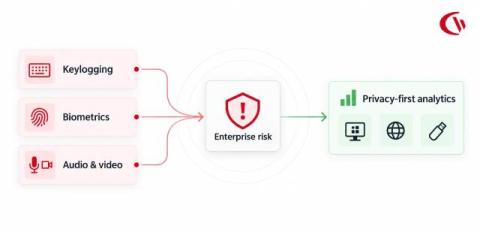
Workplace Biometrics, Keylogging & Wiretapping Laws: Enterprise Risk Assessment Guide

For years, employers assumed that owning the laptop and the network meant unlimited monitoring rights. In 2026, that assumption no longer holds. Federal wiretap law, state biometric statutes, all-party consent requirements and the EU Artificial Intelligence Act each limit what an employer can collect and how. Most workplace surveillance software must weigh the competing goals of safeguarding corporate resources and respecting employees’ right to privacy.

How can organizations enforce separation of duties in access controls?

Separation of duties, also called segregation of duties, is a control that splits a sensitive business process across more than one person so no single user can both execute and approve the same action. Organizations enforce it by mapping conflicting duties into a matrix, applying role-based access control and least privilege, requiring independent approval on high-risk transactions, and reviewing access on a set cadence.

What an AD/Entra Hybrid Audit Actually Looks For & Why Most Teams Fail the First One

Most AD cleanup processes stop at the domain boundary, but hybrid audits don’t. Here’s what auditors actually check across Active Directory and Entra ID, and the gaps that trip up teams in their first review. Ask a few IT teams how they handle offboarding and you’ll hear the same answer: disable the account in Active Directory, close the ticket, and move on.

Cybersecurity Awareness Month 2026: Why Awareness Needs to Be Intelligence-Led

Cybersecurity Awareness Month has encouraged safer online behaviour every October since 2004, but AI-enabled attacks are changing what awareness needs to look like. This article looks at the campaign's history, the latest UK threat data, and why organisations should ground their awareness efforts in real threat intelligence.