


|
By Dan Piazza
AI has removed the skill, personalization, and speed barriers that once limited cyberattacks. Attackers use language models at every stage of the kill chain, from recon to persistence, and underground tools sell pre-jailbroken access to mainstream models for as little as $50 a week. But because every attack still has to change a file, a configuration, or a script on a real system, detecting unplanned change works no matter which model wrote the payload.
|
By Netwrix Team
Data masking limits unnecessary exposure when teams copy sensitive production values into testing, analytics, and sharing workflows. It replaces those values with realistic substitutes, but weak implementations still permit inference, linkage, or reversal. Effective programs select techniques based on downstream use and test each output against its intended workflow.
|
By Grady Summers
As AI agents spread across IT environments, organizations struggle to see what agents they have and what data those agents can access. For Cybersecurity Awareness Month, we wanted to share what Netwrix is doing to help IT and security teams improve agentic AI visibility and governance to keep their sensitive data secure. I recently sat down with Jeff Warren, our chief product officer, who has been working through this problem with customers for a while.
|
By Kristina Kaya
A local password manager stores your credentials in an encrypted vault on your own device or server. You control your data and backups, but you also manage keys and updates yourself. That works for one person. Teams need role-based access, approvals for sensitive accounts, and logs that show who accessed what.
|
By Netwrix Team
A data risk assessment evaluates where sensitive data lives, who can reach it, and what happens if that access is misused. It creates value only when teams assign and track remediation; without current access data and live verification, organizations can't show that exposure has fallen. 75% of sensitive data exposures begin with compromised identities or misconfigured permissions, according to the Netwrix 2026 Data and Identity Security Report.
|
By Jarosław Bogalecki
Remote code execution (RCE) lets an attacker run commands on a system they don't own, usually through a flaw in a web application, CMS, VPN portal, or API. A successful exploit inherits the permissions of the vulnerable service, and many services run with far more access than they need. AI shortens the time from a disclosed flaw to a working exploit and lets attackers test thousands of exposed systems at once. A remote code execution flaw turns a vulnerable server into someone else's computer.
|
By Dennis Chen
Proactive security means measuring your posture against clear policies on a steady rhythm and fixing risk before it becomes an alert or an audit finding. Most teams still work reactively: they wait for an auditor or an alert, investigate, and then act. SOC 2, ISO 27001, and NIST CSF already expect ongoing improvement. Getting there takes a shift in mindset and tools that make the rhythm easy to keep.
|
By Kate Fleming
AI agents are multiplying faster than most organizations can track, let alone govern. IDC predicts there will be 1.3 billion agents by 2028. Every team that adopts one is also, often without meaning to, creating a new identity. And it’s one that can access systems, move data, and act on someone's behalf. The rush right now is to get ahead of that before it spirals, and the first step is to answer a basic question: whose job is this?
|
By Tyler Reese
Part 2 of 3 in our Rethinking Privileged Access series. Start with Part 1: The password was never the only problem. In Part 1, we drew the line between the vault-and-checkout model of legacy PAM and the session-and-Activities model of modern PAM with Netwrix Privilege Secure (NPS). One protects the password; the other eliminates the standing privilege behind it. That framing is a good starting point, but it understates the case. In Windows and Active Directory, the password is just the seed.
|
By Dennis Chen
Service accounts, app integrations, and AI agents often have more access than any person, and they get reviewed last. That gives them one of the largest blast radiuses in the environment, meaning they can reach more if they're compromised. The Uber and Cloudflare breaches and the Salesloft Drift campaign against Salesforce customers show how attackers exploit these accounts. Check them for open, stale, orphaned, and privileged access, then cut access back to what they really use.
|
By Netwrix
Learn more: netwrix.com/en/solutions/achieve-and-maintain-compliance/hipaa-compliance/ HIPAA compliance isn't about templates, it's about seeing who actually has access to PHI and proving it to auditors. Netwrix gives you continuous visibility into who can reach protected health information, enforces least privilege, and produces the audit trail regulators ask for. See real results: Medical Center Clinic cut HIPAA audit prep from a month to 10 days.

|
By Netwrix
Everyone’s talking about System One models, AI built for fast, structured decisions rather than long-form text. Meet the Netwrix team behind our AI work and see how they’re putting it to use. Netwrix AI experts Jordan Violet, Jake Mahon, and Jean Perez join Netwrix Innovation Week to demo how we use System One to assess account health, verify whether documents actually contain sensitive data, and determine whether AI can safely merge a pull request.
|
By Netwrix
Every AI agent that acts on its own needs a login, access tokens, and permissions, which makes it a new kind of identity that has to be secured. Join our Notes From the Field panel for a live discussion of identity security. We’ll cover how attackers are using AI to target Active Directory and Entra ID, how to manage AI agents as identities, and which fixes defenders should prioritize.
|
By Netwrix
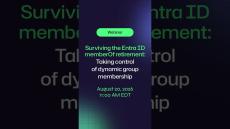
Your access, licensing, and policies have been running on a setting Microsoft is quietly retiring. If dynamic groups touch anything in your environment, this affects you, whether you've heard about it yet or not. Tyler Reese, VP Product Management, Identity at Netwrix, walks through what changes and what to do before it does. Aug 20, 11am ET.
|
By Netwrix
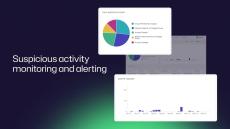
One platform to discover, monitor, and remediate data and identity risks across your environment. More visibility. More control. Fast setup.

|
By Netwrix
Security maturity isn't a single score. It's identity, access, data, and AI exposure, each moving at a different pace. Dirk Schrader, Field CISO (EMEA) and VP of Security Research at Netwrix, walks through what that actually means for how you assess your posture. Take the assessment maturity.netwrix.com.

|
By Netwrix
Track critical files. Monitor configuration changes. Know exactly what changed, when, and why. Because visibility is the first step to control.

|
By Netwrix
As access changes constantly and sensitive data moves faster than security teams can track, visibility matters more than ever. Helen R., Director of Engineering at Netwrix, explains why identity and data security can’t operate in silos anymore, especially in the age of AI. Have questions about identity governance, AI, or protecting sensitive data? Experts at Netwrix, including Helen, are helping organizations navigate these challenges every day.

|
By Netwrix
What if one small configuration change exposed your entire environment and no one noticed? Most security incidents don’t start with malware. They start with misconfigurations.

|
By Netwrix
Sensitive data sprawl, accumulated access, and unclear ownership continue to increase risk across modern environments. Farrah Gamboa, Senior Director of Product Management at Netwrix, explains why continuous visibility into sensitive data and access is critical to reducing exposure and strengthening security.
|
By Netwrix
If you are just getting started with Office 365 or you want to master its administration, this guide is for you. The beginning features very easy tasks, including provisioning and de-provisioning of Office 365 user accounts. Then it offers guidelines on managing licenses and explains how to administer different applications using both the Office 365 admin console and PowerShell. Last, this Office 365 tutorial (.pdf) provides more advanced guidance, helping you set up a hybrid environment, secure your cloud-based email application with encryption and spam filtering, and more. After reading this guide, you'll also know how to troubleshoot Office 365 issues, ensuring a seamless experience for your business users.
|
By Netwrix
Cybersecurity practitioners worldwide use the NIST Cybersecurity Framework to strengthen their security program and improve their risk management and compliance processes. The framework is voluntary, but it offers proven best practices that are applicable to nearly any organisation. However, it can seem daunting at first because it includes so many components.
|
By Netwrix
The simplest definition of Active Directory is that it is a directory service for Windows operating systems. But what does this actually mean? What is Active Directory used for? How can you manage it? Whether you are a new system administrator who wants to learn Active Directory basics, such as its structure, services, components and essential terminology, or a seasoned administrator looking to find new best practices and improve your skills even further, this eBook has something for you.

|
By Netwrix
Safeguarding business-critical and regulated data like customer records, financial information and intellectual property is critical to the success of the entire organization. However, your goal should not be to build a fortress. Rather accept that your network will inevitably be breached from the outside and attacked from within, so you should build a layered defense strategy that helps you both minimize your attack surface and spot suspicious behavior in time to respond effectively.
|
By Netwrix
If you are just getting started with Office 365 or you want to master its administration, this guide is for you. The beginning features very easy tasks, including provisioning and de-provisioning of Office 365 user accounts. Then it offers guidelines on managing licenses and explains how to administer different applications using both the Office 365 admin console and PowerShell. Last, this Office 365 tutorial (.pdf) provides more advanced guidance, helping you set up a hybrid environment, secure your cloud-based email application with encryption and spam filtering, and more. After reading this guide, you'll also know how to troubleshoot Office 365 issues, ensuring a seamless experience for your business users.
|
By Netwrix
In today's digital world, the problem of data theft by departing employees goes far beyond stealing the names of a few customers or a product design sketch; it can mean the loss of gigabytes of critical corporate intelligence and legally protected information like customer cardholder data. Plus, ex-employees have even more avenues for using the data they steal - they can use it against their former employers, leak it to competitors, sell it to the highest bidder or simply publish it on the internet.
|
By Netwrix
Although most IT pros are aware of the benefits that technology integrations promise, many of them are reluctant to take on integration projects. They know all too well that many vendor products simply aren't designed to be integrated with other systems; the lack of an application programming interface in particular is a huge red flag. Fortunately, there are vendors, such as ServiceNow and Netwrix, that enable organizations to reap the benefits of integration without having to invest lots of time and money.
|
By Netwrix
It's hard to imagine an organization today that does not rely on file servers, SharePoint or Office 365 for storing data, including valuable and sensitive information such as intellectual property and personal data. This makes these systems particularly attractive targets for all sort of attackers, from external hackers to disgruntled employees. To protect data from both external and internal threats, businesses must regularly conduct thorough data security assessments as part of their broader cyber security assessments.
|
By Netwrix
Compliance regulations are designed to provide a unified set of rules or guidelines to help IT organizations implement policies and measures that deliver the required levels of integrity, security, availability and accountability of data and operations. This white paper provides an overview of various types of IT compliance, explores their basic concepts and commonalities, and offers guidelines for implementation.
- October 2026 (23)
- September 2026 (19)
- August 2026 (15)
- July 2026 (8)
- June 2026 (14)
- May 2026 (9)
- April 2026 (18)
- March 2026 (14)
- February 2026 (10)
- January 2026 (5)
- December 2025 (1)
- November 2025 (4)
- October 2025 (15)
- September 2025 (14)
- August 2025 (9)
- July 2025 (7)
- June 2025 (13)
- May 2025 (6)
- April 2025 (13)
- March 2025 (19)
- February 2025 (8)
- January 2025 (11)
- December 2024 (11)
- November 2024 (7)
- October 2024 (13)
- September 2024 (13)
- August 2024 (11)
- July 2024 (13)
- June 2024 (11)
- May 2024 (1)
- April 2024 (7)
- March 2024 (4)
- February 2024 (12)
- January 2024 (16)
- December 2023 (11)
- November 2023 (2)
- October 2023 (1)
- September 2023 (1)
- August 2023 (5)
- July 2023 (6)
- June 2023 (6)
- May 2023 (16)
- April 2023 (12)
- March 2023 (11)
- February 2023 (11)
- January 2023 (7)
- December 2022 (14)
- November 2022 (13)
- October 2022 (20)
- September 2022 (8)
- August 2022 (7)
- July 2022 (1)
- June 2022 (5)
- May 2022 (9)
- April 2022 (5)
- March 2022 (6)
- February 2022 (3)
- January 2022 (5)
- December 2021 (9)
- November 2021 (7)
- October 2021 (7)
- September 2021 (6)
- August 2021 (5)
- July 2021 (6)
- June 2021 (7)
- April 2021 (9)
- March 2021 (6)
- February 2021 (5)
- January 2021 (4)
- December 2020 (6)
- November 2020 (4)
- October 2020 (4)
- September 2020 (10)
- August 2020 (9)
- July 2020 (10)
- June 2020 (8)
- May 2020 (2)
- March 2020 (1)
- February 2020 (5)
- January 2020 (1)
- November 2019 (3)
- October 2019 (1)
Orchestrate IT security with your data at its core. Netwrix solutions empower you to identify and classify sensitive information with utmost precision; reduce your exposure to risk and detect threats in time to avoid data breaches; and achieve and prove compliance.
Data Security Done Right:
- Consistency in the Approach. Confidence in the Results. Ensure your cybersecurity efforts are laser-focused on truly important data, instead of false positives that do not require protection. Our unified platform identifies and classifies your sensitive, regulated or mission-critical information consistently and accurately — including both structured and unstructured data, whether it’s on premises or in the cloud.
- Reduce Risk. Prevent Breaches. Do you know if the sensitive data you store is overexposed? Who can access it? What activity is going on around it? Netwrix solutions help you answer these key questions and ensure that risk-appropriate security controls are implemented around your most critical data. Plus, the platform enables you to detect abnormal activity early and respond before a threat turns into a breach.
- Achieve Compliance. Deliver Hard Evidence. Assess the effectiveness of the data security controls across your entire infrastructure so you can remediate any flaws before auditors come to call. Get the hard evidence you need to demonstrate to auditors that your controls adhere to their regulations and quickly answer any ad-hoc questions.
Data Centric. Laser Focused.