Security | Threat Detection | Cyberattacks | DevSecOps | Compliance

Securing remote military operations with effective cybersecurity strategies

Cybersecurity is a vital aspect of remote military operations, where the stakes are high and the environments challenging. Implementing effective cybersecurity strategies is essential to protect sensitive data and ensure the success of missions. This article explores key strategies and technologies to safeguard these operations.

Featured Post

From Spend to Impact: Fixing the Disconnect in U.K. Supply Chain Security

In today's hyperconnected economy, supply chains are no longer just operational backbones; they are strategic lifelines, shaping resilience, competitiveness, and innovation across industries. Yet for many U.K. organisations, these lifelines are becoming increasingly fragile. The most recent iteration of our global supply chain defence research indicates that - despite pouring significant resources into third party risk management (TPRM) programs and embracing new technologies to shore up their supply chain defences - U.K. businesses continue to face a high rate of supply chain breaches.

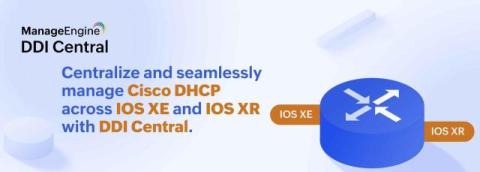
How does DDI Central assist in onboarding and managing Cisco DHCP routers within a network?

DDI Central now offers the ability to onboard an organization’s Cisco routers into the application, giving network administrators hands-on control over router configurations and resources. It also enables centralized monitoring of all DHCP leases across the router’s pool ranges. Administrators can add and manage DHCP pool ranges for both DHCPv4 and DHCPv6.

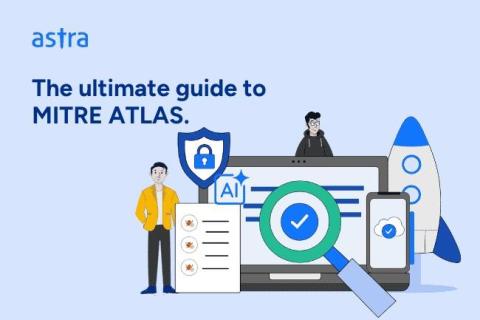
The Ultimate 101 Guide to MITRE ATLAS

Artificial intelligence is increasingly ingrained in every aspect of healthcare diagnostics, financial systems, autonomous vehicles, and critical infrastructure. Still, the reality has set in: these systems are under threat unlike anything we have seen, and existing cybersecurity frameworks were never designed to handle AI-specific threats.

Secure by Default: Why Snyk and Augment Code are the New Standard for AI Development

AI coding assistants have fundamentally changed development velocity. With tools like Augment Code, developers can now build and iterate at a pace that was unimaginable just a few years ago. However, this explosion in speed has created a new challenge: security teams, often still relying on manual review processes, are becoming the bottleneck.

Cato's ASK AI Assistant: Turning Complex Network Operations Into Simple Conversations

Every superhero needs a sidekick. For your network and security teams, that is Cato’s ASK AI Assistant, our new AI Assistant built to help you see, solve, and secure faster than ever. This isn’t a basic Q&A tool. It brings customer-specific information and ability to work with other tools to answer complex questions.

Why AI Transformations in Security Fail Like New Year's Gym Resolutions

Enterprise AI adoption moved fast. Speed mattered. Shipping mattered. Getting AI into production mattered. That phase is over. Security leaders are now asking a harder question: whether the AI already embedded in security operations is safe, explainable, and aligned with how modern SOC teams actually work. The focus has shifted from adoption to trust, specifically explainability, governance, and operational fit.

AI Automation for MSPs: Boost Productivity, Cut Costs, and Improve Service Quality

AI automation for managed service providers is creating a major shift from reactive to proactive service delivery, allowing MSPs to streamline ticket handling, accelerate resolution times, and operate far more efficiently. Real-world data shows that AI-driven automation can help service desks close significantly more tickets per technician by automating triage and routine tasks, while also reducing operational costs by 25 to 40 percent** through improved workflow efficiency and reduced manual labor.

Oracle Database Backup: A Complete Strategy Guide

Your Oracle database contains business-critical data that powers daily operations, customer transactions, and strategic decisions. Hardware failures, human errors, and ransomware attacks can destroy this data in seconds, stopping operations and costing you millions in recovery expenses and lost revenue. A proper Oracle database backup strategy determines whether your organization recovers quickly or faces extended downtime.

The Complete Guide to the 3-2-1 Backup Rule

To reduce the risk of data loss, organizations rely on proven backup strategies. In this guide, we explain what the 3-2-1 backup rule is, how it works, and how to apply it correctly. Topics discussed in this piece: click to expand What is the 3-2-1 backup rule? Three data copies Two different media One off-site copy Is the 3-2-1 backup rule still the industry best practice? Ever heard of the 3-2-1-1-0 backup rule? Alternative 4-3-2 strategy How do these compare against each other?