Security | Threat Detection | Cyberattacks | DevSecOps | Compliance

You Can't Patch Your Supply Chain So Why Treat It Like a Vulnerability Problem?

For years, vulnerability management has followed a familiar pattern: discover assets, scan for CVEs, prioritize by severity, and remediate what you can. That model works, at least within the boundaries of systems you own. The problem is that most organizations no longer operate within those boundaries. Federal agencies especially depend on a complex ecosystem of SaaS platforms, software vendors, contractors, and open-source components.
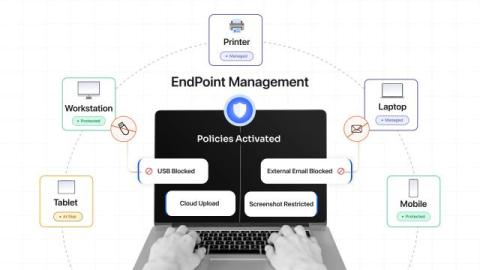
What is Endpoint Management? Complete Guide for IT Admins

Most organizations don’t struggle with managing devices in the beginning. A few laptops, some smartphones and tablets, everything feels under control. The problem starts when things scale. More devices get added. Teams start working remotely. Different operating systems and use cases come into play. Over time, it becomes harder to track what’s connected, what’s updated, and what’s secure. That’s when endpoint management stops being optional.

How Can Active Deception Validate Security Controls in Real Environments?

Security teams spend enormous effort deploying security controls. Endpoint protection tools. Network monitoring platforms. Identity security solutions. Detection systems. Logging platforms. The list continues to grow every year. But here’s the uncomfortable question many organizations eventually face: Are those controls actually working the way we expect? Security tools can generate alerts, dashboards, and metrics.

Exploring CSPM: What is Cloud Security Posture Management?

Cloud Security Posture Management (CSPM) is a category of cloud security tooling that automates the identification and remediation of misconfigurations and security risks across cloud environments. CSPM solutions continuously monitor how cloud resources are set up, compare those configurations against industry benchmarks and organizational policies, and flag issues that could create security exposure.

Cybersecurity Strengthens Trust in Digital Systems

Every time a customer enters payment details, shares personal data, or logs into an online service, they place enormous faith in the organization behind that platform, trusting that the entity responsible for managing their sensitive information will safeguard it against breaches, unauthorized access, and any form of misuse. This kind of faith is not something that customers grant freely or without careful consideration of the security measures in place. It is built through clear, measurable security practices that shield sensitive data from unauthorized access and misuse.

IREX Upgrades FireTrack AI for Faster and More Accurate Fire Detection

WASHINGTON, DC - IREX has announced a major update to its FireTrack fire and smoke detection module, introducing significant improvements in speed, accuracy, and operational flexibility across a wide range of environments. According to an article on The Next Web, the updated solution is designed to work seamlessly with existing camera infrastructure, enabling organizations to enhance fire detection capabilities without deploying additional hardware.

Navigating DORA Compliance: Software Development Requirements for Financial Services Companies

Note: This blog was originally published in July 2024 and updated on an annual basis. It was most recently updated in April 2026. Regulatory compliance is a common and critical part of today’s rapidly evolving financial services landscape. One new regulation that EU financial institutions must adhere to is the Digital Operational Resilience Act (DORA), enacted to enhance the operational resilience of digital financial services.

Q1 at AlgoSec: What innovations and milestones defined our start to 2026?

As we close out the first quarter of 2026, I find myself reflecting on a start to the year that was defined by product momentum, stronger market validation, growing trust from regulated organizations, and meaningful industry recognition. In just three months, AlgoSec introduced important platform enhancements, published fresh research on where network security is heading, strengthened its standing with government and highly regulated customers, and closed the quarter with three major awards.

How Forward Helps You Respond to CISA Emergency Directive 26-03

CISA issued Emergency Directive 26-03 in response to active exploitation of vulnerabilities in Cisco SD-WAN management systems, specifically Cisco Catalyst SD-WAN Manager and SD-WAN Controller platforms. The vulnerabilities include an authentication bypass flaw (CVE-2026-20127) that allows unauthenticated remote attackers to gain administrative privileges and manipulate network configuration, and a path traversal vulnerability (CVE-2022-20775) that enables local privilege escalation to root.

The Context Gap: How Nearly Half of Your Time is Lost to Investigation

The classic tradeoff in cybersecurity has always been simple: more visibility at the cost of speed. But today, that tradeoff is breaking down. As attackers leverage AI to find and exploit vulnerabilities at unprecedented scale, the sheer volume of alerts is burying security teams. The result? An expanding exposure gap. It is taking longer than ever to triage and remediate threats, creating a dangerous window between when a tool pings and when a human in the SOC can actually take action.