Security | Threat Detection | Cyberattacks | DevSecOps | Compliance

The Latest Cybersecurity News & Insights From Around The World


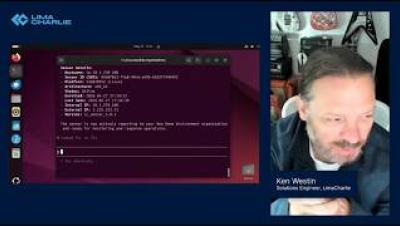
AI SecOps Worskhop Series: Building Custom Stand-Alone Dashboard Applications
This hands-on workshop is designed for security professionals, developers, and analysts who want to unlock the full potential of their security data through custom dashboards and visualizations. We will guide attendees through a practical, step-by-step process demonstrating precisely how to leverage the robust capabilities of the LimaCharlie API in conjunction with the power of Claude Code to build rich real-time dashboards.

Automation, Intent, and Ownership: What to Learn from the AI Agent Security Summit
When the AI Agent Security Summit launched in San Francisco last October, agent-based threats had already escalated from a novel consideration to a predominant blocker for enterprise adoption. The security community was laser-focused on recognizing and minimizing the blast radius posed by agentic vulnerabilities, whether that meant indirect prompt injection, MCP poisoning, or hallucinations.
Latest agentic AI developments and industry trends
A practitioner's guide to the capability shifts, framework changes, and regulatory developments reshaping how enterprise IT and cybersecurity teams govern, deploy, and defend against autonomous agents.
Vanta Launches New Agent to Unify Internal and Third-Party Risk
AI Risk Library and scoring give an always-current view of risk posture. Product announcements and demos livestreaming at Vanta Delivers: Live from New York on June 3.
Mythos access may be limited, but banking threats are there for all to see
Originally published in Vancouver Tech Journal, June 2, 2026. Bijan Sanii is CEO and founder at INETCO It may seem reassuring that JPMorganChase, the largest U.S. bank, is among the 12 launch partners involved in Anthropic’s Project Glasswing. But given the stark cybersecurity warning the initiative represents, including a single financial institution is nowhere near enough.
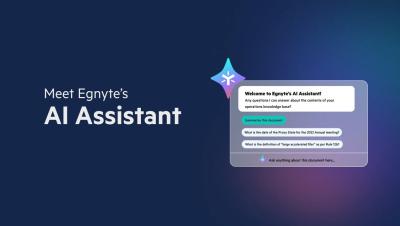
Find Insights Across Your Content With Egnyte's AI Assistant
Transform how your team interacts with company content. Egnyte’s AI Assistant brings secure, conversational AI directly into your existing cloud workflows to surface insights from files, reports, and connected apps in seconds.

Prompt injection protection: Detecting and blocking malicious AI instructions
Author: Alexander Ivanyuk, Senior Director, Technology Generative AI changes how people work with information. A user can ask a question, upload a document, summarize a ticket, draft an email or ask an AI assistant to help with a workflow. That is useful because the interaction feels natural. But the same natural-language interface also creates a new security problem: instructions and data can become mixed together.

ISO 42001:2023 and the New Reality of Cloud AI Data Risk
As organizations accelerate adoption of AI systems, the scope of data security has dramatically expanded. Sensitive data is no longer simply stored. It is continuously accessed, transformed, and moved across cloud services, APIs, and AI pipelines. For use cases from model training to inference, AI systems depend on dynamic data flows that introduce new and often unseen risks.
Why AI Changes Everything About Software Risk
Software risk has always existed. What’s changed is the scale, speed, and economics of it. For decades, organizations operated under a relatively stable set of assumptions: humans write code, security teams scan it, vulnerabilities get prioritized and patched. The process was slow, imperfect, and often underfunded — but it was manageable. AI has dismantled those assumptions. And if your security program is still calibrated to the old model, you’re already behind.