Security | Threat Detection | Cyberattacks | DevSecOps | Compliance

What Are the Risks of Using AI in the Workplace?

Bringing artificial intelligence into the office is a bit like adopting a hyper-energetic, brilliant, but chaotic intern. It can supercharge productivity, but if left unsupervised, it can accidentally delete the company database or invite a lawsuit. While the benefits of workplace AI are heavily advertised, deploying it without a safety net introduces significant vulnerabilities. Here’s a comprehensive breakdown of the risks businesses face when integrating AI into their daily operations.
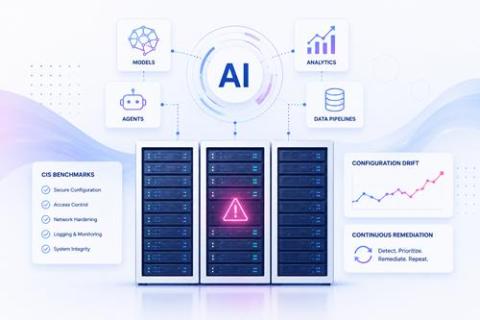
You Can't Be AI-Secure on a Misconfigured Infrastructure

Walking the floor at Infosecurity Europe this week, it was impossible to avoid the subject of AI. Every conversation seemed to touch on it in some way. Vendors were demonstrating AI-powered detection capabilities, security teams were discussing governance frameworks, and practitioners were debating how best to secure the models, agents and data pipelines that are rapidly becoming part of everyday enterprise operations.

So You Have an AI Security Budget. Now what?

Most organizations spend their AI security budget on the wrong layer. The instinct is to just buy visibility to inventory the models, map the APIs, and ship a dashboard. But visibility alone won’t stop the coding agent that just pulled in a compromised MCP server. It won’t stop the production agent that’s about to forward a customer record to a place it shouldn’t go.

Type Level Security: The future of secure AI code generation?

With code being written (& generated) faster than ever before, there is the unfortunate side effect that security vulnerabilities are also coming faster than ever before. Asking your LLM not to include security vulnerabilities in its code doesn't always work. It is becoming clear that the way software is built today, manually or with assistance, is insufficient when it comes to reliably, consistently, and provably writing secure code.

The Hidden Economics of the Agentic SOC

The conversation around AI in cybersecurity is changing. The first question was whether AI could help security teams move faster. It can. AI-led security operations can accelerate investigations, correlate signals, reduce manual work, and help defenders respond at the speed modern threats demand. But as AI moves from experimentation into production, the next question becomes harder: can organizations operate it at scale without creating a new cost problem?

Mythos access may be limited, but banking threats are there for all to see

Originally published in Vancouver Tech Journal, June 2, 2026. Bijan Sanii is CEO and founder at INETCO It may seem reassuring that JPMorganChase, the largest U.S. bank, is among the 12 launch partners involved in Anthropic’s Project Glasswing. But given the stark cybersecurity warning the initiative represents, including a single financial institution is nowhere near enough.

Why Remote IT Monitoring Is Essential for Modern Businesses

Every minute of unexpected downtime costs more than most leaders want to admit. And in a world where operations genuinely never stop, a single undetected network failure can snowball fast, resulting in lost revenue, a bruised reputation, and customers venting on social media. Remote IT monitoring gives businesses something they actually need: continuous, full-spectrum visibility across their entire IT environment, with no one physically on-site required.

What Hiring Managers Are Actually Looking for in 2026 - Straight From the Job Postings

Job descriptions have always been a useful mirror. They reflect not what organisations wish the talent market looked like, but what they actually need right now, in the roles they are actively trying to fill. Reading them carefully, across industries and seniority levels, tells a more honest story about professional demand than any survey of executive sentiment or forward-looking forecast.

AI Market Competition Depends on Control of Infrastructure, Industry Analysis Suggests

The brief leadership crisis at OpenAI in late 2023 triggered widespread debate about the future of artificial intelligence companies. While many observers focused on governance issues, some analysts viewed the situation as evidence of deeper forces shaping the industry. As reported by The Silicon Review, entrepreneur and IFORELS founder Vlad Panin argued that the long-term balance of power in AI would depend less on public leadership disputes and more on who controls critical resources such as computing infrastructure, distribution channels, data access, and financial incentives.