Security | Threat Detection | Cyberattacks | DevSecOps | Compliance

Elevate Your Cloud Defense: 6 Top Strategies for Safeguarding Cloud-Native Apps

A cloud-native application is specifically created to operate seamlessly within a cloud environment, taking advantage of cloud infrastructure and services to achieve top-notch performance, adaptability, and reliability. They use microservices instead of monolithic structures, allowing independent development and deployment. Microservices are hosted in containers, providing a lightweight and portable runtime environment.

Leveraging Low-Code Platform Integrations for Effective Business Automation

In the dynamic world of business, the quest for streamlined operations and increased efficiency is constant. One of the key tools that have gained considerable attention in recent years is the use of low-code platforms. These platforms offer a simplified approach to programming, making it easier for a wider range of individuals within a company to contribute to the digital transformation process. A notable leader in this space is Latenode.

Panel Discussion: In Fintech We Build Trust-Our Banking Apps At Risk

In the rapidly evolving world of Fintech, trust, and security are of paramount importance. We have gathered an exceptional panel of industry experts who will delve into the challenges faced by Fintech companies in maintaining the trust of their customers and ensuring the security of their banking apps. Join our industry leaders comprising of Subho Halder Majorie Labindao Salinawati Salehuddin Md. Abul Kalam Azad,CISSP,CISA,CISM, CRISC.

The Unseen Risks of Open Source Dependencies: The Case of an Abandoned Name

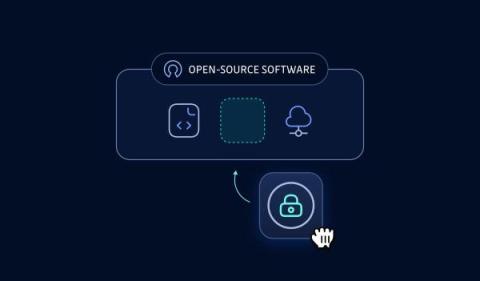
One often-overlooked risk in the bustling ecosystem of open-source software are vulnerabilities introduced through software dependencies. We mention this because today, a malicious actor took over a RubyGems package name with more than two million downloads. Mend.io technology detected the package before it could be used for an attack, but the case of ‘gemnasium-gitlab-service‘ serves as an important reminder of the risk of neglecting dependency management.

AI-Assisted Attacks Are Coming to OT and Unmanaged Devices - the Time to Prepare Is Now

Malicious code is not difficult to find these days, even for OT, IoT and other embedded and unmanaged devices. Public exploit proofs-of-concept (PoCs) for IP camera vulnerabilities are routinely used by Chinese APTs, popular building automation devices are targeted by hacktivists and unpatched routers used for Russian espionage.

Security Obscurity: DNS Tunnelling and CensysGPT

Join Bill Carter and Robin Johns as they talk about the latest and greatest Cybersecurity topics and incidents happening across our digital landscape. In this episode we dive into the concepts and attack vectors of DNS Tunnelling, as well as start exploring the dangerous OSINT tools of Shodan and Censys. Security through obscurity used to be acceptable, but with GPTs and Adversarial GANs appearing - is this still a valid approach?

Security Competency and More - Deepening our Ties with AWS

Since a lot of our customers build and run their applications in AWS, our partnership and joint solution delivery with AWS provides enormous value. We’re excited to share that we’ve deepened our ties to AWS in two compelling ways, by achieving AWS WAF Ready Status and earning AWS Security Competency. Salt is the first and only API security company in both of these vital AWS programs.

API Security: Understanding Types, Challenges, and Best Practices

The digital world has brought advancements in all sorts of life. The applications communicate with each other over the internet to deliver effective service. API is an application language that interacts with the application server to extract the client’s intended information and produce it readable. It is estimated that the global API market will reach about 13.7 billion US dollars by 2027. This user-friendly software makes the business organization widely adopt it to enhance their growth.