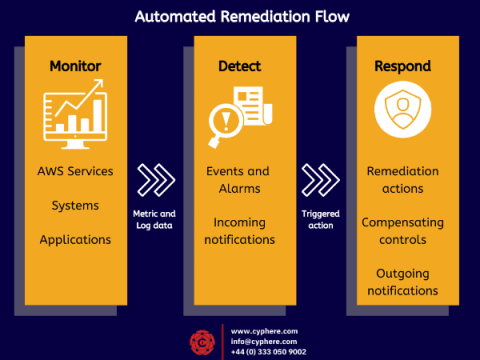
Using security best practices helps businesses establish a security baseline and protect their AWS infrastructure from potential risks. By implementing these practices, companies can reduce the likelihood of data breaches, leaks, and other threats. Additionally, using security best practices can help businesses detect and respond to threats more quickly and effectively.
Like their larger counterparts, small- and medium-sized businesses (SMBs) are moving swiftly to migrate IT workloads to the cloud, hoping to slash operating costs, eliminate technical debt, and accelerate digital transformation projects. However, cloud migration security risks are often poorly understood at the outset or overlooked entirely.
The world is becoming more digital with each passing day. Many companies are trying to transition to an online or to a hybrid system, where they can offer flexibility and autonomy to employees and have a more efficient way of managing their day-to-day operations. The digital transformation to the online world requires businesses to invest in cloud computing and cloud security software.
Businesses are moving their data to the cloud to reduce costs and increase their agility. As more applications and data migrate to the cloud, the risk of sensitive data and applications being exposed dramatically increases. In addition, as organizations deploy applications and services in different cloud environments, maintaining security and compliance across the board is becoming more complex than ever before.
Navigating the internet in 2022 is more dangerous than ever for Australian netizens. The risks to the privacy of Australian customers are at an all-time high, as the nation has reported the highest percentage of mobile threats globally, standing at 26.9%. The average Australian netizen uses web-based mobile apps to browse, entertain, communicate, and shop online.
The Chinese government took down over 2 million applications from Chinese app stores in just two years (2018-2020)! Now, the government has revised and published stricter cybersecurity updates or provisions for mobile app development, which will go into effect from August 1st, 2022. Why is this happening, and what does the new policy say? Also, how does it affect the developers within China? If you have these questions on your mind, this blog is for you.
Many technology professionals have experienced the sense of frustration that occurs when multiple tools in their environment do not play nicely with each other. When technology leaders are making decisions about bringing new tools into their environment, they should be thinking about more than whether the platform is just a shiny new object that adds a new capability to their team.