Security | Threat Detection | Cyberattacks | DevSecOps | Compliance

A Step by Step Guide to Creating Realistic Instagram Post Mockups for Presentations

A realistic Instagram post mockup can make a presentation easier to understand, especially when a campaign idea is still being reviewed. Instead of showing a loose image, a caption in a separate file, and notes in a slide, the post can be shown in a format that feels close to the final Instagram layout. This helps agencies, SMM specialists, designers, and brand teams discuss creative choices with less confusion. A good mockup is not about pretending that something was published, but about showing how a post may look before approval, portfolio use, or campaign planning.

TITAN AI Demo Series: How AI Agents Automate KEV Remediation

Most security teams find out about a critical vulnerability after it's been added to CISA's Known Exploited Vulnerabilities (KEV) catalog. By then, the clock is already running. In Episode 3 of SecurityScorecard's Demo Tuesday series, see how TITAN AI Agents automate KEV remediation workflows — so your team spends less time triaging and more time closing exposures. Watch to learn how to: Instantly identify which vendors in your ecosystem are exposed to KEV-listed vulnerabilities.

What the Cloudflare Outage Says About Changes Made Under Pressure

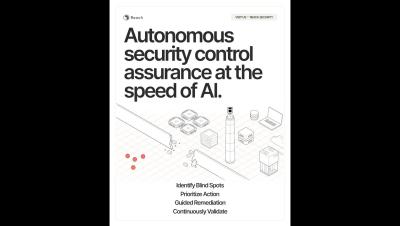
Observability is not the problem anymore. The data that tells you a change will break something usually already exists. Most teams have the events, the logs, the configuration history. What is missing is the step that turns all of it into a clear yes or no on a specific change, while there is still time to pull it. Garrett Hamilton, CEO of Reach Security, on objective data and the changes that get made before anyone checks.

The post-quantum EO is an important milestone. Now it's time to get to work

On June 22, 2026, President Trump signed Executive Order 14409, "Securing the Nation Against Advanced Cryptographic Attacks." The order sets a December 31, 2030, deadline for federal agencies to transition their most sensitive systems to post-quantum encryption, and a December 31, 2031, deadline for post-quantum authentication. The EO also directs federal contractors to comply with post-quantum Federal Information Processing Standards (FIPS) by the end of 2030.

Monitoring Agents and SaaS AI Platforms with Microsoft Agent 365 [Part 1]

Agent usage is exploding and in Microsoft 365, agents aren’t monitored by default. Even though it’s early days for tools that can monitor agents, Microsoft’s newly released Agent 365 evolves this new category with some powerful capabilities. Here are some tips for using Microsoft Agent 365 and related tools to monitor agents. Solutions discussed in this post: This is part 1 of a two-part series.

Introducing AI-assisted query creation in 1Password Device Trust

Today we're shipping a new capability directly into 1Password Device Trust that lets admins query their fleets faster, without needing to be SQL experts. Now you can describe what you want to investigate in plain English, and Device Trust generates a ready-to-run SQL query you can execute across your devices in a single click.

What nearly 10,000 developer environments reveal about agentic development risk

For years, application security teams have focused on a familiar set of questions: Is the code secure? Are the dependencies vulnerable? Is the build pipeline protected? Are issues being caught before they reach production? Agentic development adds a new question: What systems, tools, instructions, and permissions helped produce this code? AI coding agents are no longer just suggesting snippets or completing lines of code.

Announcing Agentic Development Security (ADS)

Today, we're announcing Agentic Development Security (ADS), a new Evo solution designed for securing AI-driven software development. AI agents are now active participants in the software development process, selecting tools, executing actions across systems, and generating production-ready code at machine speed.

The New Security Control Point: Governing AI Agents Inside the Execution Loop

As organizations adopt AI agents to build software, security teams face a new challenge: risk is no longer introduced only through the code that gets produced. It emerges continuously through the tools agents use, the actions they take, and the code they generate. This is the problem Evo Agentic Development Security (ADS) was designed to solve. ADS secures all three layers of the agentic development system—what agents use, what they do, and what they generate.