Security | Threat Detection | Cyberattacks | DevSecOps | Compliance

Securing AI at the Endpoint with CrowdStrike Falcon

AI is moving beyond browser tabs and SaaS apps into agents, local models, MCP servers, IDE extensions, and AI development frameworks running directly on the endpoint. These tools can access files, source code, credentials, and enterprise data with user-level privileges, creating new blind spots for security and IT teams. In this demo, see how CrowdStrike Falcon helps close the endpoint AI visibility gap by discovering, governing, and defending AI usage across the enterprise.

Falcon AIDR: Copilot Studio, Claude Code, and Browser-Based AI Coverage Enhancements

AI adoption is expanding into agents, developer workflows, and browser-based experiences, creating new blind spots where security teams need visibility, context, and control. See how CrowdStrike Falcon extends AI security coverage across Microsoft Copilot Studio, Claude Code, and the Falcon Browser Extension. Learn how Falcon helps security teams evaluate agent tool use, enforce allow or block policy decisions, inspect prompts and responses for risks like prompt injection, sensitive data, and malicious content, and enrich investigations with endpoint identity context from the Falcon sensor.

AI Hardware Shortages Are Driving Up IT Costs: What Leaders Should Do Now

If your organisation has felt the sting of higher prices or longer lead times on servers, storage, memory or end-user devices over the past year, you are not imagining it. The AI build-out is reshaping the global hardware market in ways that go well beyond a short-term price spike. The key point for IT and business leaders is this: what began as a temporary shock now looks more like a multi-year supply and pricing cycle.

How to Protect Your Repositories from Open-Source Supply Chain Attacks

The open-source trust model is broken. Not strained, not under review—broken. For years, your team has pulled third-party code into your repositories on the reasonable assumption that a widely used dependency is safe. Popularity looked like a proof. Millions of downloads looked like a security review. TeamPCP has proven otherwise.

New Phishing Kits Use Open-Source Tools to Bypass MFA

Researchers at Lexfo are tracking three sophisticated phishing kits that were built using open-source components, primarily based on the publicly available adversary-in-the-middle (AiTM) attack framework “Evilginx.” The phishing kits are designed to proxy “live Microsoft 365 authentication sessions to capture session cookies and OAuth tokens in real time, bypassing MFA entirely.” The kits also use AI to generate personalized phishing lures with a variety of different delivery metho

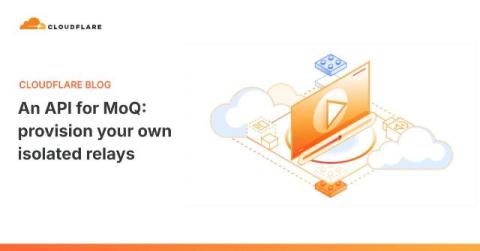
An API for MoQ: provision your own isolated relays

Last year, we enabled Media over QUIC (MoQ) on every Cloudflare server and opened the network for anyone to test. It provided a global MoQ endpoint, but not the isolation and access controls needed to run an application. Today, we’re adding those isolation and access controls. The new MoQ provisioning API lets you create an isolated relay for your application and issue separate credentials for publishers and subscribers.

The Hugging Face Incident: A CISO Wake-Up Call for the Agentic Era

Earlier this month, Hugging Face, an AI and machine learning platform company, revealed that an autonomous AI system had breached part of its production environment. The intrusion began in the platform’s dataset-processing environment and eventually involved higher-level access, credential exposure, and movement into internal clusters.

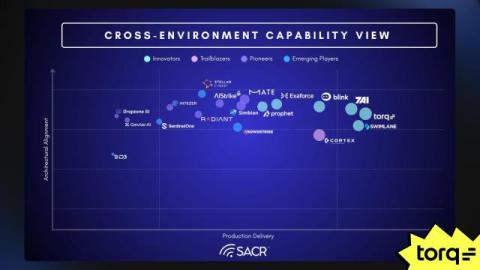
Torq Named a Leading Innovator in SACR 2026 AI SOC Market Report

Software Analyst Cyber Research (SACR) just published its 2026 AI SOC Market Report, offering an independent assessment of vendors competing in what has rapidly become the most consequential category in enterprise security. Torq features prominently, and the report’s framing is worth unpacking because it illuminates what makes the AI SOC category hard to evaluate and why Torq’s approach is consequential.

Building and Enforcing an AI Acceptable Use Policy

An AI acceptable use policy (AUP) is a formal set of rules that defines how employees can safely and responsibly use AI tools in the workplace. Its purpose is to encourage AI-driven productivity while protecting the organization from data leaks, intellectual property exposure, compliance violations, and the security vulnerabilities that unsanctioned AI usage introduces. Every organization deploying or permitting AI tools needs one. ‍