Security | Threat Detection | Cyberattacks | DevSecOps | Compliance

IAM for DevOps: How to Secure Distributed Teams, CI/CD Pipelines, and Privileged Access

Your DevOps team doesn't log into one app from one office. They're in cloud consoles, Git repos, CI/CD pipelines, and production, often at 2 am, often from home. IAM for DevOps has to work for that reality, not the one from 2016. Traditional identity and access management was built for employees signing into a handful of business apps from a managed laptop. But the DevOps team blew past that model years ago.

SSH ProxyJump at Scale: Where It Breaks Down and What to Do Instead

Most engineers meet SSH ProxyJump the same way: a single bastion host stands between the public internet and a private network, and one clean -J flag replaces a clunky chain of manual hops. For small teams managing a handful of servers, it feels like a solved problem. But infrastructure grows, teams grow, and the assumptions that made ProxyJump elegant at ten servers start to strain at ten thousand. What works cleanly in a small environment often becomes a liability in a large one, and understanding why is the first step toward finding a better approach.

What's new in Active Roles 8.5

Active Roles by One Identity version 8.3 provides several highly requested features to fortify and enrich the integration capabilities of Active Roles. These new features bring unmatched flexibility and security to Active Directory environments, supporting customers where they are today and where they want to go in the future. Watch this short video to find out how these features can help streamline and protect your Active Directory.

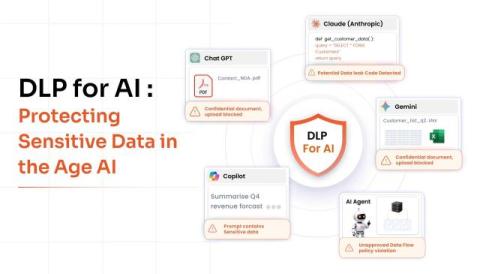
DLP for AI: Protecting Sensitive Data in the Age of AI

Employees paste code into ChatGPT. They drop customer lists into Gemini for a quick summary. They upload a contract to an AI note-taker before a meeting starts. None of it feels risky in the moment. But all of it can walk sensitive data straight out of your organization. AI DLP exists to close that gap.

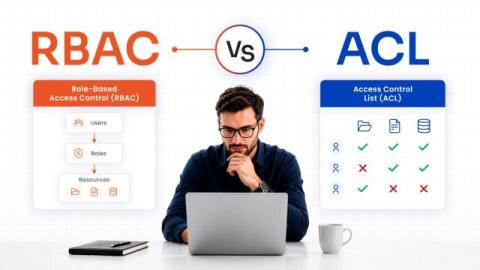
RBAC vs. ACL: Understanding the Differences in Access Control

Every employee, contractor, application, and device in your environment needs the right level of access, but deciding how that access is managed is where many organizations struggle. Grant too many permissions, and you increase security risks. Make access too restrictive, and productivity suffers. Understanding the differences between RBAC and ACL is essential for designing a secure, scalable, and compliant access strategy.

Lithic powers the infrastructure behind modern card issuing - S3E13

In this episode, we're excited to introduce Robin Gandhi, Chief Product Officer at Lithic, the programmable card issuing and processing infrastructure for developers, digital banks, and financial institutions handling billions in annual volume. Robin brings over a decade of deep fintech expertise across product, partnerships, and global operations. Before joining Lithic, he served as CPO at Nium, defining payment strategy across 190+ countries, and held leadership roles at Navan (formerly TripActions) and Adyen, where he scaled global issuing and North American partnerships.


How CIAM Improves Customer Experience

According to the Baymard Institute, 22% of US consumers abandon an online purchase specifically because of an overly complicated registration and checkout process. While you may believe this to be a pricing issue, it’s usually a login problem. Your customer login experience dictates your conversion rate right at the finish line. Why risk it for something you can control? This is where customer identity management becomes critical.

How Unchecked Drush Access Creates a Privileged Access Risk in Drupal

Drupal is one of the most widely adopted enterprise Content Management Systems (CMS), powering government portals, healthcare platforms, educational institutions, financial services, and large corporate websites. Drupal can be managed through its web based administrative interface (GUI), which is the standard way to configure and administer sites. It has improved immensely when it comes to UI / UX aspects of the admin section - largely to improve and ease user adoption.