Security | Threat Detection | Cyberattacks | DevSecOps | Compliance

Process Hunting with a Process

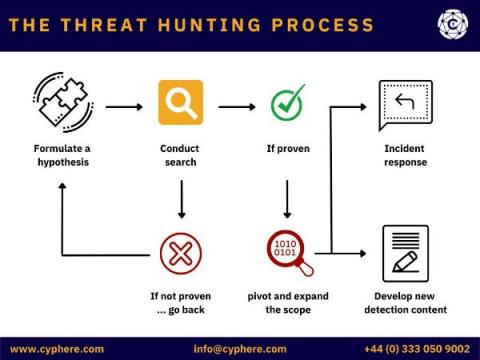
Quite often you are in the middle of a security incident or just combing through your data looking for signs of malicious activity, and you will want to trace the activity or relationships of a particular process. This can be a very time-consuming and frustrating task if you try to brute force things (copying/pasting parent and child process IDs over and over again). And in the heat of battle, you may miss one item that could have led you to something interesting.

Threat Hunting Like a Pro - With Automation

It’s no secret that cyber attacks are on the rise. Not only are they becoming more frequent, but the malicious actors who mount these attacks are constantly improving their skills and evolving the tools in their arsenals. Protecting your organization is challenging at best; especially since we measure the return on investment for cybersecurity as ‘preventing losses’ instead of ‘increasing revenue.’

Supervised Active Intelligence - The next level of security automation

Taking a proactive approach to threat hunting in cybersecurity is crucial, especially today when attacks are more stealthy and more complex than ever. What this means is that the olden ways of cybersecurity relying on time-consuming manual workflows are slowly becoming obsolete, and cybersecurity teams must be supported by active learning intelligence in their threat hunting processes.

Why proactive threat hunting will be a necessity in 2021

We all witnessed how merciless 2020 was for a wide range of organizations. Even the mightiest, most prestigious companies and enterprises are not exempt from the deadly grasp of sophisticated cyber attacks. What this means for security professionals is that they should take a proactive, rather than a reactive stance. But how do you anticipate the unknown? Many security professionals would wonder.

4 Differences Between Threat Hunting vs. Threat Detection

Increasingly, companies are becoming aware of the importance of building threat detection and hunting capabilities that avoid putting their businesses at risk. Now more than ever, when it comes to both protecting enterprise cybersecurity and delivering effective IT security solutions and services, organizations and MSPs can no longer simply act when cyberattacks occur, but long before they even pose a threat.

Anatomy of a Supply Chain Attack: How to Accelerate Incident Response and Threat Hunting

In recent months, we’ve seen a sharp rise in software supply chain attacks that infect legitimate applications to distribute malware to users. SolarWinds, Codecov and Kesaya have all been victims of such attacks that went on to impact thousands of downstream businesses around the globe. Within minutes of these high-profile attacks making headline news, CEOs often ask: “Should we be concerned? How is it impacting us? What can we do to mitigate risk?” .

Hunting for Detections in Attack Data with Machine Learning

As a (fairly) new member of Splunk’s Threat Research team (STRT), I found a unique opportunity to train machine learning models in a more impactful way. I focus on the application of natural language processing and deep learning to build security analytics. I am surrounded by fellow data scientists, blue teamers, reverse engineers, and former SOC analysts with a shared passion and vision to push the state of the art in cyber defense.

Accelerate SecOps with a Single Source of Network Truth

Network evidence is vital for defense, but collecting it can be overly complicated and result in incomplete data that is difficult to use. By transforming VPC and on-premises traffic into Zeek logs and Suricata alerts, you can accelerate threat hunting and incident response workflows in security analytics tools like Chronicle and VirusTotal.

Log Analytics and SIEM for Enterprise Security Operations and Threat Hunting

Today’s enterprise networks are heterogeneous, have multiple entry points, integrate with cloud-based applications, offer data center delivered services, include applications that run at the edge of the network, and generate massive amounts of transactional data. In effect, enterprise networks have become larger, more complex, and more difficult to secure and manage.